Exhibitions
Transitions and festivals. From Carmen to Sant Pere
The Contemporary Art Center La Sala and the Casa de la Festa of Vilanova i la Geltrú have commissioned Isidre Roset to curate the ongoing exhibition entitled Transitions and Festivity. From Carmen to Sant Pere, which deals with the maritime procession of boats, its origins and its evolution over time.
The exhibition presents the continuity of traditions and changes in formats and denominations. These transitions are reflected in various thematic areas, eleven in total, ranging from a first introductory part with reference to the formation in 1920 of the political group Els Almogàvers, the youth branch of the Catalan Centre, based in the Teatre Principal. From the participation in the Sant Pere festivities of that time with the organization of regattas with gussis and the involvement of women in the making of the trophy, a starry flag.
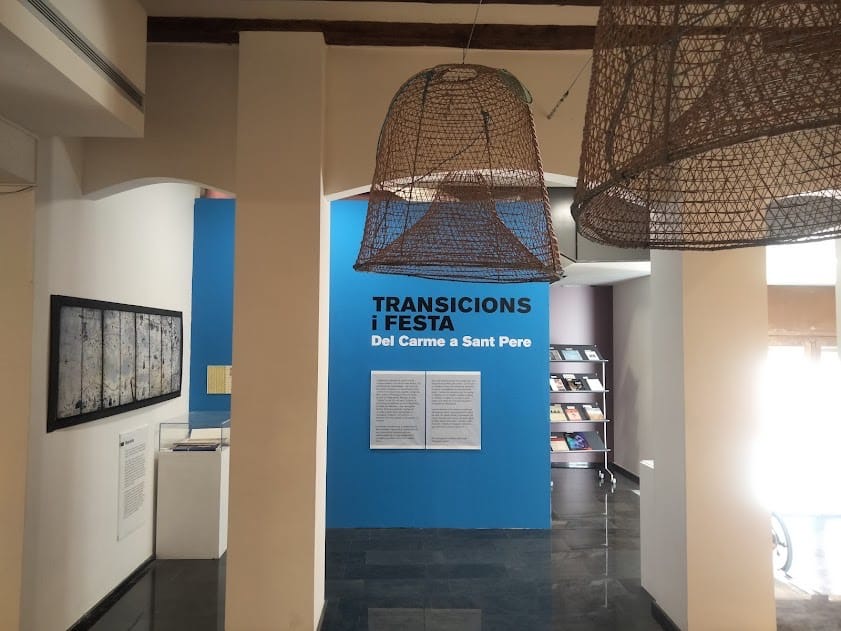
The exhibition shows a reproduction of the Catalan Atlas, also known as the Cresques Atlas (1375), the original of which is preserved in the Bibliotheque National de France in Paris. Two books are presented here, one in Catalan and the other in Spanish, published by the Diàfora publishing house in 1975. The menu of the Peixetada Nacionalista that the Almogàvers of Vilanova in 1921 have been reproduced, as well as the program of the Festa Major of the same year, in which you can read the parallel events that these young Catalanists organized independently and autonomously a hundred years ago.
The section called comic strip and the section called Marina present graphic works and paintings by artists from Vilanova i la Geltrú such as EC Ricart, Ricard Vives Sabaté, Manuel Amat, A. de Cabanyes, Armand Cardona Torrandell, Pau Roig Estradé, Rosa Pastó Figueres, Josep Canyelles, Ramon Bernadó, Joaquim Budesca and others such as the Barcelona resident Alfred Sisquella who lives in Sitges, which show the old appearance of the seafront, a beach that was transformed into a port in 1954.
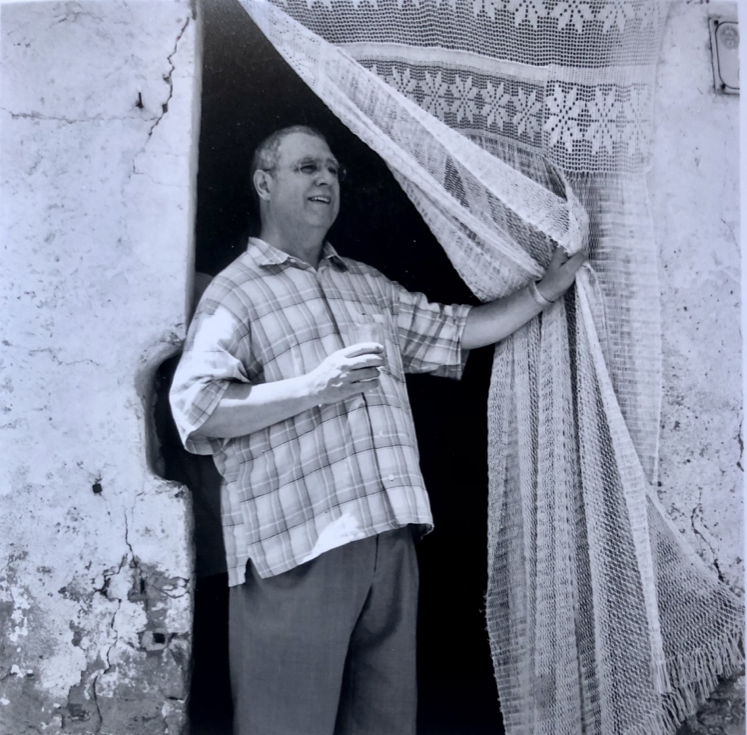
The transition also occurred in the mechanical fishing gadgets and devices, which went from sails and oars to the combustion engine, Diesel. The Vilanova i la Geltrú Sea Museum has preserved many of these pieces that are witnesses to the technical evolution and the adaptation to new materials such as the plastic of the handles hanging from the ceiling, a contribution by Mr. Segarra de Cal Cabossa. He appears in the audiovisual section of the Lighthouse Space, an object a history, a project made reality and Oral Memory of Baixamar, which was formerly called Sa Llacuna in the letter of the people of Vilanova de Cubelles in 1274 by Jaume I.
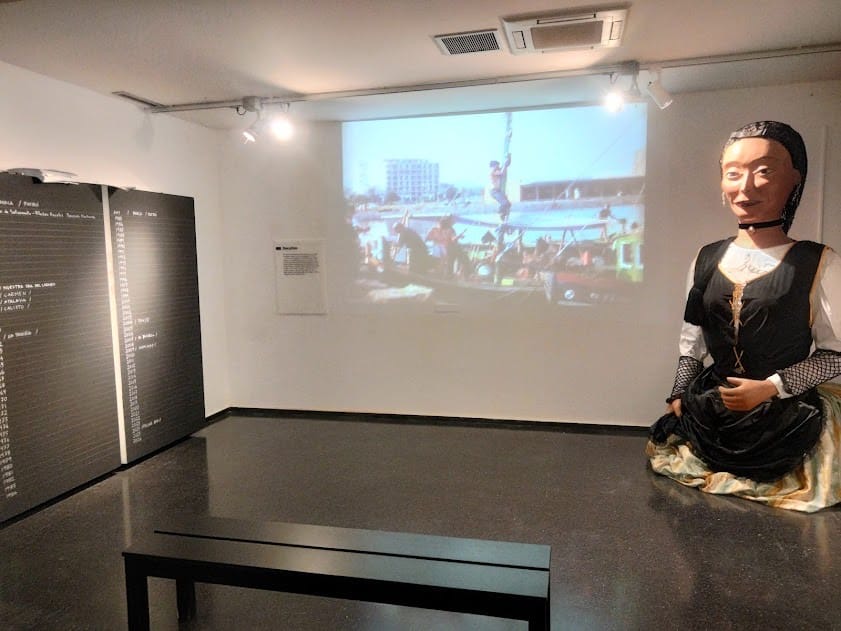
Two photographs, one in black and white and the other in color, one of Our Lady of Carmel and the other of Saint Peter the Apostle carried in a tabernacle, one by the marines or naval riflemen and the other carried on the backs of the castellers de Mar, a group that emerged in Baixamar even before the Bordegassos. A half-finished list makes it clear that history has yet to be written and recounted. In addition, three projections, one from Lloret in 1902 with the procession of Santa Cristina, another “Vol de Gavina” (1934) documentary of the port of Barcelona by Manuel Amat Roses and a third from 1971 by amateur filmmaker Jesús Santacana show the evolution of a particular festive format such as the marine procession.
The giant Carme, dressed as a pubilla, a net-catcher on the Vilanova Beach, closes the visual journey and experience that is shown until September 7 in La Sala Oberta of La Sala Centre d'Art contemporani de Vilanova i la Geltrú, a climatic and cultural refuge to enjoy for free, every day from 7 to 9 pm and on Saturdays and Sundays from 10 to 14 am. Wake up Ferro!!
You may be
interested
...