News
Eduard Arranz-Bravo enters the National Collection
Institutional recognition for a rebellious and singular career.

The work of Eduard Arranz-Bravo (1941-2023) is reaching several Catalan museums thanks to its recent incorporation into the National Collection of the Generalitat. With this step, a significant part of his artistic legacy will be distributed among institutions such as the MACBA , the MNAC , the Granollers Museum , the Valls Museum and the MAMT . A move that reaffirms the growing interest in reviewing and situating the career of a creator who always moved in his own way, a little out of place and at the same time well rooted in his time.
The Arranz-Bravo Foundation, in collaboration with the Arranz-Bravo Estate, has published a digital catalogue that includes the works acquired and includes a text by Àlex Mitrani , historian and curator of contemporary art at the MNAC. Mitrani puts into words the constant energy that defines Arranz-Bravo's work. He highlights the constant movement, the tendency towards change and a vital search that avoids academicism or predictable gestures. "Eduard Arranz-Bravo's vitality stands out. There may be anguish in his work at times, but he was a creator guided by an unredeemed enthusiasm, defined by movement and change, always in the dynamic search for a joyful and rebellious freedom."
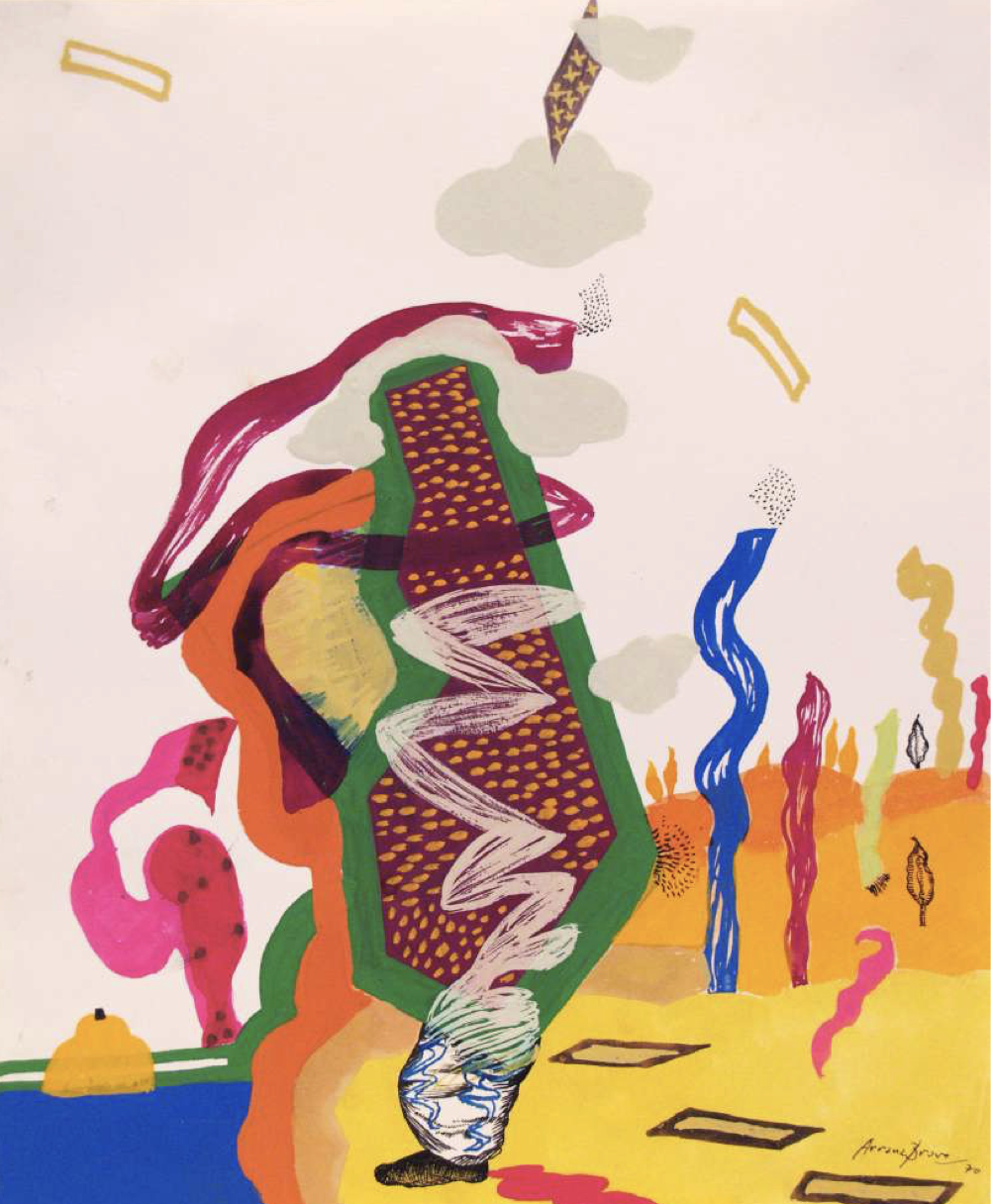 Fiumo 4, Eduard Arranz-Bravo (1970). Depositat al MAMT
With a critical eye, Mitrani also places him within a line specific to the Catalan context: "Arranz-Bravo could be placed closer to the Catalan painters of effervescence, the ascensional and imaginative, and not to those of classical common sense or the materiality of informalism." And he highlights a fundamental aspect of his way of working: "A core of tension and originality of Arranz-Bravo is found in the combination of linear games that seem to derive directly from automatism, from a stroll of the line, free from any constructive or descriptive intention, but which coexists with a natural figuration or with the linear description of bodies."
Eduard Arranz-Bravo was born in Barcelona in 1941 and began to move around the world of art very early on. In the late 1950s he entered the city's School of Fine Arts, but it didn't take long for him to look beyond that. A trip to Paris pushed him to experiment with abstraction and, shortly after, a trip to Italy left a lasting impression on him. During the 1960s he began his own painting, moving away from abstract to explore a very personal figuration that, although some critics dubbed "new figuration", he never quite accepted this label. By the late 1960s, he was already participating in group exhibitions with artists such as Bartolozzi , Llimós or Gerard Sala , and from the 1980s he began to consolidate a very active career with prominent exhibitions all over the world.
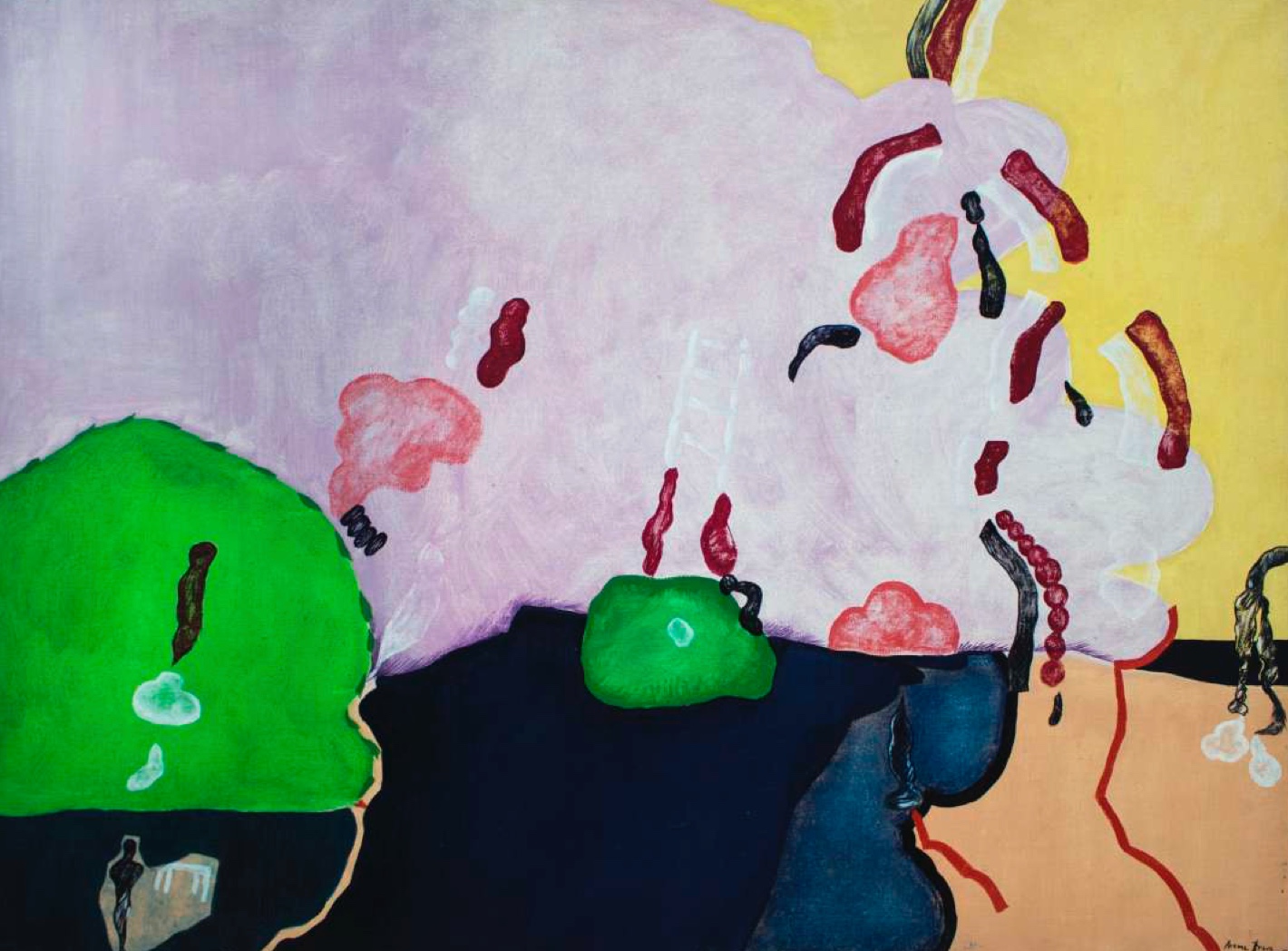 Doble Mont-verd, Eduard Arranz-Bravo (1969). Depositat al Museu de Valls
His work was on display at the Cadaqués Gallery in 1981 in his first solo exhibition. The following year, he presented the Abraçades series for the first time at the Miguel Marcos Gallery in Zaragoza. More soon followed, such as the retrospective at the Sala Gaspar or a large-format exhibition in Terrassa with the support of the Generalitat. From the nineties, his name became more present on the international scene, with exhibitions in Madrid, Palma, Paris, Bonn, New York, Lausanne and, later, in China. His work, with a marked evolution, but faithful to a way of seeing and questioning the world, has maintained the interest of both critics and the public for decades.
At the same time, the Arranz-Bravo Foundation —based in L'Hospitalet de Llobregat— has kept the link with the artist alive since 2009. Born with the desire to preserve and disseminate his legacy, it is also strongly committed to giving visibility to emerging contemporary art. Its collection, made up of more than 300 works from different periods and techniques, is the result of a donation by the artist himself and is preserved, studied and displayed both at the Foundation's headquarters and in collaboration with other institutions.
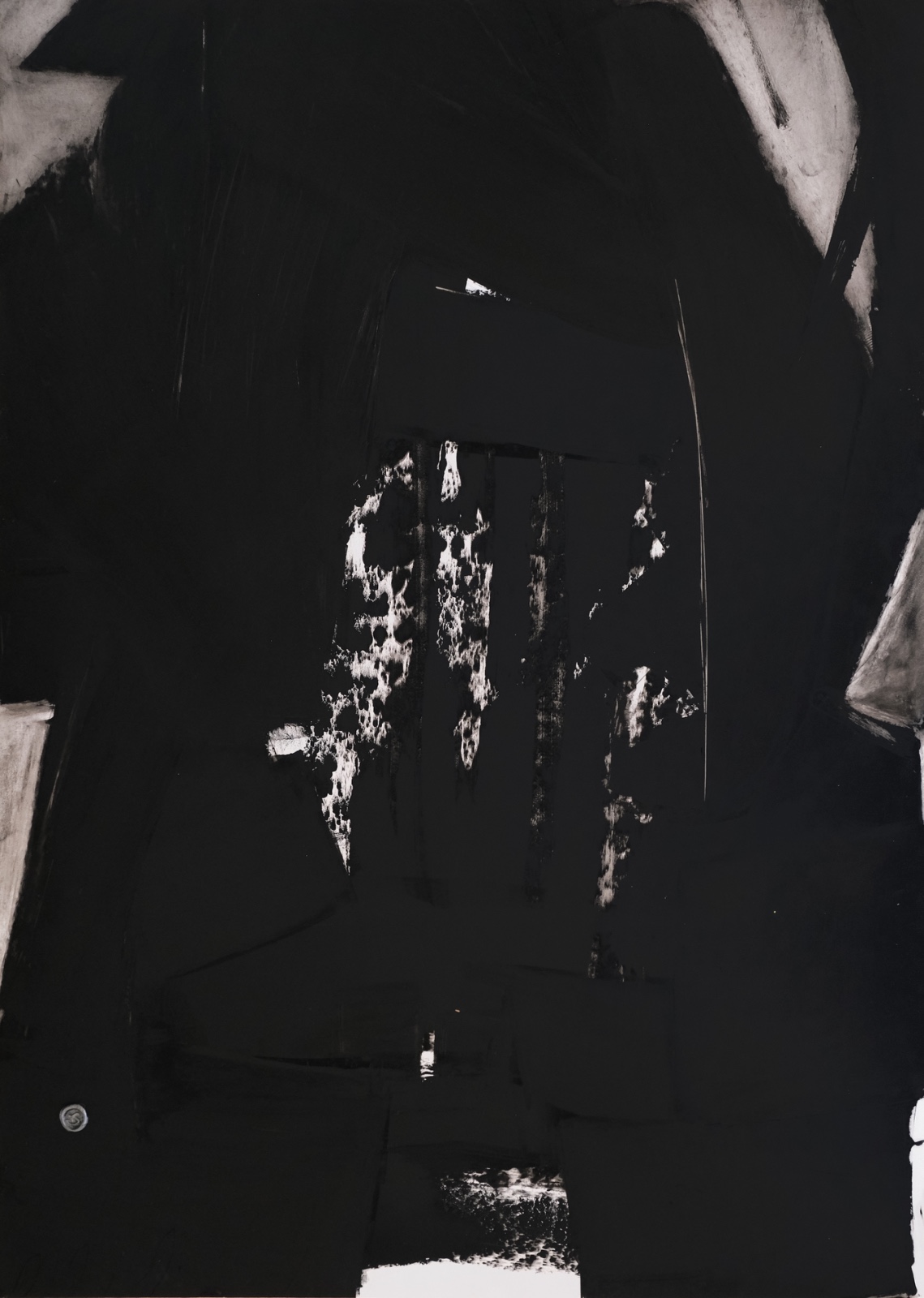
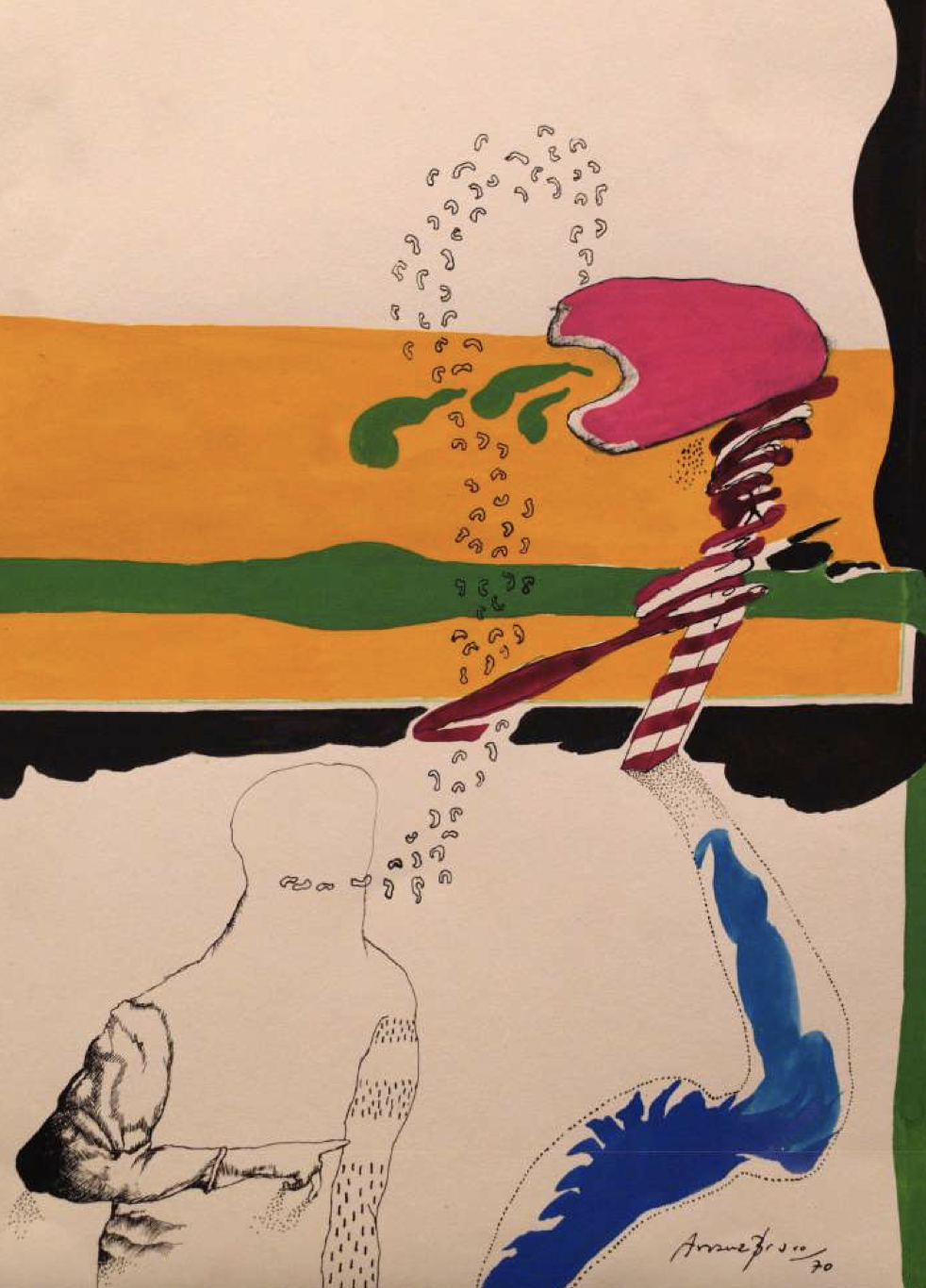 Berio 7, Eduard Arranz-Bravo (1970). Depositat al MACBA

You may be
interested
...