Exhibitions
Yayoi Kusama facing infinity
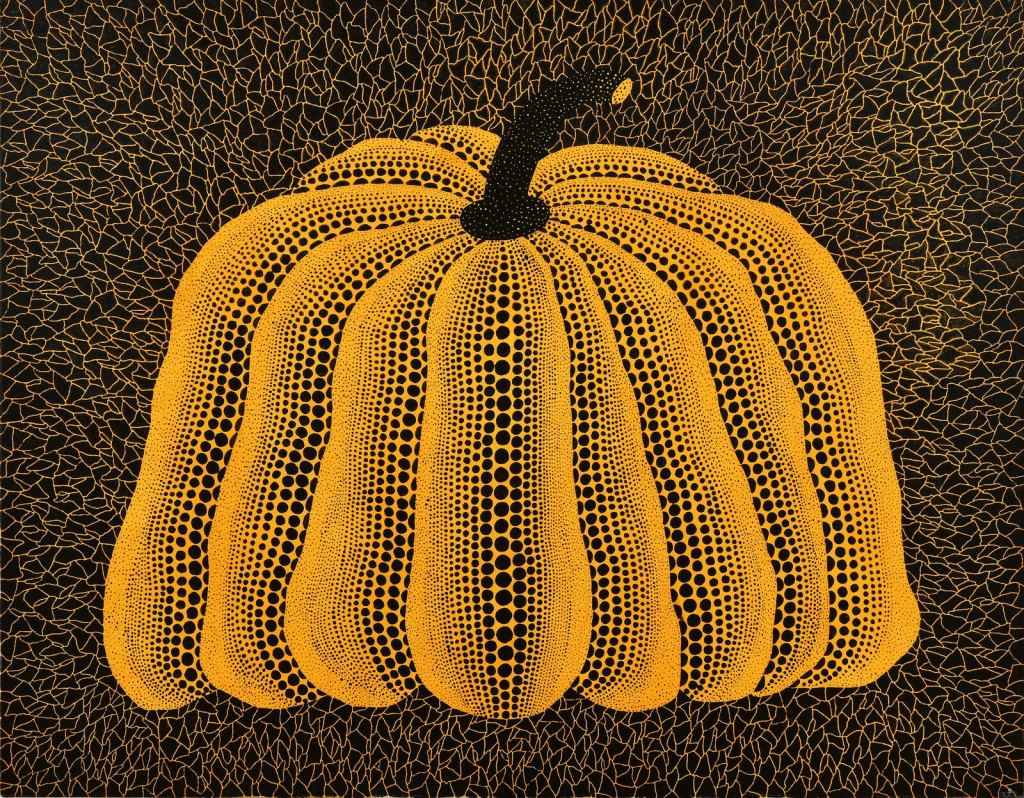
Yayoi Kusama's universe is built upon a constant tension between the intimate and the infinite. Dots, repetitions, mirrors, and surfaces that seem to extend without limit are not merely formal devices, but elements of an artistic language that has transformed our perception of space, the body, and identity itself. The Stedelijk Museum in Amsterdam presents a major retrospective dedicated to one of the most influential and singular figures in 20th- and 21st-century art, a journey spanning more than seven decades of production and allowing us to observe the evolution of an artist whose work has transcended the boundaries between disciplines.
The exhibition brings together a wide variety of media and languages: painting, sculpture, installation, drawing, collage, fashion, performance art, and happenings, as well as some of the immersive experiences that have made Kusama an internationally recognized figure. The exhibition traces her career back to her early works created in Matsumoto, Japan, during the 1950s, then to her pivotal move to New York and her involvement in the avant-garde scene of the 1960s, culminating in her most recent productions developed in Tokyo.
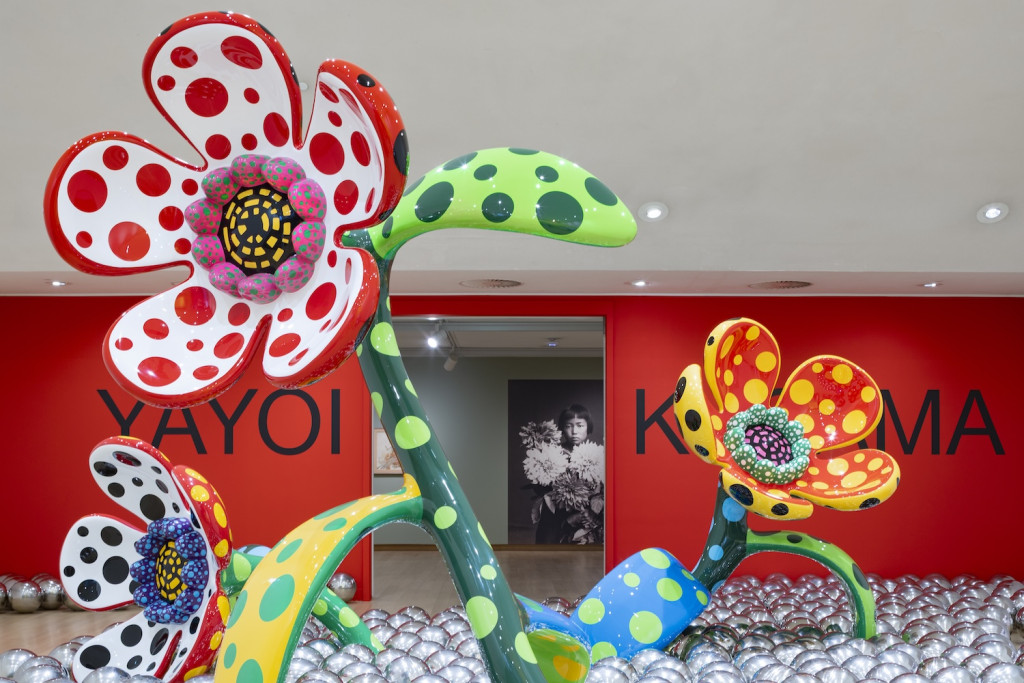
Born in 1929, Kusama began her artistic career in Japan before moving to the United States, where she came into contact with some of the leading experimental movements of the time. In New York, she developed a radical practice that challenged the traditional boundaries of painting and sculpture and progressively incorporated new spatial, performative, and conceptual dimensions. Her work thus began to expand into installations, performances, literature, design, and fashion, resulting in a body of work that defies easy categorization.
One of the key aspects of the retrospective is precisely this breadth. In contrast to Kusama's public image, often associated with her signature polka dots and the celebrated Infinity Mirror Rooms, the exhibition allows us to rediscover the complexity of a much broader career. Early paintings, works on paper, sculptural accumulations, performance interventions, and explorations of repetition construct a trajectory in which an obsession with certain visual motifs transforms into a continuous investigation of space, perception, and the limits of the individual.
Repetition plays a central role in this process. Kusama has transformed the reiteration of shapes, dots, and patterns into a strategy for questioning perception and generating the sensation of an expansion that seems to have neither beginning nor end. The dot motif, one of her most recognizable symbols, thus acquires a conceptual dimension: individuality dissolves into a larger structure, while the viewer's body becomes part of an environment that continually alters its scale and references.
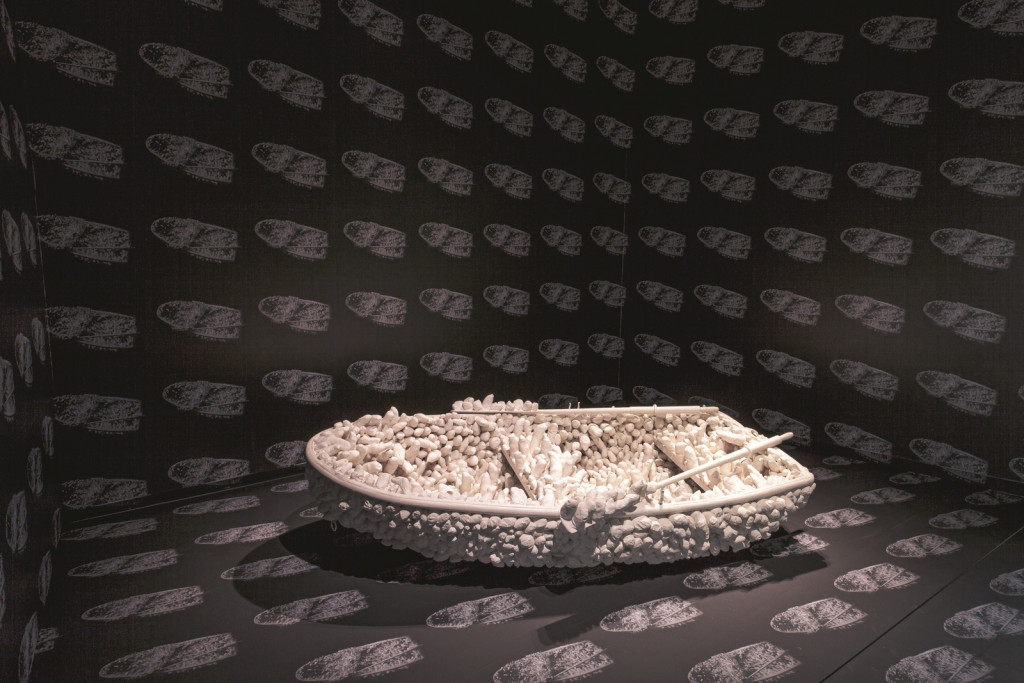
Mirror installations deepen this experience. In them, reflection multiplies space and produces a perception akin to the limitless. The visitor ceases to contemplate a work from an external position and becomes physically incorporated into it. The boundary between observer and art object then becomes more unstable, in a game where individual identity is suspended before the experience of the infinite.
The retrospective includes some of her most iconic works alongside historical pieces never before exhibited in Europe. The exhibition is further enriched by new works created specifically for this occasion, establishing a dialogue between different periods of her artistic production. This combination allows us to understand Kusama's career not as a succession of closed stages, but as an ongoing artistic exploration of themes that have accompanied her work for decades.
The Stedelijk exhibition is part of a retrospective project developed in collaboration with the Fondation Beyeler in Basel and the Museum Ludwig in Cologne. The first leg took place in Basel between October 2025 and January 2026, followed by a tour in Cologne, where it remained until August 2026. Amsterdam is now hosting the third leg of the tour, which will be open until January 17, 2027.
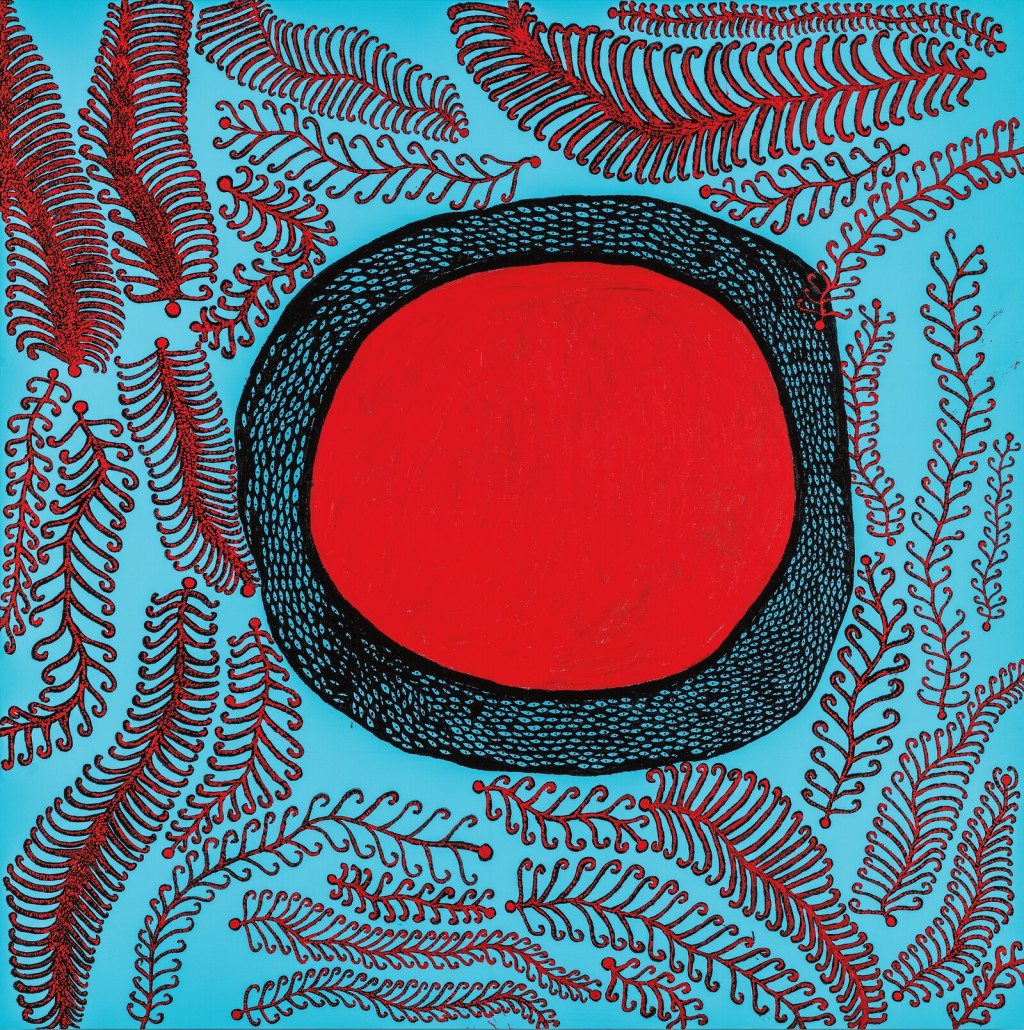
Beyond the spectacular nature of her installations, the exhibition reveals the persistence of a series of ideas that run throughout Kusama's work: infinity, self-annihilation, repetition, and the relationship between body and space. These concepts, far from being exclusively linked to the history of the avant-garde movements of the 1960s, continue to acquire new interpretations in the present.
The new production conceived for the exhibition revisits some of these principles and places them in a new spatial context. In it, Kusama's visual universe once again functions as an immersive experience in which the visitor is confronted with the multiplication of forms and the disappearance of stable references.

You may be
interested
...