News
The Gabo Festival champions journalism as an act of democratic resistance
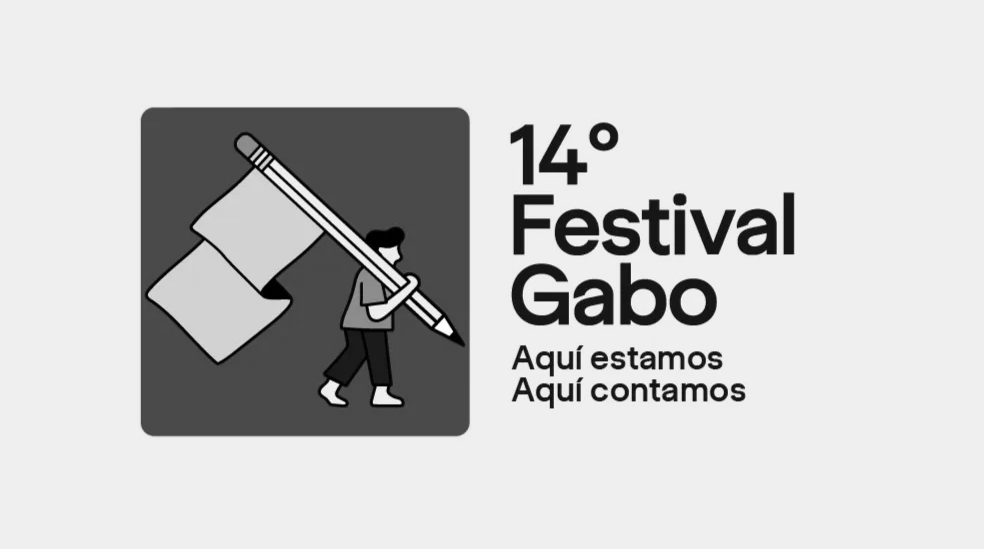
The city of Bogotá hosted the fourteenth edition of the Gabo Festival from July 24 to 26, an event that once again placed Ibero-American journalism at the center of cultural and democratic debate. A year before the centenary of Gabriel García Márquez's birth, the Gabo Foundation transformed the festival into a declaration of principles based on two ideas that encapsulated the spirit of this year's edition: "Here we are" and "Here we tell our stories."
Far from being mere slogans, both expressions championed the enduring relevance of journalism in the face of attempts to discredit or displace it from the public sphere. The festival defended rigorous storytelling, source verification, and public accountability as essential tools for sustaining democratic discourse in a global context marked by polarization, disinformation, and the weakening of institutions.
Over three days, journalists, writers, researchers, and intellectuals reflected on the contemporary challenges facing the profession and revisited some of Gabriel García Márquez's ideas on narrative, magical realism, and the role of literature and journalism in understanding Latin American reality. The discussions connected those reflections with the concerns of the 21st century, at a time when information faces new forms of manipulation and discrediting.
One of the most prominent debates revolved around the relationship between the democratic crisis and the climate emergency. Lawyer and freedom of expression specialist Catalina Botero warned that the deterioration of democracies often begins with systematic attacks against journalists and critical voices. She explained that a pattern repeats itself in numerous processes of autocratization: first, freedom of expression is stigmatized, and subsequently, the institutional checks and balances that sustain the democratic system are eroded.
Botero noted that, after several decades of democratic expansion since the 1980s, the international landscape has experienced a setback since 2010, coinciding with a progressive erosion of guarantees for the practice of journalism. In this context, participants also warned that disinformation amplified by social media is fostering new forms of climate change denial, hindering the social and political response to the environmental crisis.
The Gabo Festival once again dedicated a prominent space to recognizing journalistic excellence with the presentation of the 2026 Gabo Awards, considered among the most prestigious accolades in Ibero-American journalism. This year, 1,915 submissions were evaluated by an international jury of 66 professionals from journalism, photography, literature, and audiovisual production.
Brazil was the star of the ceremony, winning three of the five main awards. The Coverage award went to the multimedia report *A política da bala* (The Politics of the Bullet ), produced by the Metrópoles team, which documents the increase in police lethality in São Paulo. Gabriela Biló won the Photography award for * Como sobrevivem as democracias* (How Democracies Survive ), a series published in Folha de S.Paulo that portrays the political process in Brazil following the attempted coup of January 2023. The Image award recognized the documentary *Terceirão – um ano, quatro vidas* (Terceirão – One Year, Four Lives ), directed by Eliane Scardovelli and Caio Cavechini for TV Globo, which follows four Brazilian students' transition to adulthood over the course of a year.
The other two awards went to Spain and El Salvador. In the Audio category, the podcast "She Was Named Like Me ," by journalist Isabel Cadenas Cañón, was recognized. It's an investigation that revisits the story of Begoña Urroz and questions the official narrative that for decades identified her as ETA's first victim.
In addition to the awards, the Gabo Foundation gave a special recognition to war correspondent Catalina Gómez Ángel for a career committed to covering international conflicts and defending independent journalism.
You may be
interested
...