News
The Venice Biennale in crisis: art, politics and ethical limits
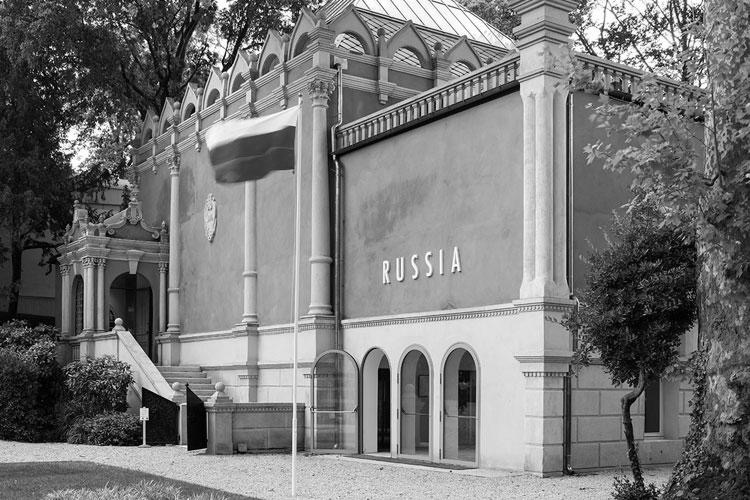
Just days before the opening of the Venice Biennale, one of the most influential events on the global art scene, the mass resignation of its international jury has shaken the institution to its core. The departure of figures such as Solange Farkas, Zoe Butt, Elvira Dyangani Ose, Marta Kuzma, and Giovanna Zapperi, without detailed public explanations, leaves the event in an awkward position and reveals deep-seated tensions that extend beyond the artistic realm.
The trigger appears to be an unprecedented decision: the jury's refusal to award prizes to countries accused of crimes against humanity by the International Criminal Court. This stance, which directly affects Russia and Israel, introduces an ethical dimension that clashes with the traditional claim of art's neutrality in international contexts.
The Russian case has been particularly contentious. Russia's participation in this edition—its first since the invasion of Ukraine in 2022—has generated significant backlash, even within the Italian government itself. Culture Minister Alessandro Giuli has announced that he will not attend either the pre-festival events or the official opening, distancing himself from a decision he considers controversial.
For his part, the director of the Biennale, Pietrangelo Buttafuoco, has maintained a firm stance in defense of Russian participation, insisting on the institution's autonomy from political pressure. This position has had tangible consequences: reduced funding from the European Union and increased institutional scrutiny of the event.
Meanwhile, the Italian government's explicit support for Israel adds another layer of complexity. The direct contact between Minister Giuli and the artist of the Israeli pavilion, Belu-Simion Fainaru, highlights how political alliances also influence the cultural sphere. Fainaru, for his part, has defended artistic freedom and rejected any form of boycott or discrimination.
The jury's resignation is not merely an administrative gesture: it is a statement that highlights the delicate balance between ethics and artistic expression. In a world rife with conflict, the question is no longer whether art should take a stand, but how it can do so without losing its essence.
With the opening ceremony scheduled for May 9 and the Golden Lion at stake, the Biennale faces a historic crossroads. Beyond the awards, what is at stake is the role of art as a space for dialogue or as a symbolic battleground in times of global polarization.
You may be
interested
...