Exhibitions
Marilyn and Marilyn
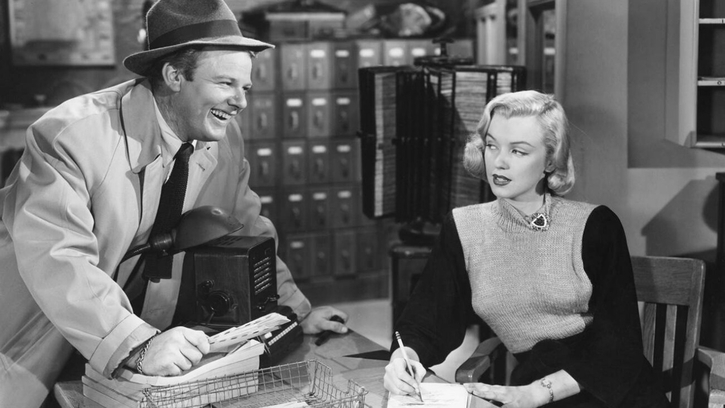
Star or actress, woman or symbol, cultural phenomenon: Marilyn Monroe remains difficult to categorize, to understand, even within the cinematic landscape; the same landscape that, throughout her career, both gave her wings and condemned her, time and again. Ultimately, the fact that her name carried more than one meaning; the fact that a woman could signify something more than a mere physical contrast to her opposite, was something incomprehensible to the society of the time. Something intolerable.
In many ways, it still is. Attempts to demystify the myth, to strip Monroe of everything that surrounded her in order to return her, if possible, to the woman , are nothing more than another form of condemnation. A somewhat reductionist method, not unlike the one the media used at the time to try to fit her into a comprehensible format; an easier one, but no less appropriate for that.
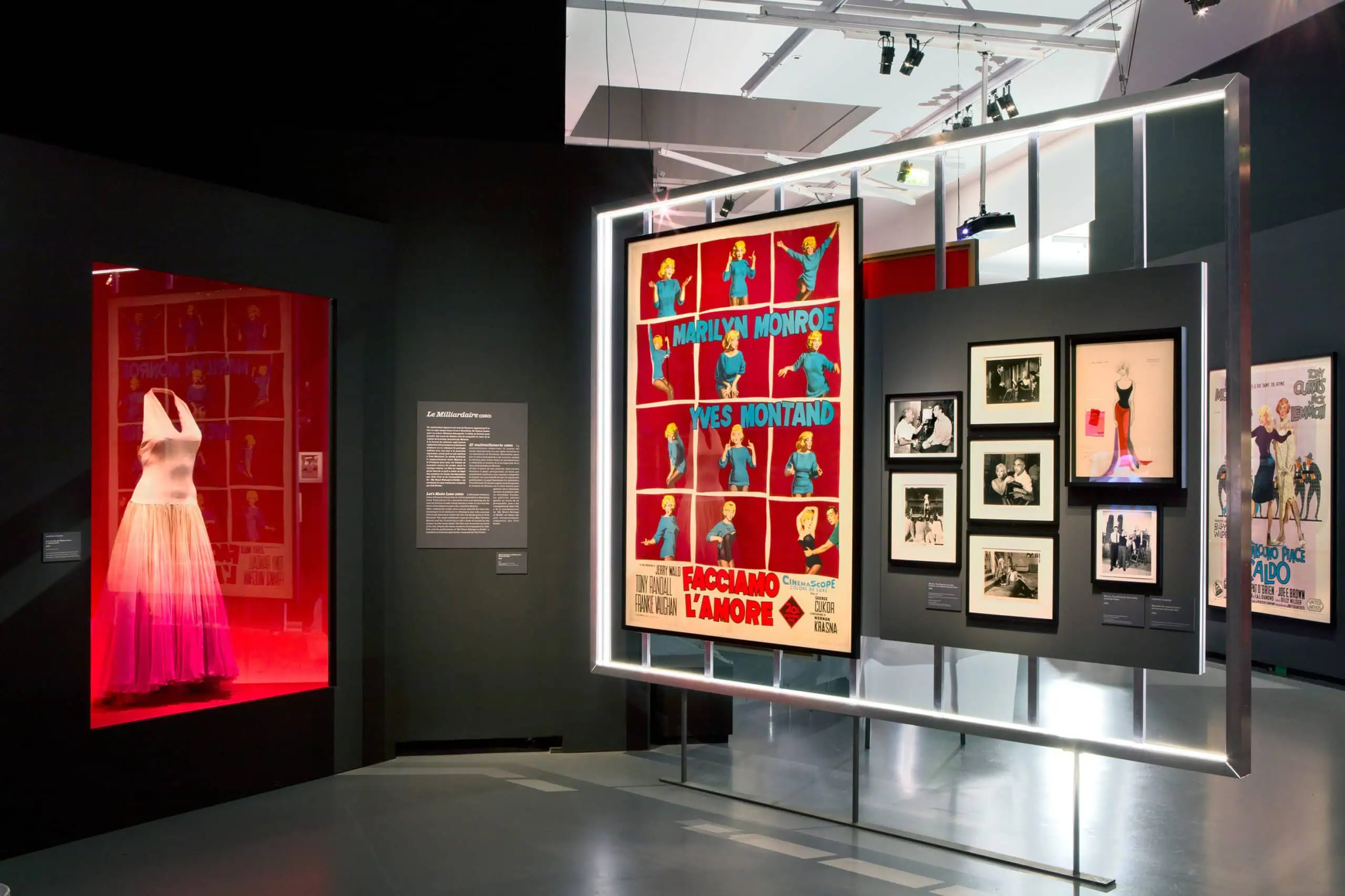
Marilyn Monroe, her image, is trapped in time. It cannot be altered. But our perspective has changed. The same image that was once viewed with a hostile, singular gaze—channeled through the eyes of the media and the directors and photographers who focused their lenses on her—is now viewed from broader perspectives. With distance. This is precisely what Florence Tissot, curator of the current exhibition at the Cinémathèque française dedicated to the centenary of Marilyn Monroe, proposes.
Monroe is shrouded in legend. So numerous and contradictory are the stories surrounding her that, at a certain point, it becomes virtually impossible to understand her without considering them. The exhibition, therefore, offers a fresh perspective not only on the actress herself, but also on all the beliefs that contributed to her rise to stardom and that accompanied her throughout her career.
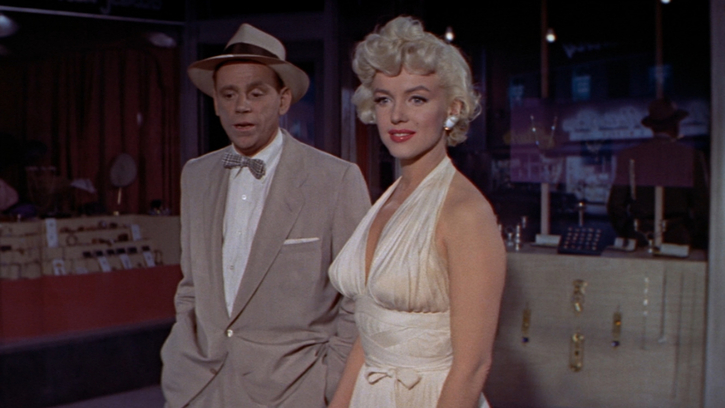
Fritz Lang said, “She knew exactly what effect she had on men. And that’s all.” John Huston also stated, “She wasn’t acting.” Even Arthur Miller—Monroe’s third and last husband—emphasized that “in everything she did, she was herself .” These comments, though not necessarily expressed maliciously, have, in retrospect, contributed to discrediting Marilyn Monroe’s work as an actress. Richard Dyer—included in the catalogue—proposed the following idea in 1986: “Monroe embodies the contradictions of the 1950s, both puritanical and obsessed with sexuality, through her supposed spontaneity derived from her pin-up image.” Marilyn Monroe was an actress. But her image and her presentation to the world, hyper-analyzed by those around her—and even misinterpreted over the years—has directly influenced how we see her and consider her work.
But Sarah Churchwell defines it very well. In her critical historiography of existing biographies of Monroe, The Many Lives of Marilyn Monroe (2004), the writer and academic writes that “beliefs often precede facts and reveal more about us than about the star.”

You may be
interested
...