Exhibitions
'Up, Up and Away' or when Andy Warhol stopped painting… and started to expand
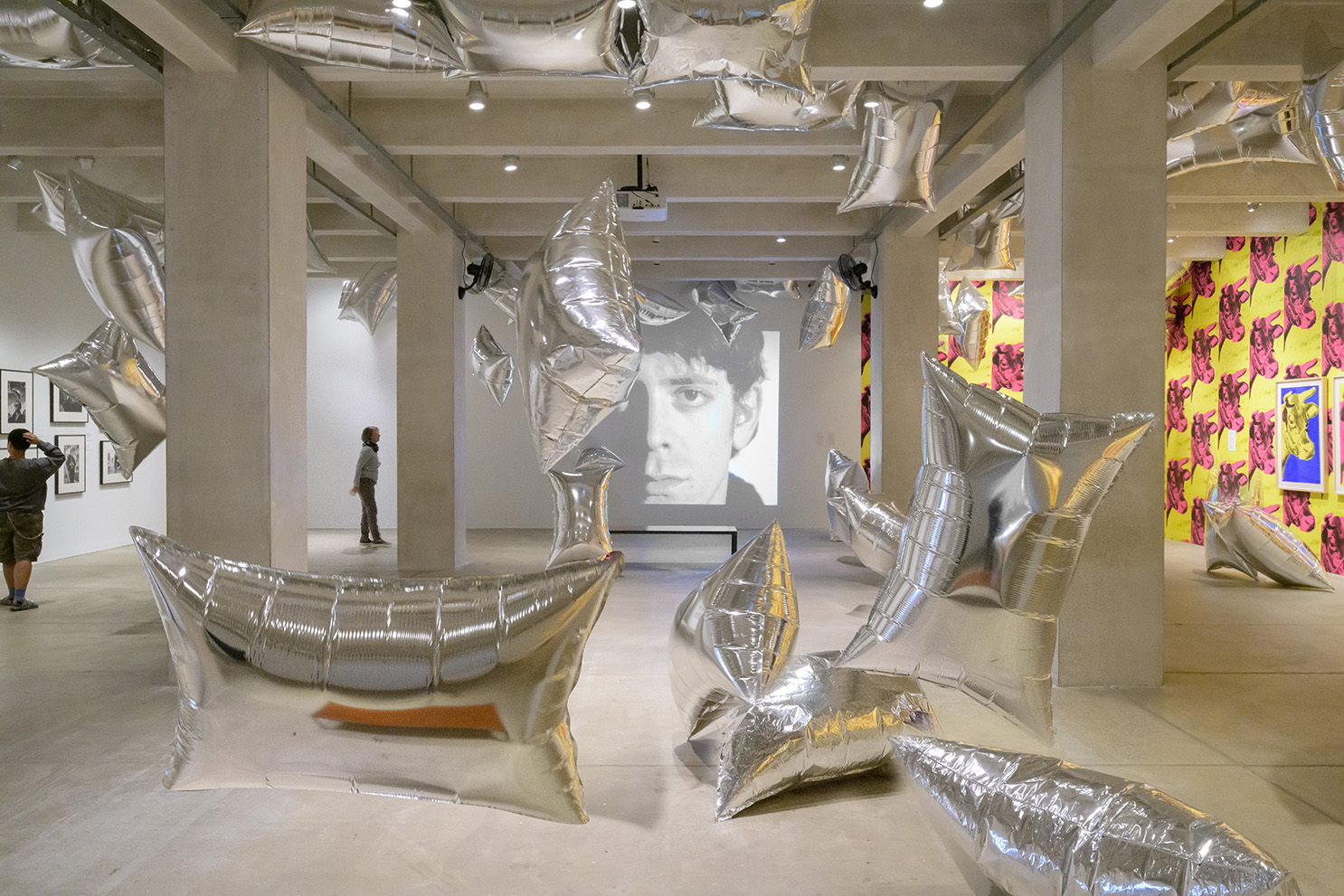
In 1965, at the height of his fame following the iconic Campbell's Soup Cans and Marilyn Diptych series, Andy Warhol announced his retirement from painting. More than a gesture of weariness or provocation, it was a conceptual statement: to dismantle the idea of the artist confined to a single medium and shift the focus from the object to the process, from the canvas to the event.
The exhibition Up, Up and Away , curated by Amber Morgan and Matt Gray for The Andy Warhol Museum, recaptures that moment of rupture as a fertile territory in which Warhol does not disappear, but rather multiplies.
The anti-exhibition: from canvas to space
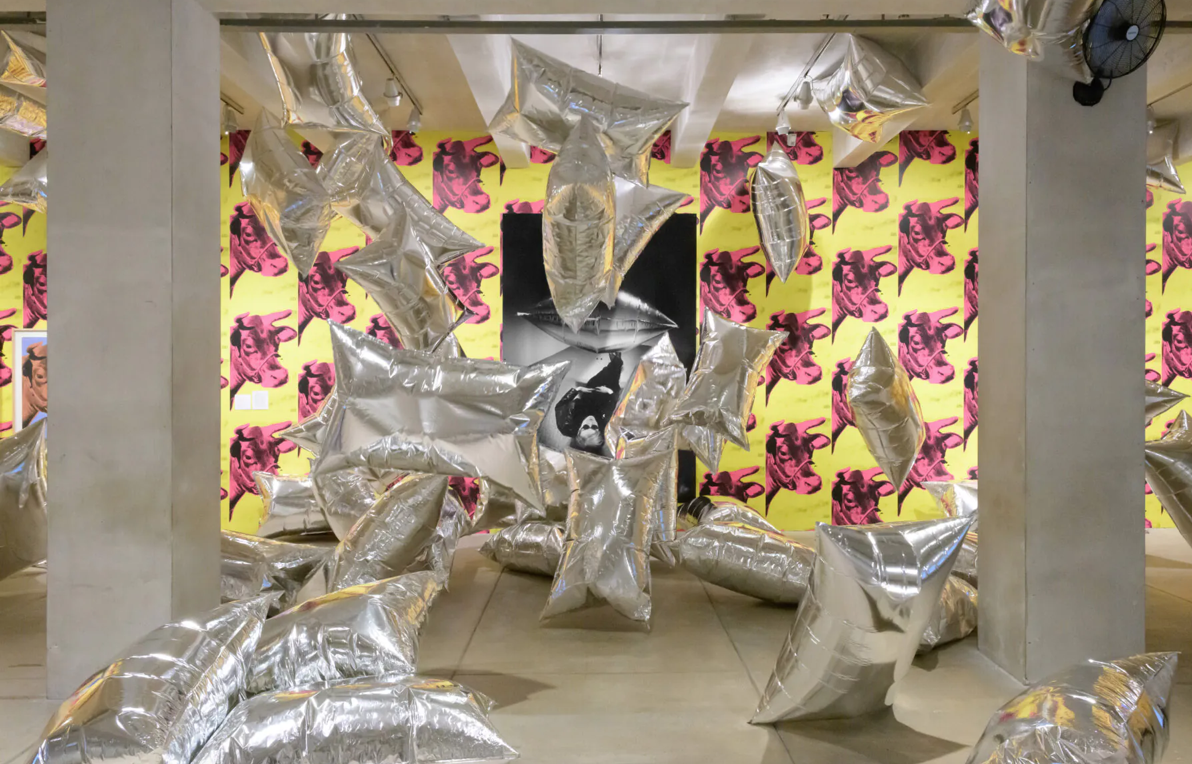
The narrative revolves around the April 1966 exhibition at the Leo Castelli Gallery. There, Warhol replaced painting with atmosphere: one room covered with his repetitive Cow Wallpaper in garish colors, and another occupied solely by the floating Silver Clouds . There were no paintings to contemplate, but rather an experience to be lived.
The gesture of opening the window and letting one of the silver cushions fall out—"That would be the end of painting"—encapsulates Warhol's operation: liberating art from its physical and symbolic framework. It's not about abandoning painting, but about dematerializing it, transforming it into atmosphere, repetition, circulation.
Warhol's "retirement" opened a space for interdisciplinary experimentation that feels surprisingly contemporary today. His foray into film—already radical in its length and static nature—hybridized with a new role: music producer. His collaboration with The Velvet Underground crystallized in the show Exploding Plastic Inevitable , a proto-multimedia installation where live music, superimposed projections, and strobe lights generated a sensory overload.
Here, Warhol ceases to be merely an author and becomes a catalyst. His practice anticipates expanded and relational art: the artist as a director of flows, as a generator of contexts rather than objects.
Critique: withdrawal as a strategy
Up, Up and Away doesn't present withdrawal as a hiatus, but as a strategic shift. Warhol understood earlier than many that painting—especially after his own serial exploitation—risked becoming a repetitive brand. By withdrawing, he breaks market expectations and reconfigures his position.
However, the exhibition also reveals an ambivalence: was this abandonment an escape from saturation or a way to expand his signature into other territories? Probably both. The Warholian paradox is that even when he abandons painting, he continues to produce “images,” even if they are now ephemeral, performative, or sonic.
Warhol's subsequent return to painting does not invalidate this period; it enriches it. Following his forays into installations, film, and music, his pictorial work acquires a new awareness of circulation and spectacle. Up, Up and Away achieves more than simply documenting an episode: it reconfigures our understanding of Warhol. Not as the artist of the soup cans, but as a complete cultural operator, capable of anticipating contemporary art in its most expansive dimension.


You may be
interested
...