Exhibitions
'One in a Million': The Epic of the Everyday in the Painting of Néstor Jiménez
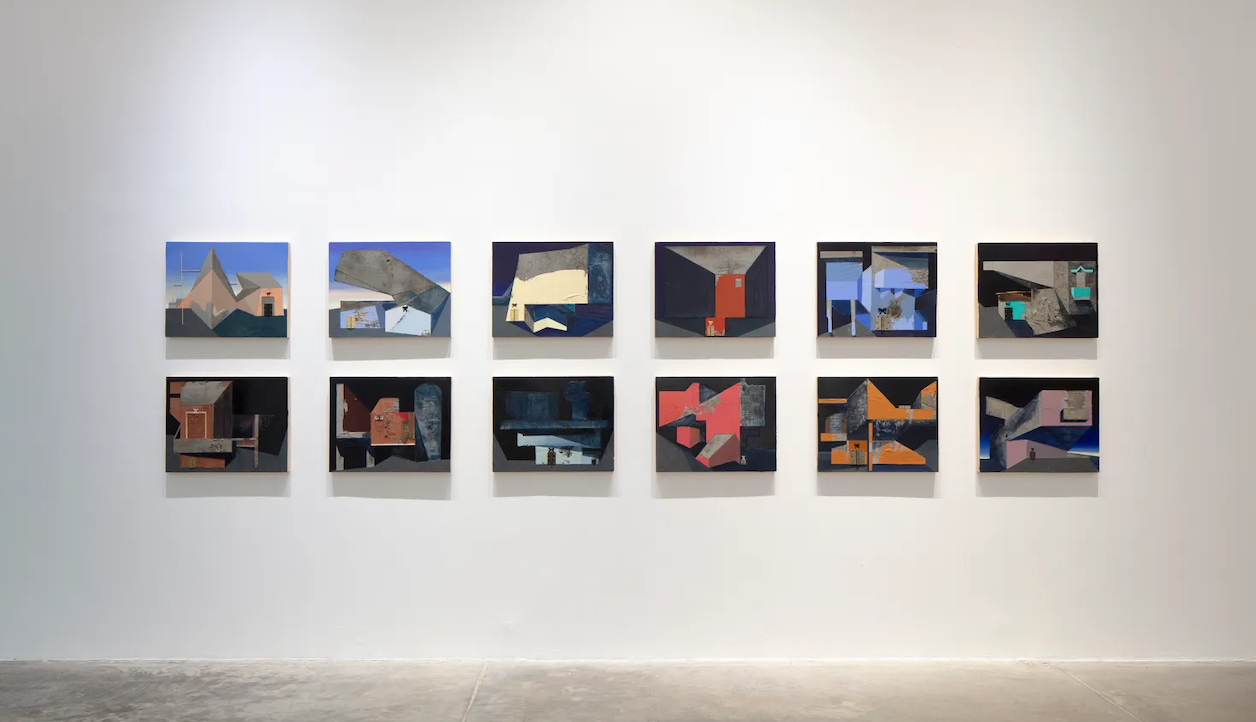
Curated by Lucía Sanromán, chief curator of the University Museum of Contemporary Art (MUAC), the exhibition One Among Millions brings together work commissioned from the artist Néstor Jiménez (Mexico City, 1988), one of the creators who have breathed new life into contemporary painting in Mexico.
From February 7 to July 3, Room 3 of the capital's museum will host six pieces created specifically for the exhibition, encompassing easel painting and collage, ceramic sculpture, kinetic sculpture, and mural painting. The exhibition focuses on "the epic of an ordinary man," a thematic axis that encapsulates Jiménez's pictorial explorations in recent years, offering a journey that engages with both tradition and innovation in contemporary Mexican painting.
In several of the pieces in the exhibition, play appears as a metaphor, especially in The Mousetrap . For Jiménez, playfulness is not innocent: “Play may seem harmless, but in reality, it’s a structure of control,” he explains. The work alludes to phenomena such as urban displacement and gentrification, scenarios where the rules are not decided collectively and where, inevitably, someone loses. “I don’t believe in closed messages. Ambiguity allows the viewer to engage with it from their own experience. The critique is there, but not as a slogan, rather as an open question,” the artist adds.
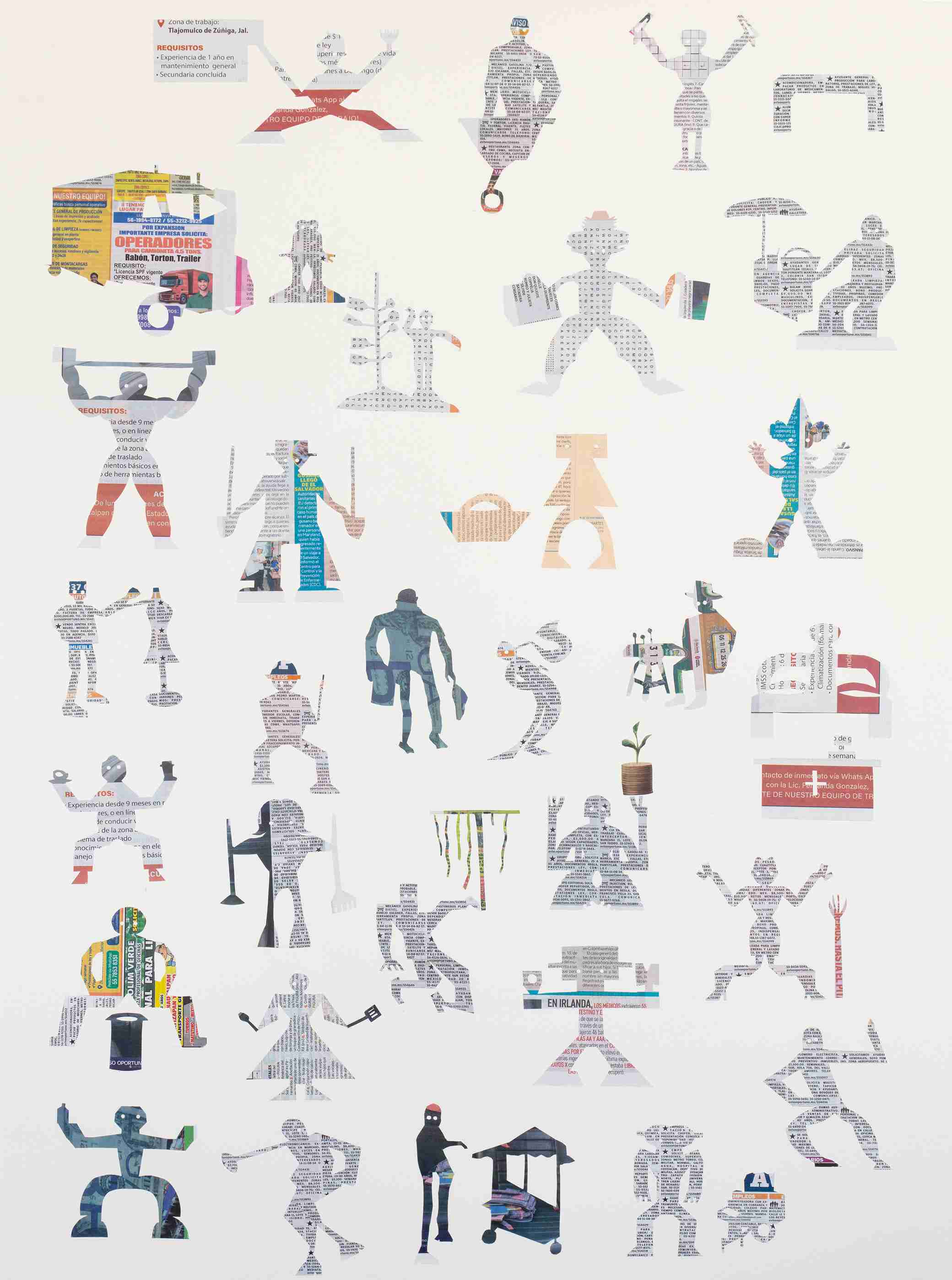
Failure—economic, emotional, or ideological—also occupies a central place in the exhibition. Jiménez conceives of it not as absolute defeat, but as a structural condition of our system: “It is part of the experience of so many people, and yet it is rarely represented. I am interested in giving it a place.”
Jiménez's work also stems from specific historical research, but the transformation from archive to artwork only occurs when that information ceases to be abstract and begins to affect the artist physically and emotionally: “The archive has to pass through the body, through experience. Otherwise, it remains an intellectual exercise.”
It is precisely at this moment of transformation that Jiménez's works highlight the persistent materiality of objects, incorporating recycled and construction materials such as cement and plywood. The use of industrial means and the creation of structures reminiscent of a reinvented Brutalist architecture link his painting to the polyangular muralism techniques of David Alfaro Siqueiros.
In these pieces, Jiménez revisits the historical tensions of Mexican muralism—political ideology, social class, and access to well-being—but revisits them from a contemporary perspective that allows us to recognize the personal and the political as inseparable dimensions of the current experience.


You may be
interested
...