
Exhibitions
Gabriele Münter, the pioneering vision that shaped Der Blaue Reiter
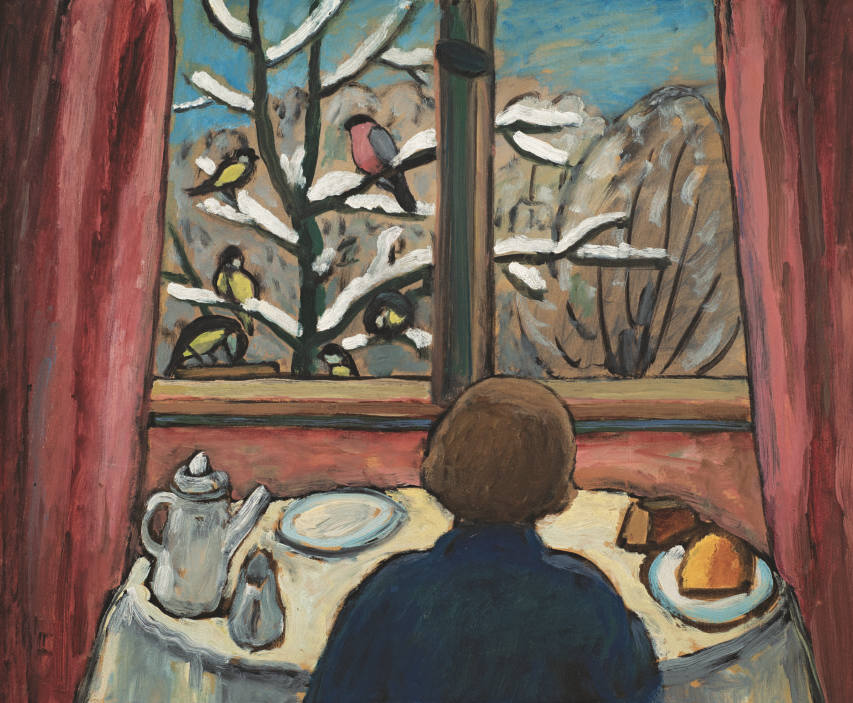
This exhibition, Gabriele Münter: Contours of a World at the Guggenheim Museum in New York, highlights Münter’s enduring engagement with themes of everyday life, influenced by her travels, the places she inhabited, and the communities she encountered. More than fifty paintings are on display across three galleries in the Tower, alongside nineteen photographs taken during her extended stay in the United States between 1898 and 1900. Shot with a portable box camera, these early images reveal her keen sensitivity to composition and light.
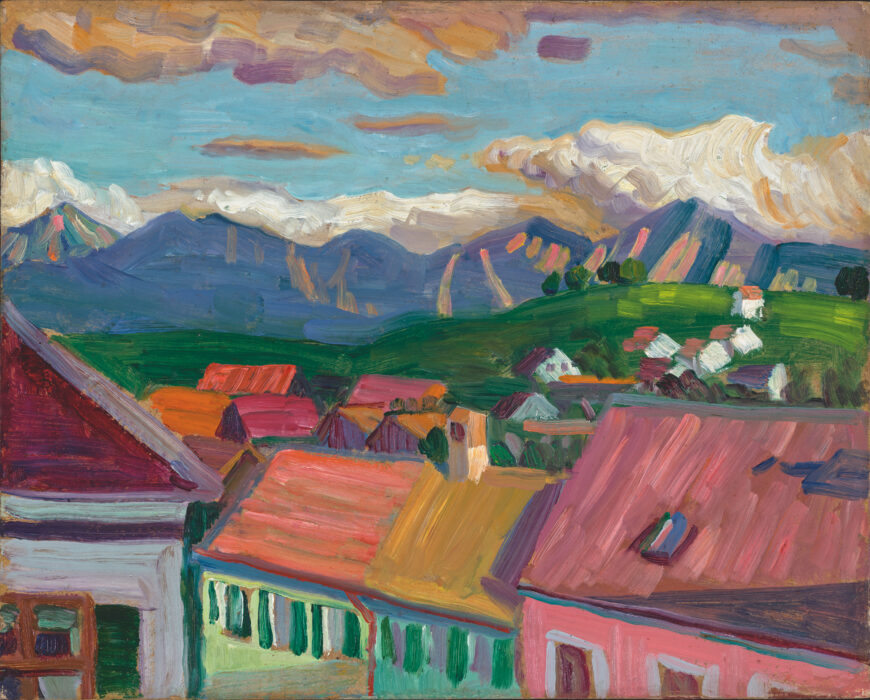
Gabriele Münter, From the Griesbrau Window, 1908, © ARS.
This German artist not only had a romantic relationship with Kandinsky, but also played a fundamental role in the formation of Der Blaue Reiter, the influential expressionist movement that emerged in Munich. Her work was crucial in consolidating the group, characterized by its search for spiritual expression in art, its bold use of color, its formal freedom, and its interest in diverse visual traditions—from Bavarian folk art to children's paintings and icons. Münter not only contributed her own work, but also offered intellectual and material support that allowed the collective to crystallize and evolve.
The exhibition will be open until April 26, following the November 2024 opening of the first retrospective in Spain dedicated to Gabriele Münter, organized by the Thyssen-Bornemisza National Museum. This exhibition, which ran until February 9, brought together more than one hundred paintings, drawings, prints, and photographs by the German artist. Although most of her works are held in museums in various German cities, some can also be seen at the Guggenheim Museum in New York until April 2026.
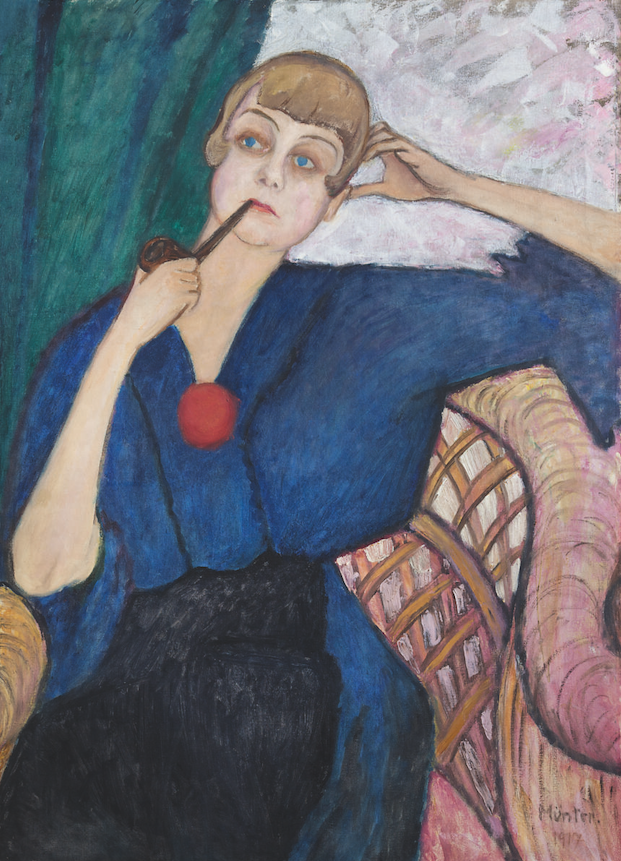
Gabriele Münter, Portrait of Anna Roslund, 1917, © ARS.
Münter's early canvases display a bold and radical approach to color and form, particularly in the context of her involvement as a founding member of Der Blaue Reiter and related modernist collectives. Her artistic style was further transformed during her time in Scandinavia during the First World War (1914–1918) and in response to the cultural shifts that swept across Europe in the 1920s and 1930s. Taken as a whole, her work reflects a life driven by curiosity, deeply rooted in local encounters, yet always guided by a conviction in our shared humanity.
Throughout her career, Münter attentively observed the life around her and, as the exhibition title suggests, highlighted certain facets and contours, whether portraying a friend like the painter Gertrude Holz, a living room in Murnau, or the scaffolding of a Parisian street. As she herself explained: “I extract the most expressive aspects of reality and represent them in a simple and direct way… forms come together in contours, colors transform into fields, and from these emerge images of the world,” words that serve as an epigraph for the exhibition.
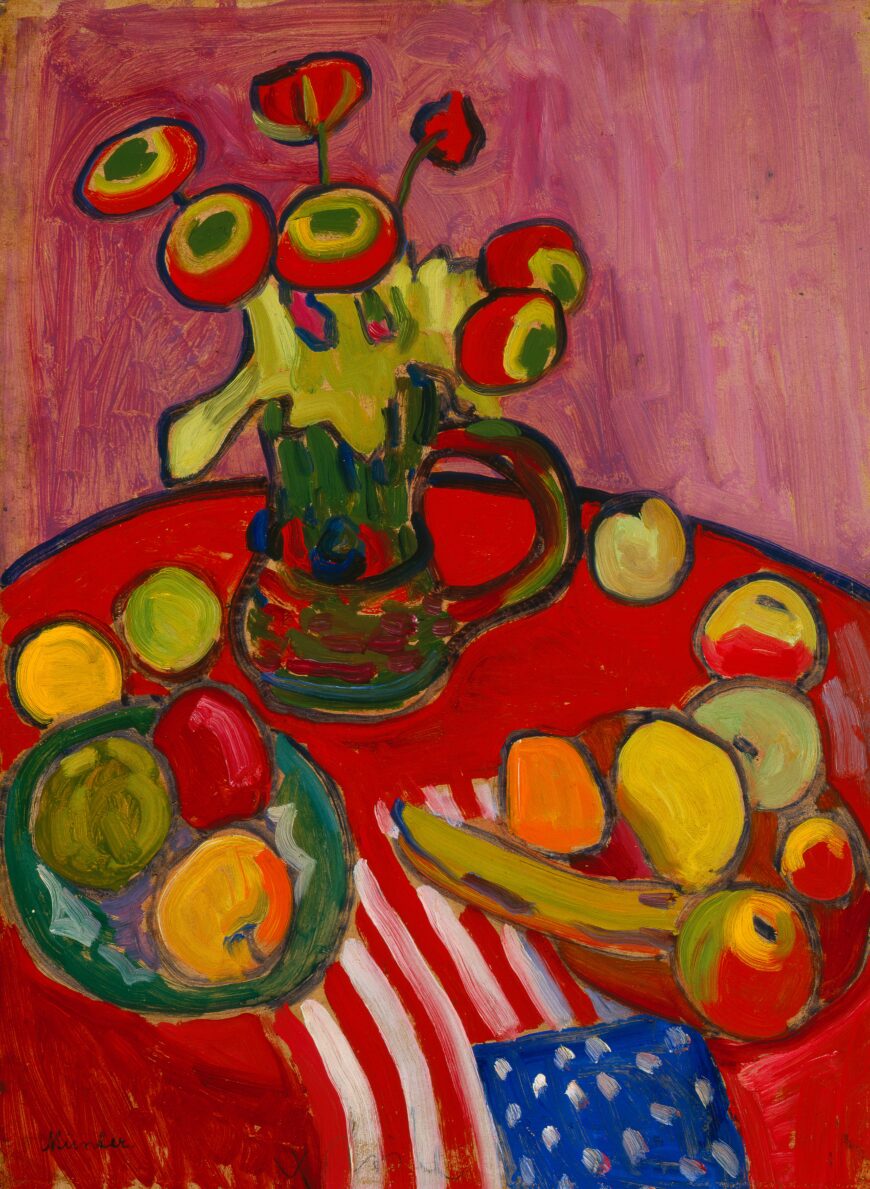
Gabriele Münter, Still Life, Red, 1909, © ARS.
“Her connection to everyday life made her radical in her time, when many artists were exploring fragmented planes and seeking abstraction as a synonym for modernity,” says Megan Fontanella, curator of the exhibition. “Münter was a true pioneer in her careful observation of the world around her.”
"Münter always rewards you for spending time with her paintings," Megan Fontanella


You may be
interested
...