Exhibitions
Equestrian Carousel: The Spirit That Turns
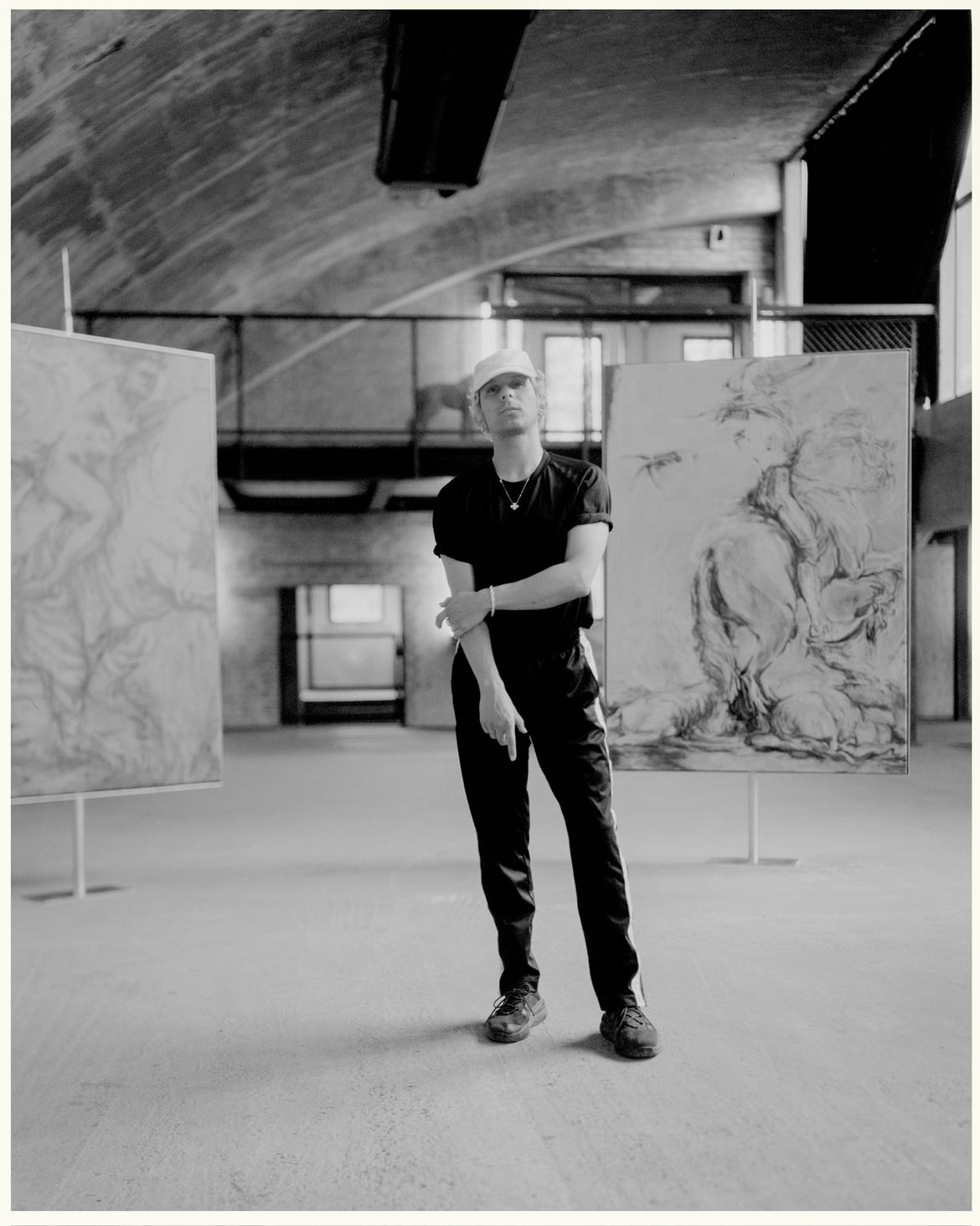
In Equestrian Carousel , Irving Ramó (Quito, 1989) transforms the ancient image of the hero on horseback into a spiritual mirror. The installation, presented as part of POLYPHONIC VIEWS during Berlin Art Week 2025, reveals what was once a symbol of power and dominion: the elevated figure, the body controlling another body. The narrative of the victor becomes an open cycle, a movement that invites us to reflect not on glory, but on consciousness.
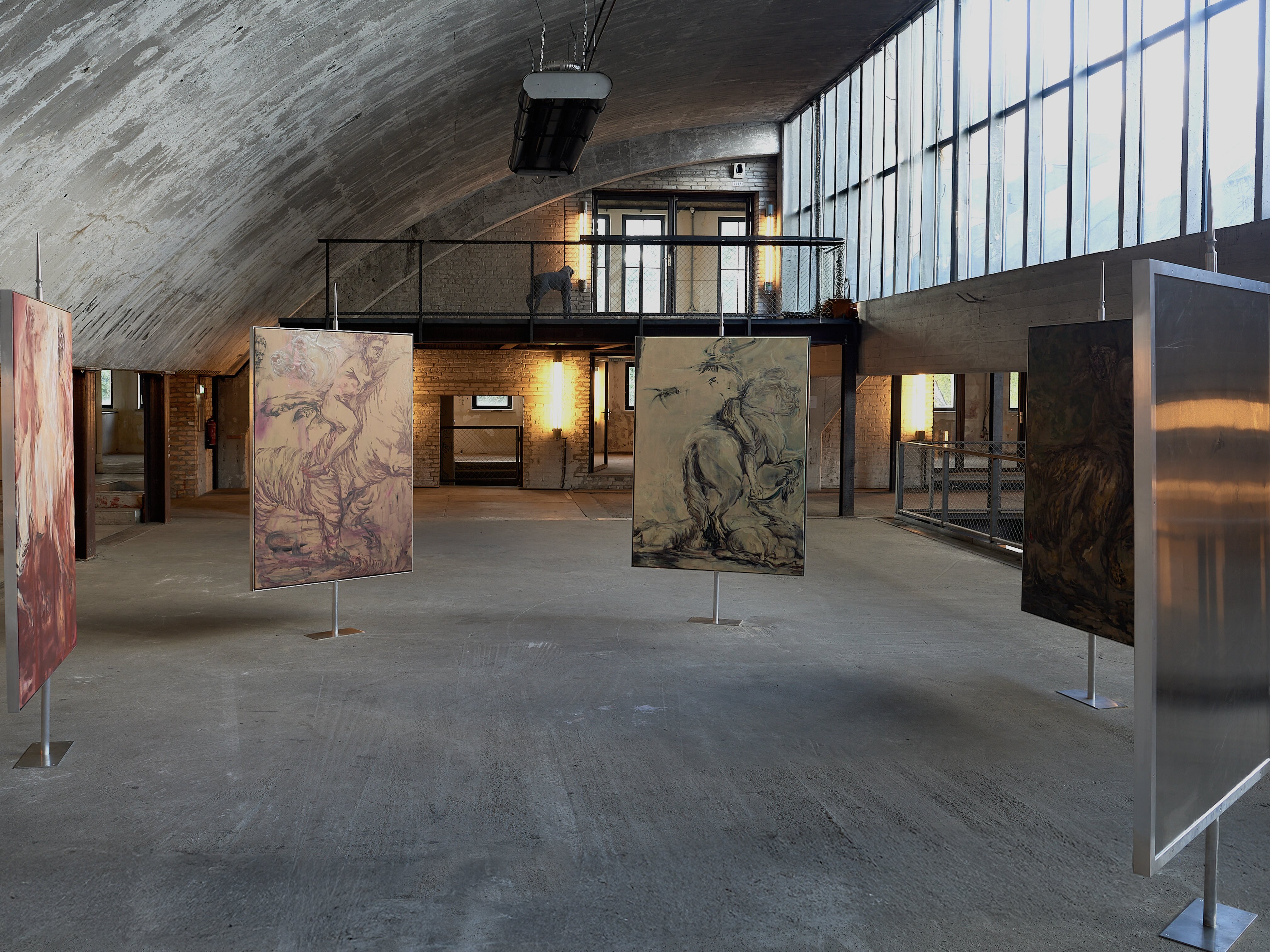
This new series, with its narrative chiaroscuro, stems from a long visual lineage: Rubens, Goya, Delacroix. All of them understood the tension between human and animal as a theater of force and destiny. Ramó takes up this tradition, but shifts it toward a more intimate territory. Instead of depicting triumph, he reveals doubt. Instead of the hero, he shows the being in process.
In the exhibition, each painting is a scene where something resists being fixed. Hybrid creatures, horses in suspense, tigers that seem more guardians than adversaries… everything vibrates as if about to become something else. The installation proposes a different reading of power: not as imposition, but as energy in transit.
The key is the carousel. That circle that once served to train warriors and later became a children's attraction. In Ramó's hands, the carousel becomes a spiritual metaphor: a wheel, the eternal return, reminding us that we return to the same points in life, to see them with new eyes. We don't spin to repeat; we spin to understand. Of the being who, by spinning again and again, lets go of the masks that held him up. Of the spirit that understands that true strength lies not in dominating, but in listening.
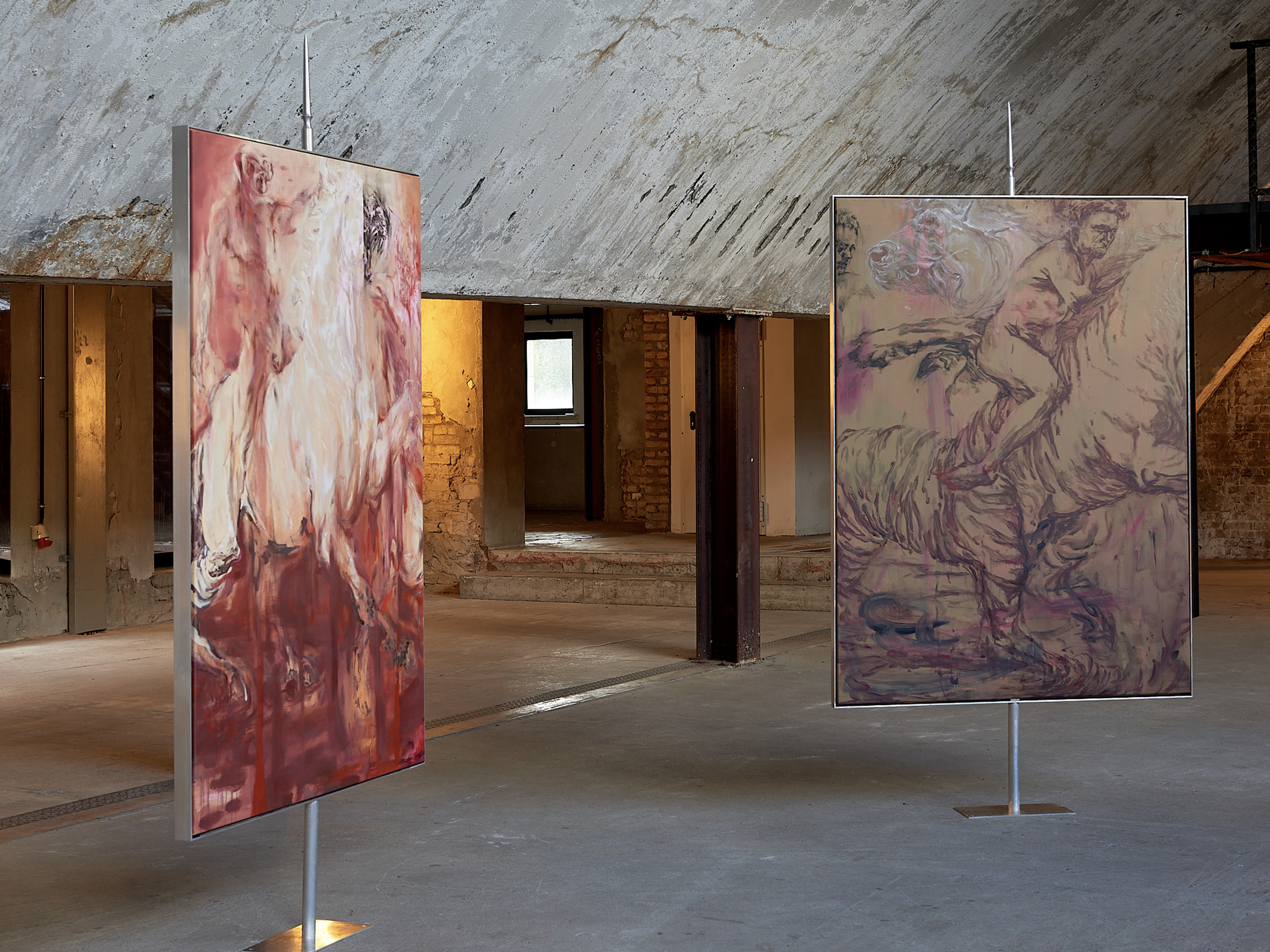
In these works, the hero's glory fades as the figure is repeated. The armor no longer protects, the posture loses its firmness, the gesture becomes humanized. The hero who seemed invincible reveals himself to be vulnerable. And it is precisely there that the spiritual emerges: in that crack where strength gives way to sensitivity.
The metal spears that accompany each painting function as symbolic anchors. Are they necessary? They are there, prompting questioning and self-reflection. They remind us that the history of heroism is marked by violence, conquest, and sacrifice. But the color, texture, and freedom of the lines soften these wounds and transform them into meditation. War becomes ritual; tragedy, understanding.
In Irving Ramó's visual universe, the vibrant color, quite unlike his earlier series, which were full of visual power and contemporary grounding, the (un)drawn anatomy, the scene that never quite closes, invites us to observe our own way of relating to what we try to control: our desires, our emotions, our fears. In his work, the animal is not the enemy, but the teacher.
Irving Ramó, drawing from his life and practice in Berlin, a city where memory and rebirth coexist, proposes a simple yet profound gesture: to look at tradition, dismantle it, and transform it into a space of awareness.

You may be
interested
...