Exhibitions
Of gestures and screens: Warhol and Pollock face off in an unprecedented exhibition
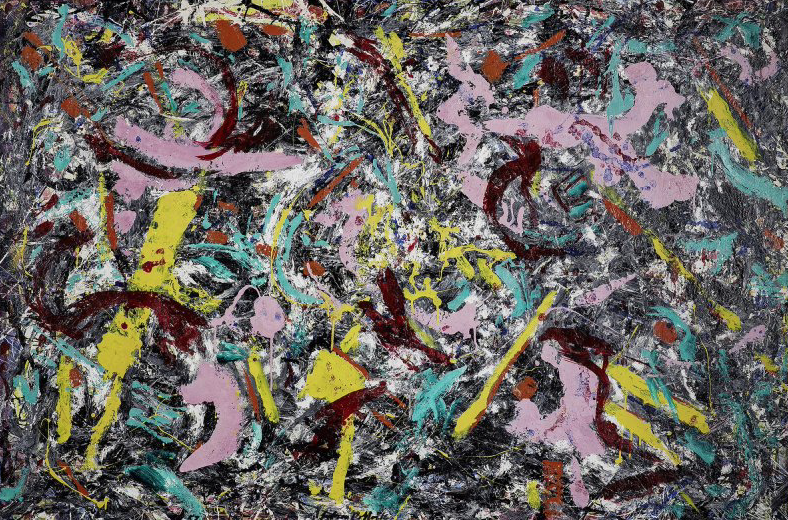
The work of Andy Warhol and Jackson Pollock constitutes a fundamental axis for understanding the radical transformations experienced by 20th-century art. Both artists, considered essential figures in the evolution of contemporary painting, introduced profound questions about new spatial strategies and the role of the image within the canvas. Although at first glance their artistic languages appear to be at opposite extremes—the gestural and expressive monumentality of Pollock versus the iconic and mechanical imagery of Warhol—a closer look reveals significant similarities.
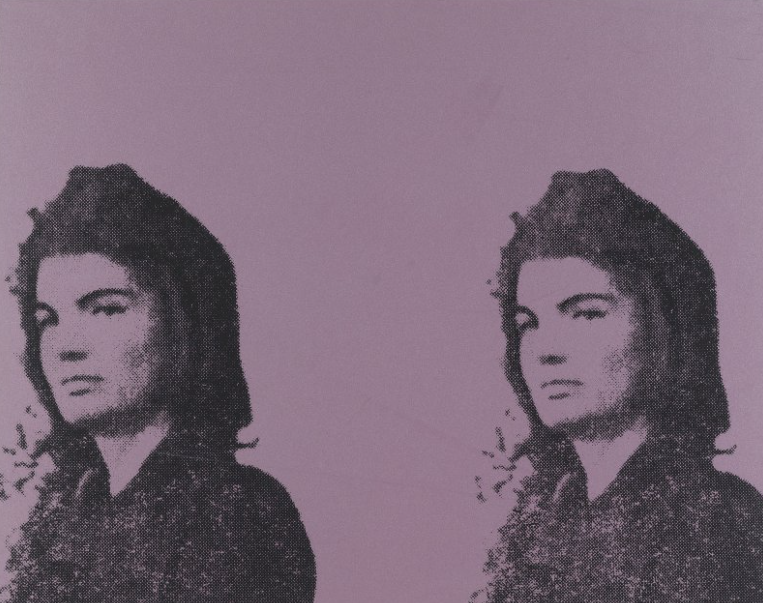
Andy Warhol, Jackie II, 1966, © Staatsgalerie Stuttgart, Graphische Sammlung, erworben 1968 Land Baden-Württemberg.
The Museo Nacional Thyssen-Bornemisza presents an ambitious exhibition from October 21 to January 25 that brings together the work of two essential figures in 20th-century art, Andy Warhol and Jackson Pollock, alongside that of other artists who, during the same historical period, faced similar challenges. The exhibition addresses the profound transformations that affected painting practice, highlighting how these artists rethought traditional spatial strategies and explored new ways of conceiving the painting. Through a diverse set of pieces, the museum invites us to revisit a crucial moment in the evolution of contemporary art, marked by the expansion of the physical, conceptual, and perceptual boundaries of painting.
Both Warhol and Pollock directly challenged the limits of pictorial tradition. Their works, which often employ large formats, expand the viewer's experience and redefine the physical relationship with the painted surface. They also share a sustained concern with the spatial dimension of painting, exploring alternative ways of conceiving the painting as a site of action, industrial production, or immersive experience.
The exhibition brings together an exceptional collection of more than one hundred works, many of which are being presented for the first time in Spain. These pieces come from around thirty leading cultural institutions in North America and Europe, providing a broad and rigorous international overview. The exhibition includes emblematic works by Warhol and Pollock, along with creations by other key artists such as Lee Krasner, Helen Frankenthaler, Marisol Escobar, Sol LeWitt, and Cy Twombly, whose contributions are essential to understanding the complexity of this artistic period.
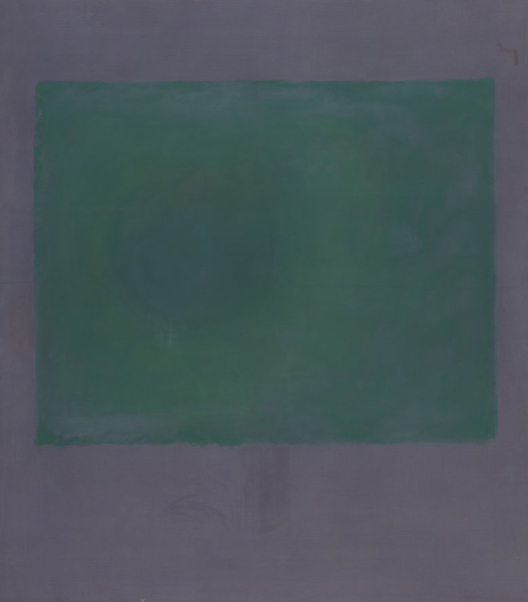
Mark Rothko, Untitled (Green on Purple), 1961, © Kate Rothko Prizel and Christopher Rothko, VEGAP, Madrid.
Highlights include Jackson Pollock's Brown and Silver I , Robert Rauschenberg's Express , and Mark Rothko's Untitled (Green on Purple) , all from the Thyssen collection. This selection, diverse in its approaches and formal strategies, underscores the richness of 20th-century artistic production and allows us to appreciate the diversity of languages that redefined the pictorial landscape in a context of profound aesthetic transformations.
Six spaces create the exhibition at the Museo Nacional Thyssen-Bornemisza in Madrid.
The exhibition Warhol, Pollock and Other American Spaces is divided into six sections on the ground floor of the museum, with a route that invites you to progressively explore the various transformations of pictorial space during the 20th century. The itinerary begins with the section entitled Space as Negotiation: Figure and Background , which brings together early works by Pollock and Krasner, along with early pieces by Warhol such as his iconic Two Coca-Cola Bottles . This first section highlights the constant tension between representation and abstraction.
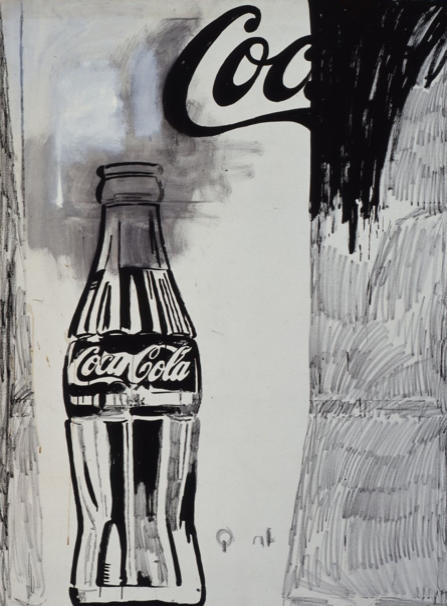
Andy Warhol, Coca-Cola [2], 1961, © The Andy Warhol Museum, Pittsburgh; Founding Collection, Contribution Dia Center for the Arts.
The second chapter, "Traces and Vestiges ," features works by Audrey Flack, Marisol Escobar, Anne Ryan, Perle Fine, and Robert Rauschenberg, as well as Warhol and Pollock. In these works, figuration begins to blur and become hidden, generating surfaces where the recognizable becomes a sign or residue.
The third room, entitled "The Background as Figure ," features some of Warhol's most celebrated works, such as "A Solo Elvis" (1964), in which the depicted motifs appear to hover over unstable, dissolving backgrounds. Also on display are photographic series and experimental works by Sol LeWitt, Cy Twombly, Hedda Sterne, Krasner, and Pollock, which examine the dynamic nature of the visual surface.
The fourth space, Repetitions and Fragments , focuses on the seriality and mechanical multiplication of motifs, a territory widely cultivated by Warhol in works such as Flowers (1964) or in his depictions of car accidents. The analysis of reiteration here becomes a critical tool for exploring mass culture.
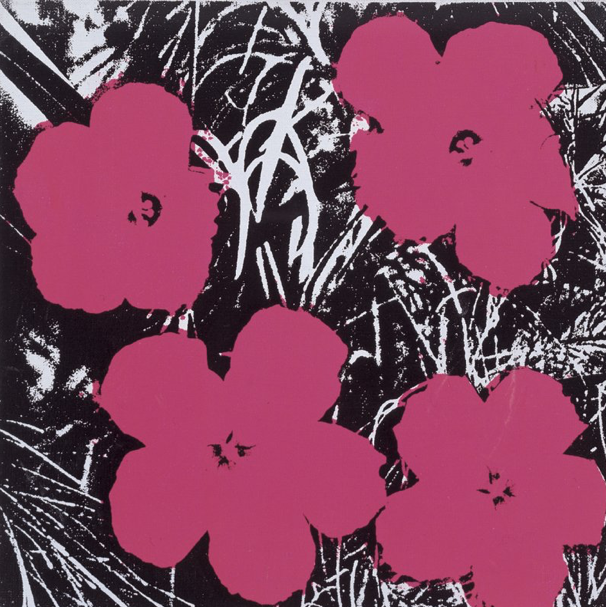
Andy Warhol, Flowers, 1964, © Sonnabend Homem Collection. Courtesy of the Sonnabend Homem Collection.
Next, Spaces Without Horizons brings together eight of Warhol's oxidized paintings, created through chemical processes using the artist's own bodily fluids. These pieces engage with Pollock's later work, alluding to the final dissolution of gesture and the complex relationship between control and chance.
The tour concludes with Space as Metaphysics , a chapter dedicated to Warhol's latest explorations, where the total disappearance of the figure gives way to an abstract and almost contemplative territory. This closing section underscores the radical evolution of the image throughout the exhibition and the way these artists redefined the experience of space in contemporary painting.

You may be
interested
...