
Exhibitions
William Kentridge unfolds his theater of memory and history in Brussels
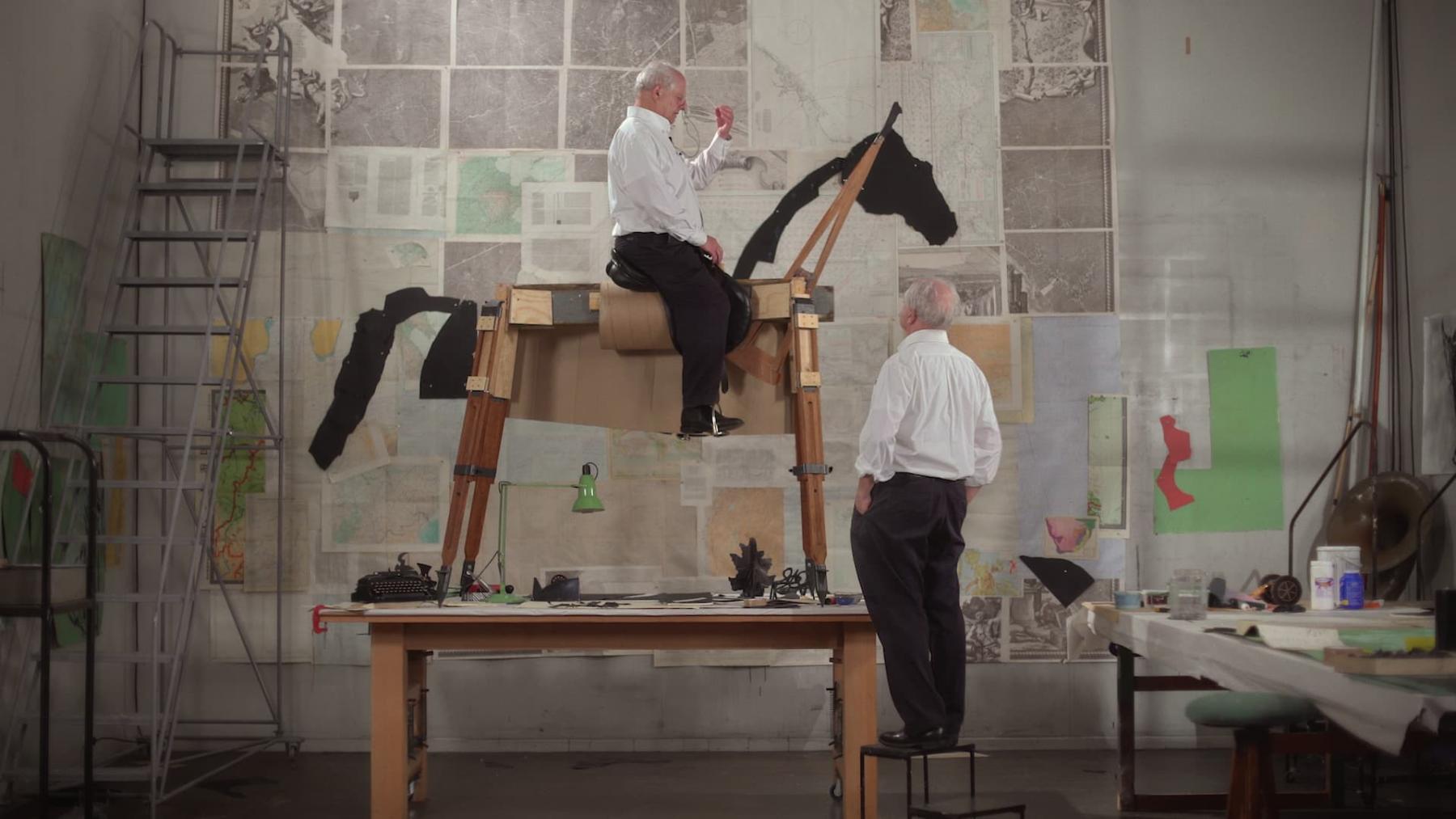
The work of William Kentridge is shaped by a deeply political consciousness, but also by a poetics that finds in drawing, movement, gesture, and theatricality ways to interrogate history. Born in South Africa, the artist began his career in a context marked by the struggle against apartheid, a reality that has left a lasting mark on his production and his way of addressing the tensions between memory, power, violence, and representation. His work does not merely document the conflicts of his time but subjects them to a visual and symbolic revision in which the absurd, the tragic, and the poetic coexist.
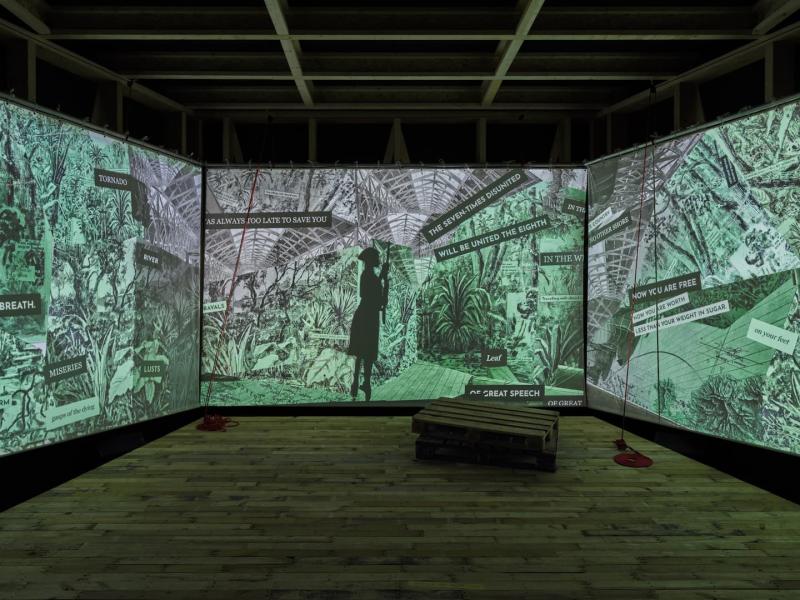
At Bozar, Brussels, I am not me, the horse is not mine offers a broad approach to his creative universe, from the earliest works of the 1980s to his most recent projects. Drawings, animated films, sculptures, prints, installations, and videos engage in a dialogue within a journey that allows an understanding of the breadth of an artistic practice that transcends disciplinary boundaries and finds in the theatrical and operatic stage another of its essential territories.
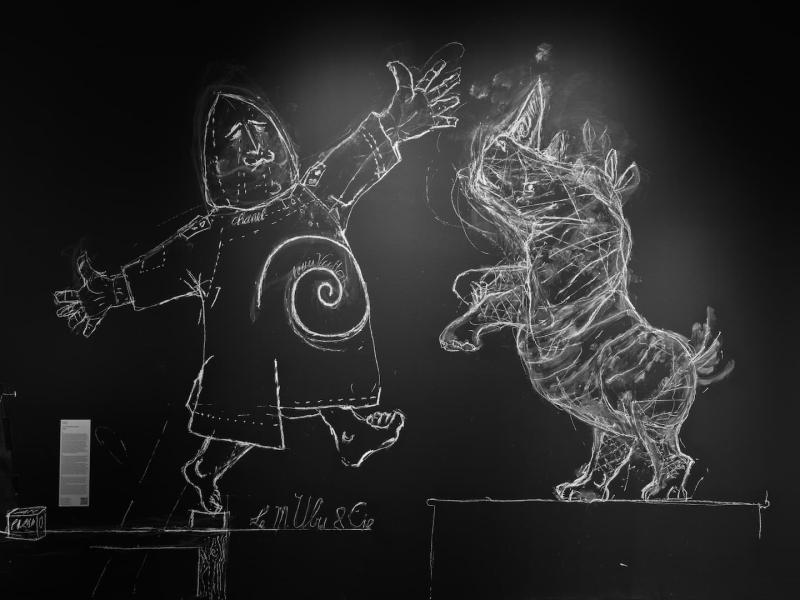
Kentridge builds images that do not seek to offer closed answers. His drawings, frequently subjected to processes of erasure, transformation, and reconstruction, function as a metaphor for the fragility of memory and the difficulty of fixing a definitive version of events. Charcoal, paper, and movement become tools to explore the instability of history, the persistence of traces, and the contradictions that traverse human experience. In his animations, the drawing never remains still: it changes, shifts, disappears, and reappears, revealing the provisional nature of every image.
The scenic dimension occupies a central place in the exhibition. The artist, who has also developed extensive work as a theatre and opera director, understands creation as an open, collaborative, and transversal process. Some of his major stage productions take prominence in the exhibition route, demonstrating how ideas, materials, and images transform when they come into contact with music, movement, dramaturgy, and performance. The stage does not constitute a parallel space to his visual work, but an extension of his artistic thinking.
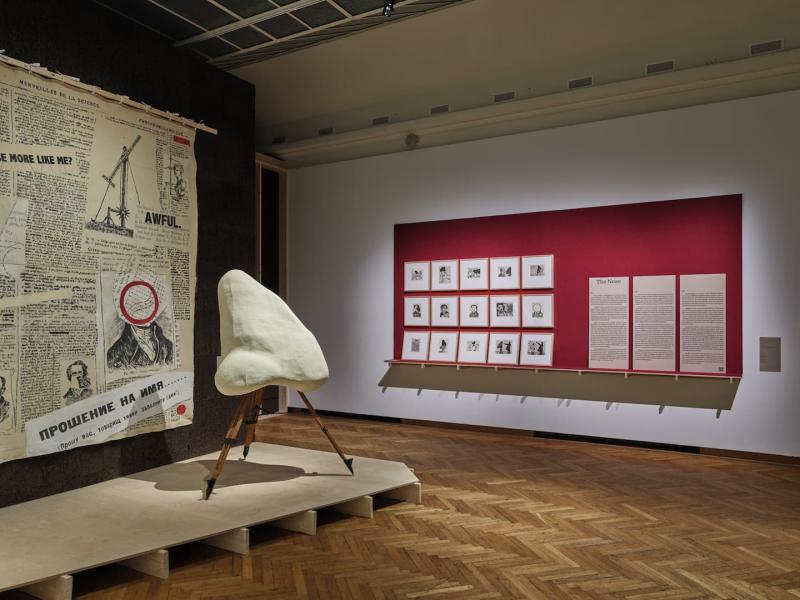
In this confluence of languages, Kentridge turns art into a space for political inquiry and historical revision, but also into a place where imagination can disrupt established structures. His view of South Africa, of colonial legacies, of inequalities, and of power mechanisms is not articulated through a linear narrative but through fragments, associations, displacements, and paradoxes. The theatricality of his works allows history to manifest as a complex experience, in which images do not illustrate discourse but rather question it.
Bozar’s proposal unfolds in one of its major exhibition spaces, where Kentridge presents interventions conceived specifically for the venue and accompanies the exhibition with a multidisciplinary program. The experience reinforces the expansive nature of his work and its capacity to build universes that engage the viewer on different levels of perception, reflection, and experience.
Kentridge’s relationship with Brussels and Bozar is not new. In the Belgian capital, he presented Faustus in Africa! in 1995, and held his first European solo exhibition at Bozar in 1998. That connection has continued through a practice that has found theatre and opera a privileged platform to extend his artistic investigations.


You may be
interested
...