
News
The Macaya glass collection debuts a new space at the Maricel Museum in Sitges
The Sitges Museums present a new location for a selection of the 400 objects collected by Alfons Macaya, one of the most important private glass collections in the country, with pieces that trace the history of this art from ancient Egypt to the modern era.
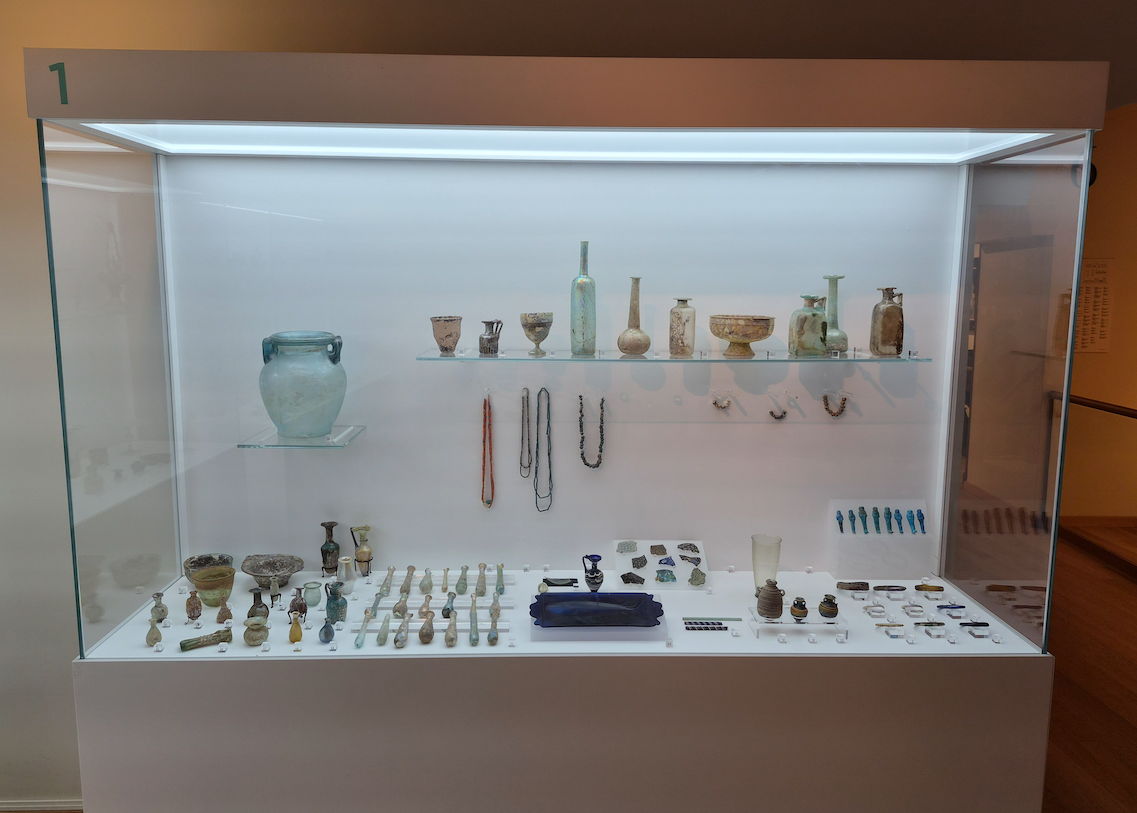
The Macaya glass collection begins a new exhibition phase at the Maricel Museum of Sitges. The Sitges Museums have moved the selection of objects that were previously displayed on the second floor of the building to the Deering Bedroom, located on the first floor, a change that allows for new visibility to one of the most notable private glass collections in the country, both for the quality of the pieces and for their historical, artistic, and geographical diversity.
The collection, deposited by the heirs of Alfons Macaya Sanmartí (Barcelona, 1880-1950), is made up of nearly 400 items spanning a wide chronological period, from ancient Egypt to the productions of the 18th and 19th centuries. The collection stands out for the uniqueness of some pieces, which find parallels only in reference institutions such as the National Archaeological Museum of Madrid.
A businessman and collector, Alfons Macaya developed an intense patronage activity and played a prominent role in the introduction and promotion of sports disciplines such as football, tennis, and golf in Catalonia. At the same time, he gathered throughout his life an important set of glass objects acquired in national and international markets, intending to build a narrative about the evolution of this material and its multiple artistic expressions.
The selection that can be visited at the Deering Bedroom allows the discovery of the richness of this heritage through pieces of very diverse origins, shapes, and techniques. Among the most outstanding items are Egyptian funerary figures, bracelets, and necklaces from antiquity, as well as unguentaria, amphorae, jugs, and cups from the Roman world, coming from different territories of the Mediterranean.
The tour also includes medieval Islamic glassware, with a special focus on Aleppo lanterns decorated with enamels and gilding, and a wide representation of Catalan, Venetian, and other European production centers from the 16th to the 18th centuries. Fruit bowls, porróns, pitchers, and albarellos exemplify the functional and ornamental diversity of a material that, over the centuries, has been able to combine utility, technical experimentation, and artistic sophistication.


You may be
interested
...