
Opinion
Sport as the altar of contemporaneity in Darío Escobar
There are objects that, despite their apparent banality, condense an extraordinary symbolic capacity. A ball, a skateboard, a baseball bat, or a bicycle wheel are part of a shared imaginary that transcends borders, generations, and cultures. Darío Escobar, a Guatemalan artist, finds precisely in that familiarity a fertile space to question the nature of objects, their cultural charge, and the mechanisms that elevate them from their utilitarian condition to an almost sacralized dimension. His work, also presented in the context of ARTBO a few months ago, allows an approach to a relationship between art and sport that is not limited to representation but operates from material and symbolic transformation.
Sport is much more than a physical activity or a spectacle. It has become one of the great systems of collective identification of contemporary times. Its iconographies, its heroes, its rituals, and its objects are part of a global visual culture, capable of generating attachments, fervors, and communities that sometimes approach faith structures. Escobar seems to detect in that dimension an opportunity to question how we build our beliefs, which objects we venerate, and how contemporary society produces new forms of worship.
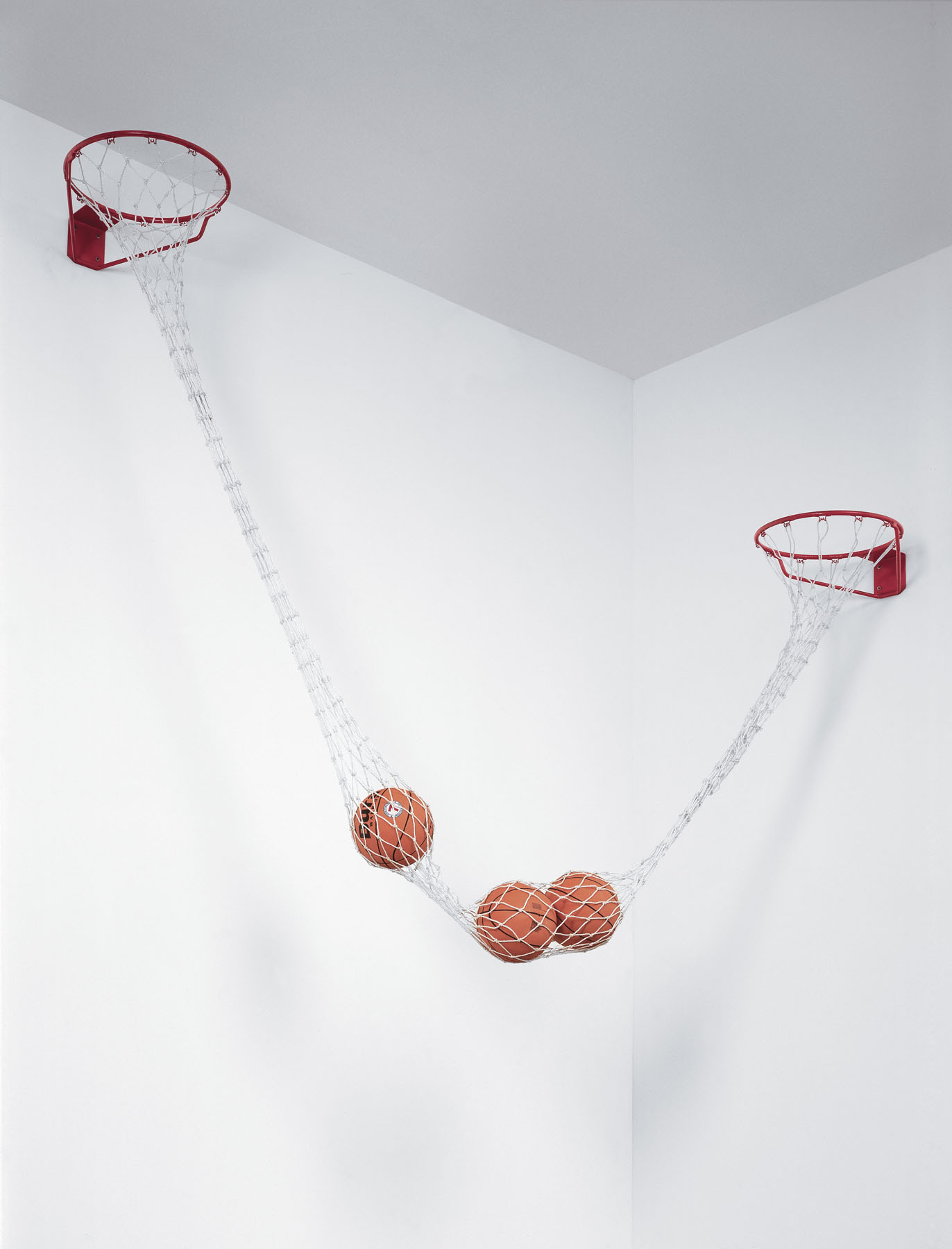
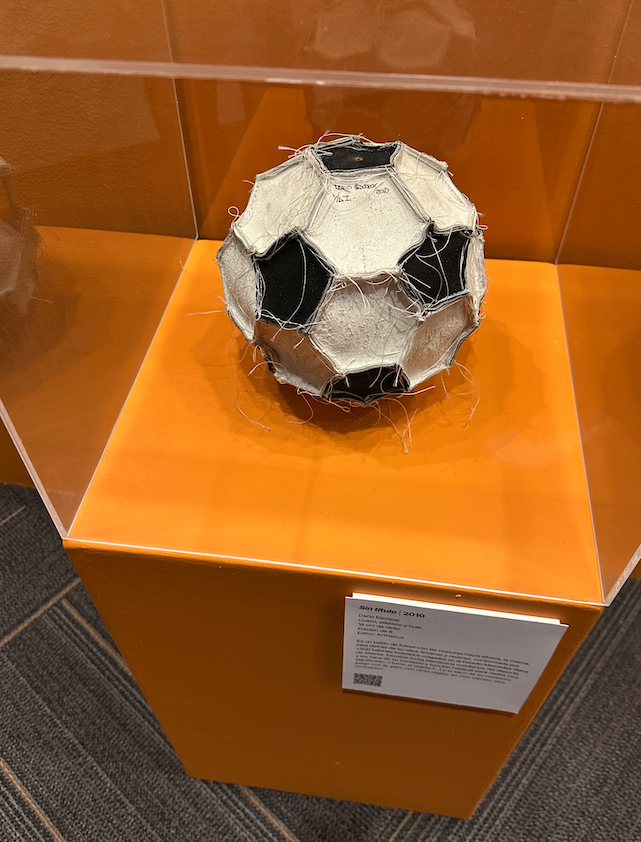
In his installations, the sports utensils cease to respond to their original functionality. The ball, the bat, or the board are no longer instruments intended for play, but elements subjected to a sculptural operation that alters their perception. Repetition, recomposition, surface treatment, and the incorporation of artisanal techniques turn the everyday into a material susceptible to contemplation. The artist does not seek only to decontextualize but to open a new reading on that which, precisely due to its familiarity, usually goes unnoticed.
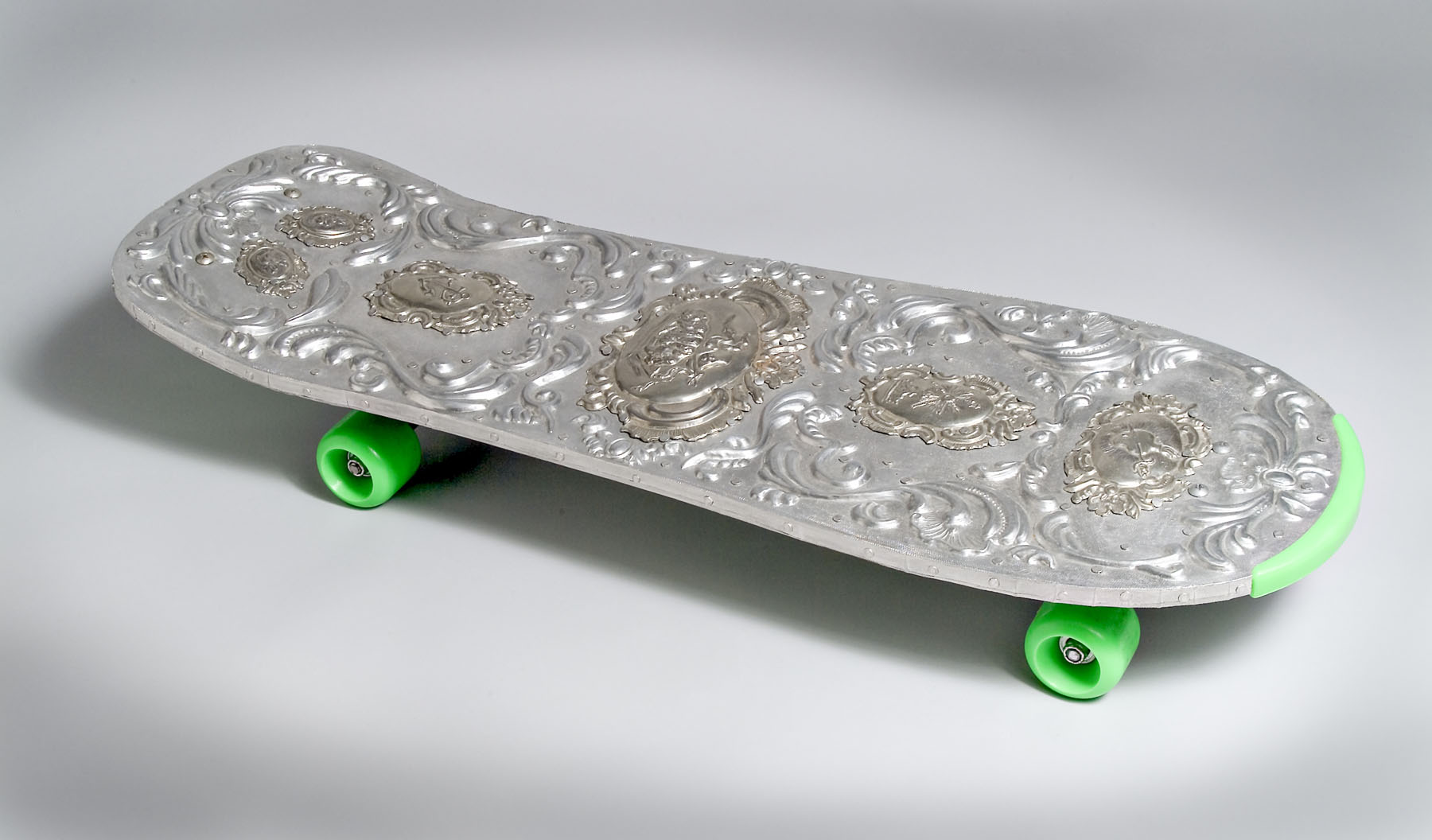
This operation establishes an unexpected dialogue between the industrial universe of sport and the artistic and religious traditions of Guatemala and Latin America. A skateboard covered in silver can evoke a reliquary, a piece of goldsmithery, or a fragment of a baroque altar. The elements of a bicycle, reorganized into sinuous structures, acquire mythological resonances that refer to pre-Columbian imaginaries. In that transition, the modern object does not oppose the historical legacy but comes into contact with it, generating a tension between temporalities, languages, and systems of representation.
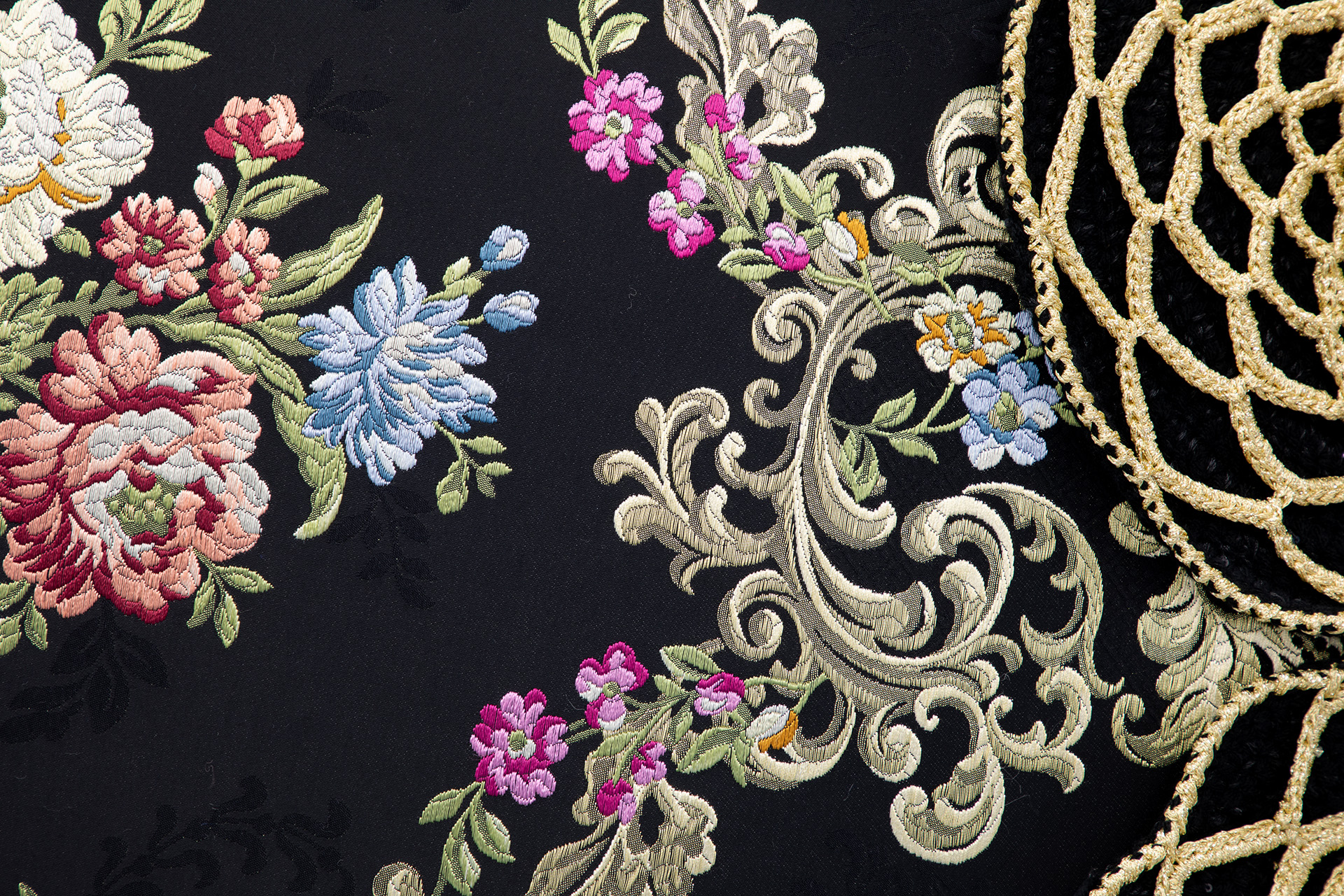
The baroque, with its ornamental exuberance, its capacity to construct images of power, and its will to visual seduction, constitutes a particularly significant reference in this process. Escobar recovers part of that aesthetic vocabulary but displaces it toward objects linked to industry, consumption, and sports culture. The result is not a simple historical citation but a confrontation between contemporary materiality and the forms of symbolic legitimation that have accompanied art and religion throughout the centuries.
The choice of sport is not casual either. Its global dimension has generated an iconography recognizable practically anywhere in the world. Sports objects circulate among markets, stadiums, streets, and screens, while athletes become reference figures and identification models. In that scenario, Escobar explores the possibility that the objects accompanying the game acquire a relic condition. Not because they have definitively lost their connection with sport, but because the emotional, social, and cultural charge surrounding them allows them to be perceived differently.
The work poses, in this sense, a reflection on society building its own altars. If historically religion has articulated objects, images, and rituals intended to support a community of believers, contemporary sport also generates forms of devotion, shared codes, and symbols functioning as meeting points. The jersey, the ball, or the shoe can become objects charged with memory, admiration, and identity. Escobar does not establish a literal equivalence between both universes but opens a space of analogies where the spiritual dimension, popular culture, and consumption meet.
His artistic practice thus situates itself in an ambiguous territory, between critique and fascination, between the manufactured object and sculptural intervention, between global culture and local traditions. The transformation of sports objects does not strip them of their history but amplifies it, making visible the layers of meaning that accumulate over them. In that operation, sport ceases to be a peripheral matter to become a cultural subject capable of dialoguing with the history of art, religion, anthropology, and aesthetics.

You may be
interested
...