
Exhibitions
Julian Charrière listens to the Earth's pulse in ‘Ring of Fire’
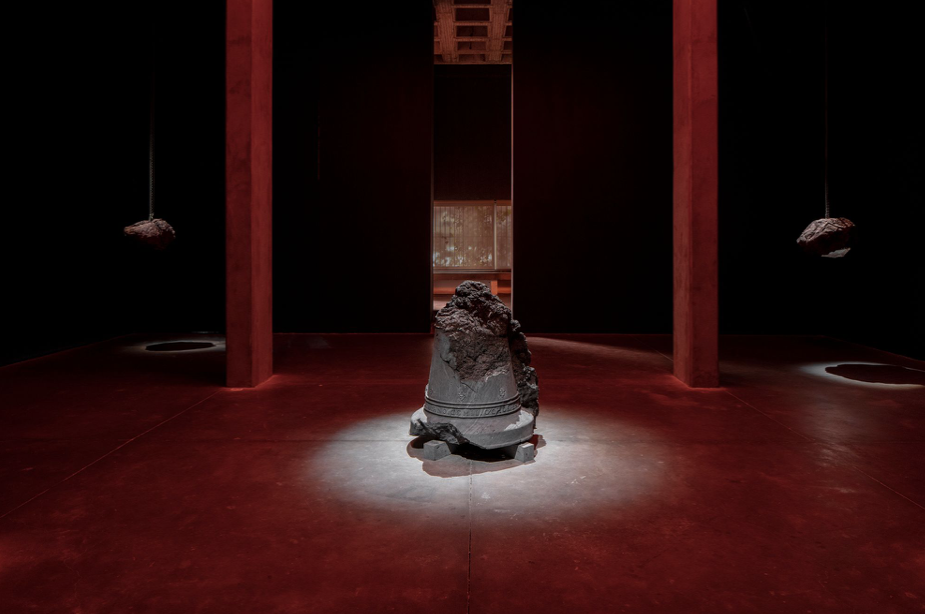
The volcano as a living presence, memory archive, and force capable of transforming the landscape is the starting point of Ring of Fire, Julian Charrière's first solo exhibition at OMR, Mexico City, which can be visited until December 12, 2026. The Franco-Swiss artist proposes an approach to mountains and volcanic phenomena that transcends their geological dimension to explore their ability to generate images, narratives, and ways of listening to the Earth.
The project recovers a story linked to the birth of the Paricutín volcano in Michoacán in 1943. According to legend, the violence of the eruption made the bell of the church of San Juan Parangaricutiro ring by itself. No one had pulled the rope: it was the mountain itself, emerging beneath the feet of the inhabitants, that caused the sound. This narrative becomes the symbolic core of the exhibition and a reflection on the encounter between human time and geological temporality.
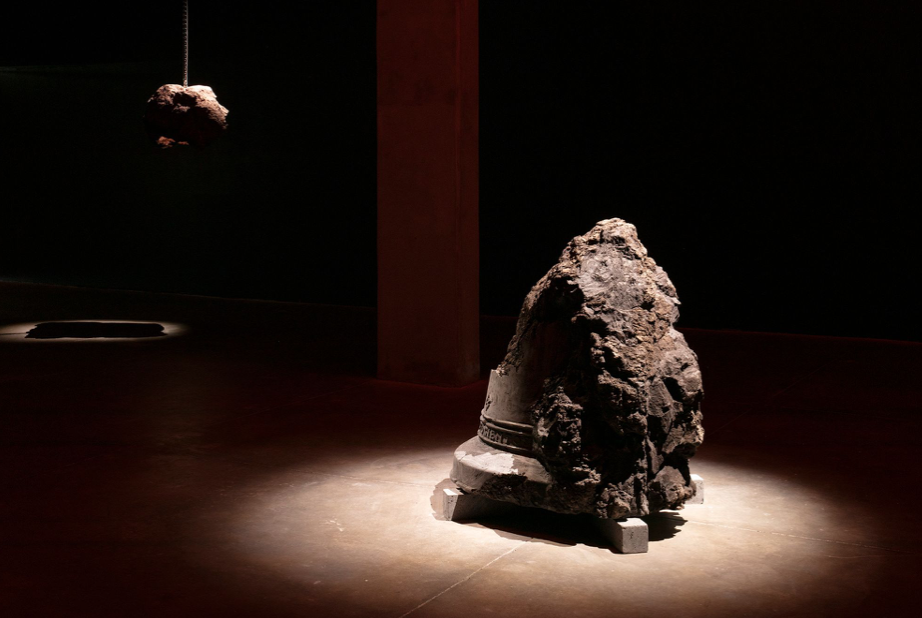
Based on the three-dimensional digitization of that bell, Charrière has reconstructed its shape by carving it from a single block of volcanic rock. In the piece Ring of Fire, which gives the exhibition its title, the object seems to partially emerge from the very igneous material that buried the town: between sculpture and relic, its presence evokes the resonance of a sound that seems never to end.
The exhibition brings together different approaches to volcanic activity, combining contemporary technologies, seismic records, photography, and materials such as basalt, ash, obsidian, and coal. In Dark Labyrinth, large blocks of tezontle suspended in space contain cavities where visitors can insert their heads to listen to seismic and geophonic data from Popocatépetl. The experience, developed in collaboration with volcanologist Sébastien Valade, transforms the body into an instrument for perceiving the internal movements of the mountain.
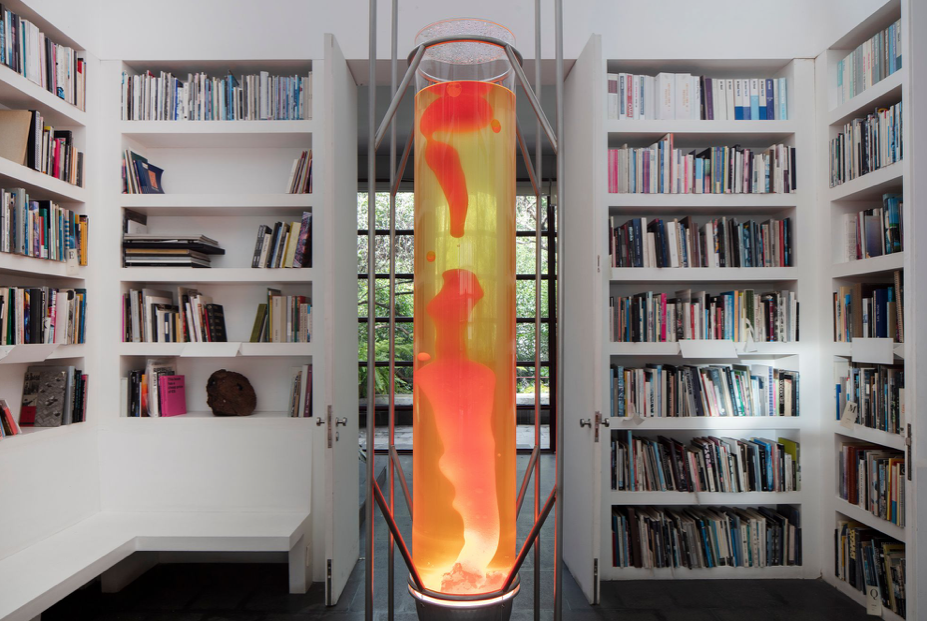
In After the Smoke Cradle | Popocatépetl, the artist incorporates ashes and lava collected during his ascent of the volcano, transformed into pigments to create images that he subsequently coats with obsidian dust. Thus, the mountain ceases to be merely the subject of a photographic representation and instead introduces its own matter into it.
The reflection on perception continues in Caldera, where a polished obsidian mirror appears integrated into a block of anthracite coal, accompanied by the flame of a small oil lamp. The work relates different geological and cultural temporalities while recovering the ancient use of obsidian as a surface for contemplation and the search for the unknown.
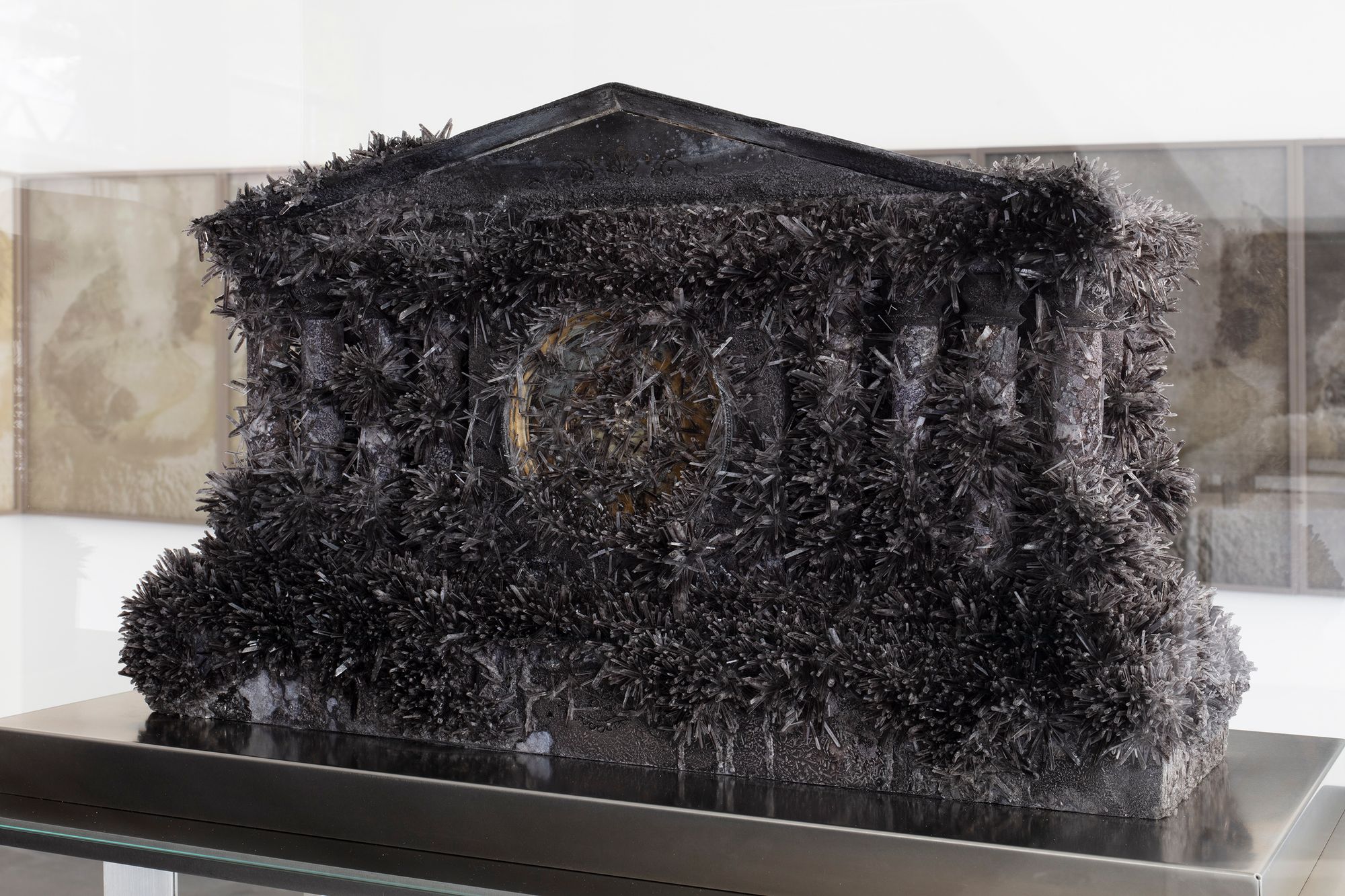
Meanwhile, Imperfect Lovers addresses the fragility of human time through 19th-century mechanical clocks whose mechanisms have stopped and have progressively become covered by mineral crystallizations. In dialogue with Untitled (Perfect Lovers) by Félix González-Torres, Charrière contrasts the regular measurement of modern time with geological processes that escape any human convention.
In Ring of Fire, bells, clocks, cameras, and sensors appear as instruments with which humanity attempts to understand, record, and order the world. However, the Earth retains its own temporality that overflows any system of measurement.


You may be
interested
...