
News
Turkey served in a platter for Thanksgiving
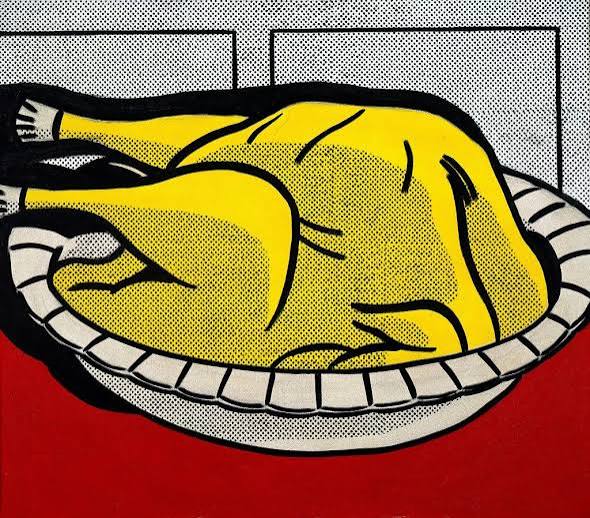
Every fourth Thursday of November, millions of households repeat an almost identical choreography: the oven turned on early, the parade of giant balloons in Manhattan, the background NFL football games, and, at the center of the table, a majestic piece that sums up an entire collective imagery. In that everyday scene — as warm as it is predictable — Roy Lichtenstein’s Turkey fits perfectly, a work that transforms a festive dish into a graphic emblem of industrial modernity.
Far from the traditional still life, where the brush seeks the shine of the fat, the crispy texture of the skin, or the intimate chiaroscuro of the dining room, Lichtenstein reduces the roasted bird to bold black contours, intense yellow planes, and Ben-Day dot patterns that refer to commercial printing and comics. The turkey ceases to be just food or a symbol of family abundance to become a reproduced image, almost in series, as recognizable as a logo.
Much of the magnetism of Thanksgiving in contemporary popular culture resides there. What began as a harvest and gratitude celebration has consolidated throughout the 20th and 21st centuries through a powerful media machine: discount catalogs, television broadcasts, viral recipes, and domestic scenes repeated year after year. It is a festivity that oscillates between the intimate and the spectacular, between reunion around the table and shared spectacle from a distance.
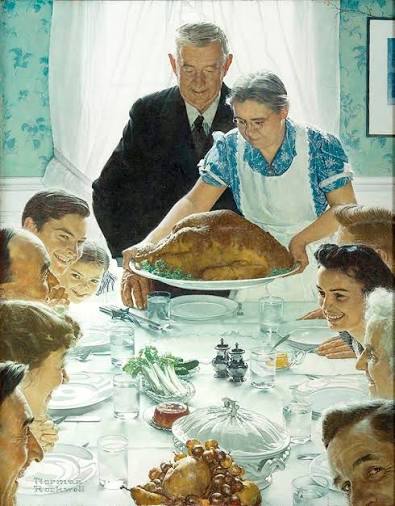
It is no coincidence that the art world has looked again and again towards this date as a cultural thermometer. From Norman Rockwell’s famous Freedom from Want, which fixed the idealized image of the American family gathered around the white tablecloth, to the covers of The New Yorker, and to the most ironic or critical reinterpretations by contemporary artists who question the official narrative, consumption, or identity, Thanksgiving functions as a living canvas where each era projects its own myths. Thus, among museums, screens, and after-dinner conversations, the ritual of the fourth Thursday in November shows that few traditions manage to condense so well the tension between the intimate and the collective.
You may be
interested
...