
Exhibitions
Loop Fair 2026 brings together 35 international artists around moving images
The fair focuses on new productions and international premieres, with a selection that spans more than five decades of audiovisual creation and addresses political, social, ecological, and technological issues.
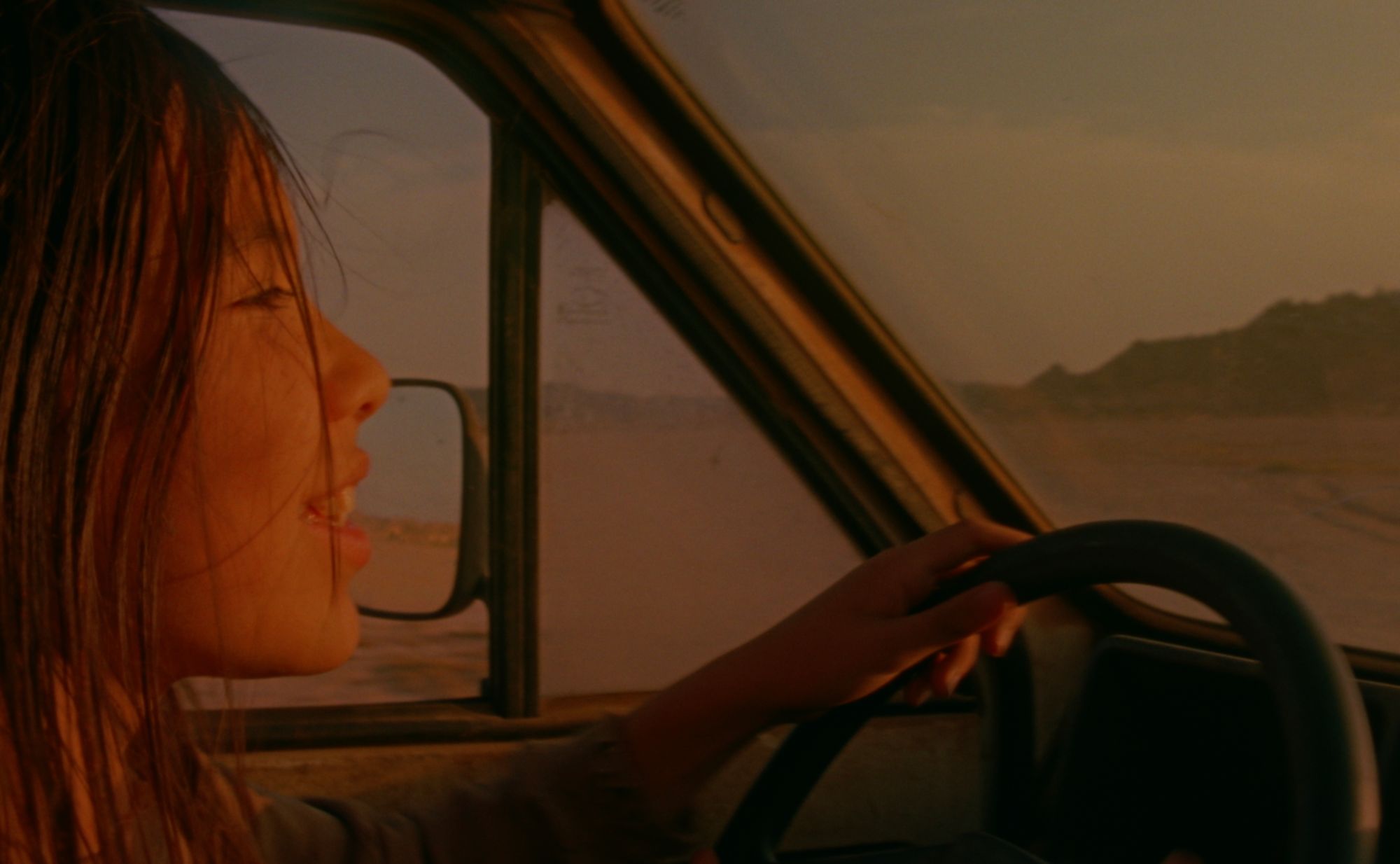
Loop Fair 2026 will bring together 35 artists and artistic collectives represented by their galleries, coming from Europe, America, and Asia, with notable participation from countries such as Argentina, Brazil, and Canada. The new edition consolidates the fair's international vocation and its commitment to moving image as a territory of artistic experimentation, conceptual research, and critical reflection.
Among the notable names present are Theo Eshetu, represented by Galerie Barbara Thumm, and Éric Baudelaire, from Barbara Wien, both selected for In Minor Keys, the international exhibition of the 61st Venice Biennale. The program will also include a work by Ceal Floyer (1968-2025), presented by Esther Schipper, in tribute to an artist who developed a conceptual practice based on the economy of means and the ability to question mechanisms of perception. Through projections, videos, and everyday objects, Floyer placed the act of looking at the center of her artistic investigation.
One of the pillars of the edition will be the presentation of new productions and international premieres. Included in this scope are The Center Cannot Hold (2026), by Karlos Gil, presented by Galeria Francisco Fino; Shape of Wind and Fire (2026), by Jaehun Park, from Bradwolff & Partners; Famous Mouse & Joan of Arc (2026), by Igor Simić, from Galerie Anita Beckers; and Home Movies (2026), by Simona Žemaitė, represented by Meno Parkas Gallery. This set evidences the fair’s intention to offer a platform for recent projects and new lines of audiovisual research.
The selection traces a path of more than five decades of practices linked to the moving image and proposes a transversal reading of the concerns that cross contemporary creation. Political conflicts, colonial inheritances, collective memory, ecological crises, identity, and the impact of emerging technologies structure a program that also highlights the plurality of languages of the medium. From analog cinema to experimental documentary, through animation and computer-generated images, with a growing presence of artificial intelligence, the works propose different ways of interrogating reality and its representations.
This breadth of registers is especially visible in the confrontation between works of very different natures and temporalities. Canciones napolitanas (1971), by Narcisa Hirsch, presented by Rolf Art, recovers a fundamental piece of the history of experimental cinema, recently digitized from the original 16 mm film. In contrast, Waves 2.0: Terra, by Memo Akten, presented by DAM Projects, delves into the expressive possibilities of artificial intelligence and computational simulation. Between these two extremes, Workweek (2024), by Casper Braat, represented by TORCH Gallery, takes the cinematic experience to an exceptional length of forty hours, during which it documents the transformation of one cubic meter of marble into one cubic centimeter.
The political and historical dimension also occupies a relevant place in the program. The works of Igor Grubić, Prateek Vijan, and Meryl McMaster revisit colonial narratives, political histories, museum collections, and personal memories to question the processes of construction, preservation, and transmission of memory. In this way, Loop Fair expands the field of moving image beyond its formal and technological dimension, claiming its capacity to generate discourse and activate new readings of the past and present.
The configuration of the program falls to an independent committee of collectors made up of Jean-Conrad and Isabelle Lemaître, Josée and Marc Gensollen, and Haro Cumbusyan. This year, Mario von Kelterborn joins, linked to the Kelterborn Collection of Frankfurt, a collection that includes outstanding moving image works by artists such as Harun Farocki, Hito Steyerl, Gary Hill, and Richard Mosse.
With this selection of 35 artists and collectives, Loop Fair 2026 sketches an international panorama of contemporary audiovisual creation where the recovery of historical pieces, new productions, and research into digital languages coexist. An overview that situates the moving image as a privileged space to think about the cultural, political, and technological transformations of our time.


You may be
interested
...