Exhibitions
Dr. Atl and the Cosmic Energy of the Landscape as an Expression of Matter
The National Museum of Art of Mexico reviews the artistic, scientific, and philosophical dimension of Gerardo Murillo through an exhibition that explores his connections between nature, modernity, and the universe.
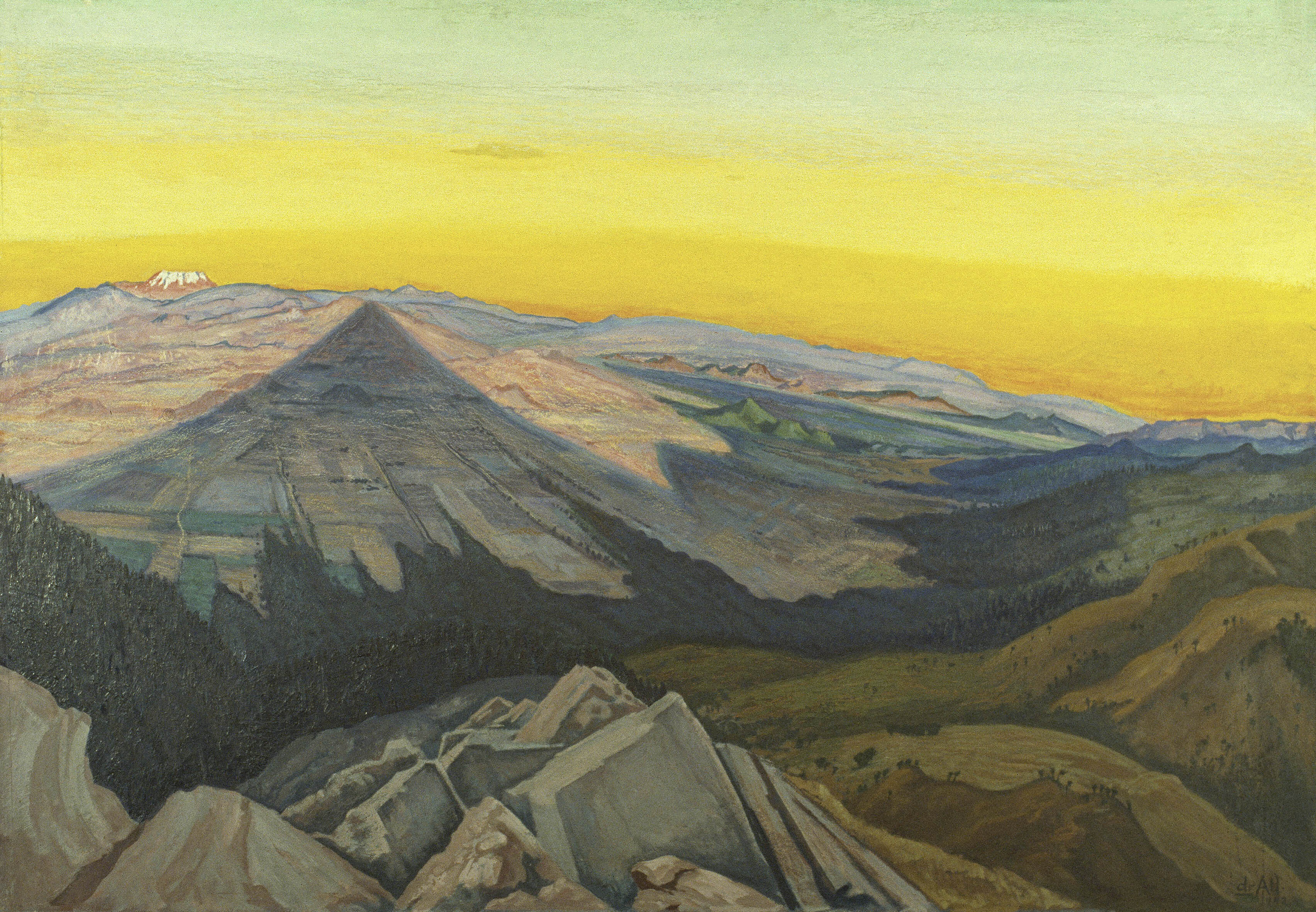
The figure of Gerardo Murillo, known as Dr. Atl (Guadalajara, 1875-Mexico City, 1964), escapes any conventional classification. Draughtsman, painter, art critic, writer, curator, mountaineer, volcanologist, astronomer, editor, politician, and traveler, he was a creator of multiple interests whose career overflowed the boundaries of artistic practice. His intellectual curiosity and willingness to experiment with different disciplines made him one of the most unique personalities of Mexican cultural modernity. The National Museum of Art of Mexico recovers this complexity in the exhibition Dr. Atl. Cosmic Energy of Matter, open from November 4, 2026, to May 30, 2027, a proposal that offers a transversal reading of his production and the ideas that articulated his thought.
The exhibition starts from a fundamental premise: the landscapes that have granted the artist international recognition are not only representations of nature, but visual constructions of a cosmic conception in which matter and energy are part of the same principle. In his paintings, mountains, volcanoes, skies, and geological formations cease to be passive settings to acquire a dynamic, almost organic dimension. Nature manifests as a force in permanent transformation, and the landscape becomes a territory where the physical, spiritual, and universal dimensions of existence converge.
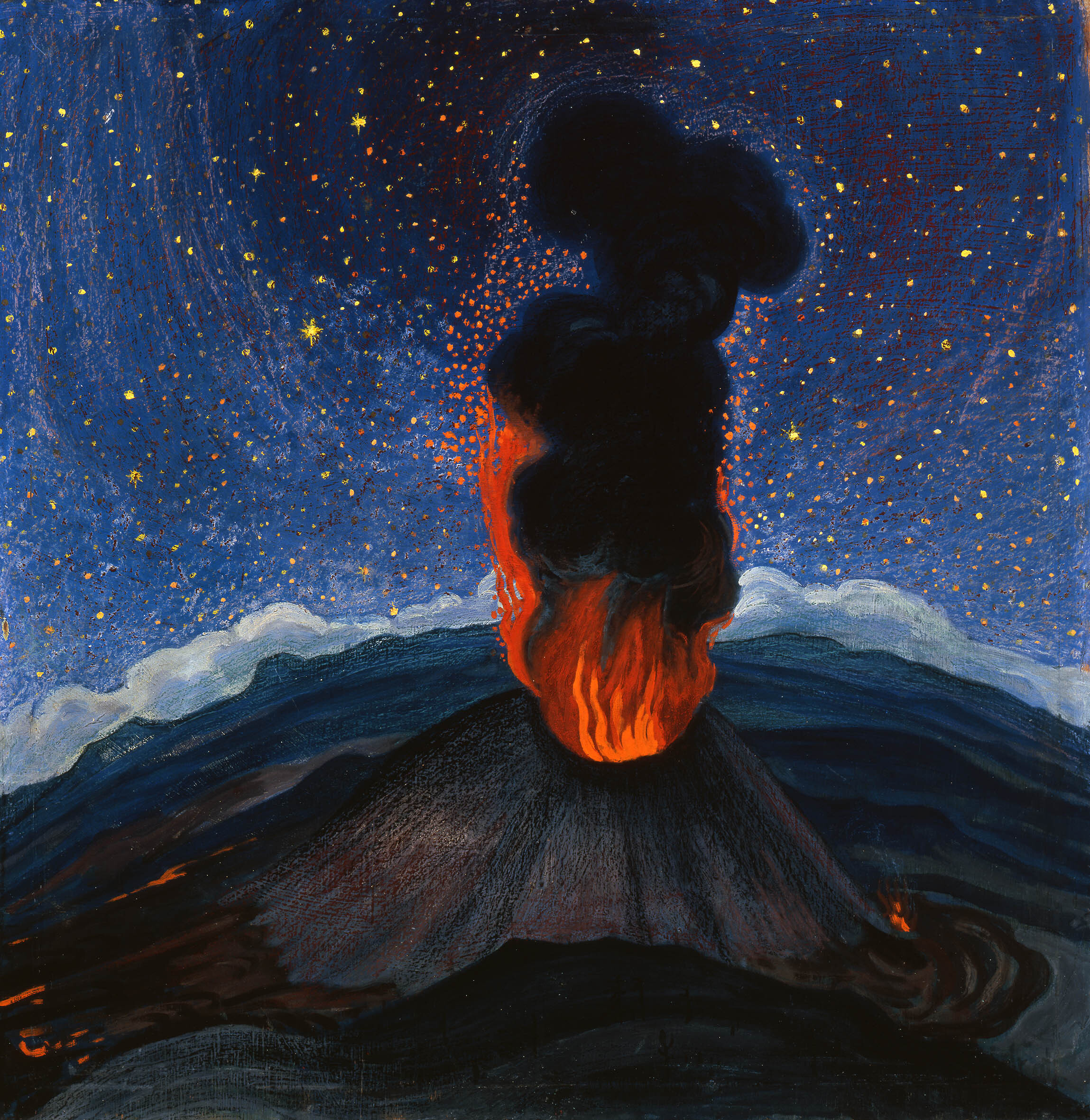
Starry Night.
This interpretation allows an approach to Dr. Atl’s work from a perspective that transcends the landscape genre. His pictorial surfaces, impastos, textures, and traces of tools reveal an investigation that assigns as much importance to the creative process as to the final image. The experimentation with materials and techniques is not only a formal will but a search for a language capable of expressing the energy contained in matter. In this sense, painting becomes an extension of the artist’s physical experience before the natural world.
One of the most suggestive aspects of his production lies precisely in the frequent absence of human figures. Although the individual scarcely appears represented, their presence remains implicit in the point of view from which the landscape is observed. Each composition seems to place the viewer in the artist’s own vantage point, facing a nature that imposes its scale and power. The human gaze does not completely dominate the territory but confronts a reality that exceeds its dimensions and invites interrogation of the universe’s mysteries.
For Dr. Atl, walking through the mountains and climbing volcanoes was much more than an exploration activity. It was an initiatory experience, an exercise of knowledge and personal transformation that he subsequently transferred to the plastic language. The direct observation of geological and atmospheric phenomena nourished a conception of landscape in which physical experience, scientific investigation, and artistic intuition were inseparable. The exhibition captures this experiential dimension and offers the visitor a journey that evokes an ascent: a walk towards the heights from which to contemplate the abyss and discover nature as an ungraspable force.
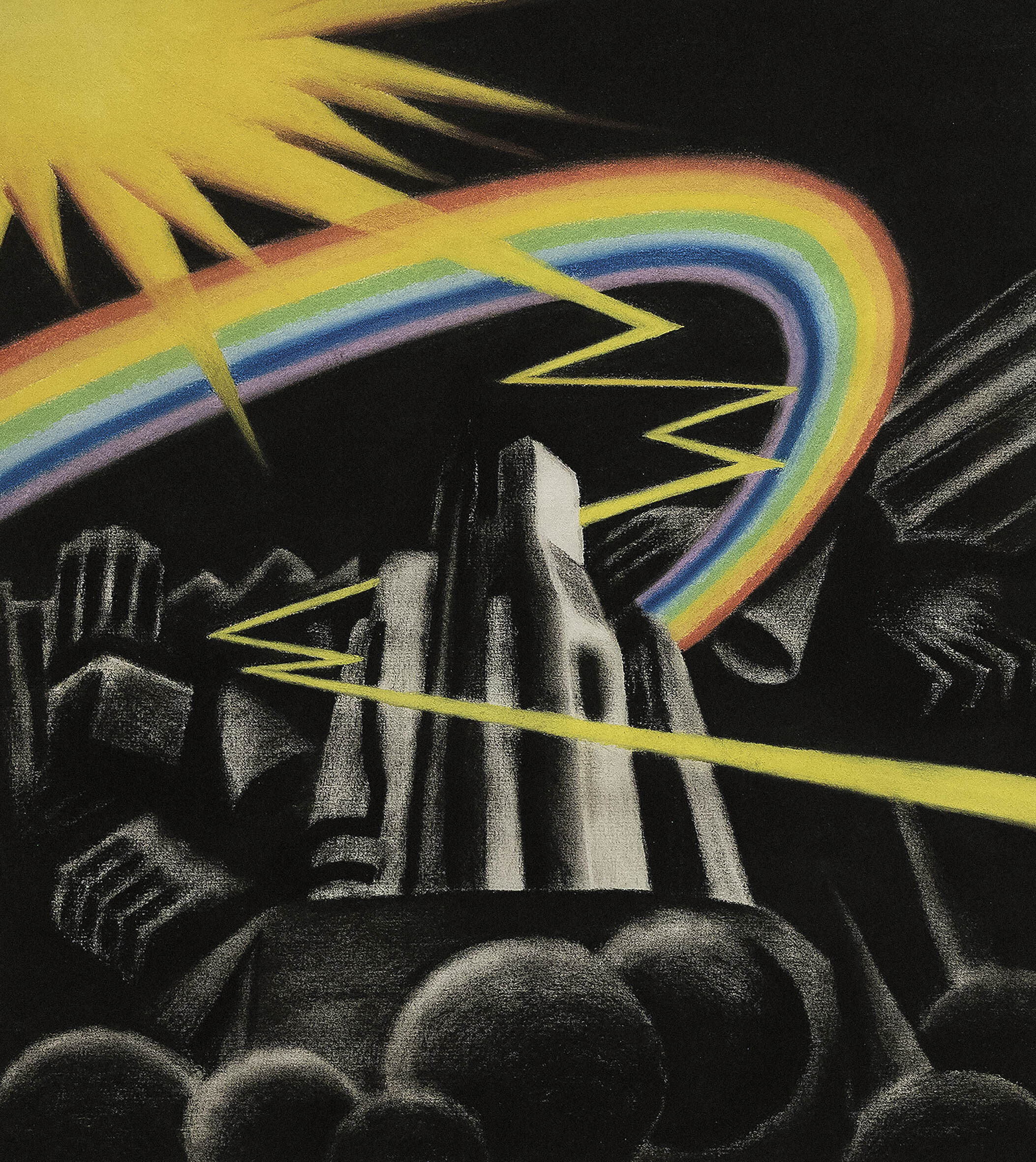
Constructivist Drawing.
The exhibition project also broadens the usual interpretation of Dr. Atl, often focused on his condition as a painter of volcanoes and landscapes. Through paintings, drawings, photographs, documents, books, and magazines, the show establishes connections between his literary, editorial, and plastic projects, revealing the coherence of a career marked by transversality. This perspective allows understanding that his artistic production cannot be separated from his volcanological investigations, his travels throughout Mexican territory, nor his participation in the cultural debates of his time.
The relationship with modernism constitutes one of the three main axes of the exhibition. His career is situated at a moment of profound aesthetic transformations, in which the search for new artistic languages coincided with a revision of Mexican cultural identity. Dr. Atl actively participated in this context, although his uniqueness lies in having articulated a modern sensitivity that did not renounce the symbolic and spiritual dimension of nature. His approach to landscape distances itself both from academic description and from a merely picturesque vision of the territory: nature appears as a living reality, subjected to geological and cosmic forces that painting attempts to make visible.
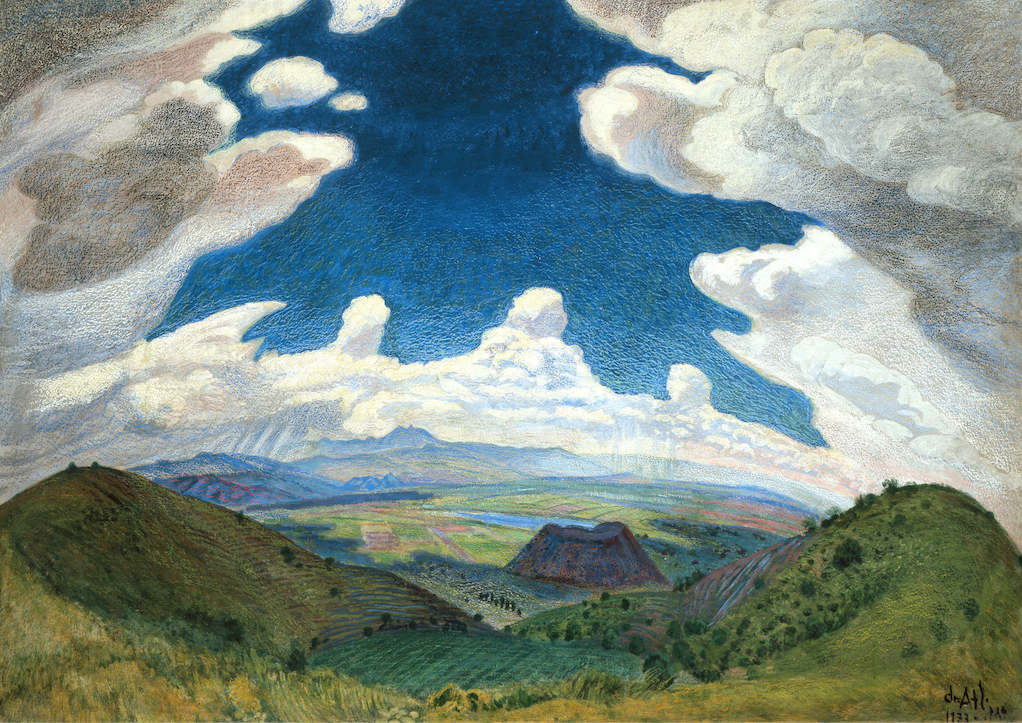
Clouds over the Valley of Mexico.
The second axis examines the technologies and procedures he used in his artistic production. Material investigation was a constant in his practice, with a will to expand the expressive possibilities of painting and find surfaces capable of transmitting the intensity of natural phenomena. From this perspective, matter is not a simple support for representation but an active component of visual language. Textures and reliefs acquire an almost geological presence, establishing a parallel between the natural formation processes and the mechanisms of image construction.
The third area proposes understanding the landscape as cosmos. It is probably the most ambitious dimension of his artistic thought because it shifts the gaze from representing a specific place to a universal conception of matter and its transformations. Volcanoes, in particular, condense this tension between creation and destruction, stability and movement, surface and depth. In them, Dr. Atl found a privileged expression of the forces that shape the world.

You may be
interested
...