News
Rudi Fuchs, the curator who transformed the view of the contemporary museum, has died.
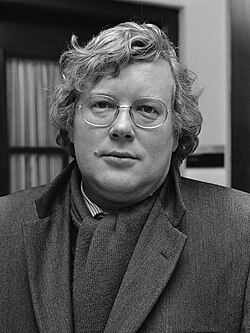
Rudi Fuchs, one of the Netherlands' most influential art historians and curators, died in Amsterdam on October 25 at the age of 84. Director of some of Europe's leading art institutions, his career was marked by a renewed vision of the museum and exhibition practice, based on the dialogue between works from different periods, styles, and origins.
Born in Eindhoven on April 28, 1942, Rudolf 'Rudi' Fuchs studied Art History at Leiden University between 1967 and 1975, while also developing an active career as a critic and essayist. In 1975, at just 32 years old, he was appointed director of the Van Abbemuseum in Eindhoven, becoming the youngest person to hold that position. From this post, he began to define an acquisitions policy that diverged from the dominant trends in European museums, which at the time were primarily focused on contemporary American art.
Fuchs championed a stronger presence of European art, with particular attention to the art scenes of Germany, Austria, and Italy. This approach helped shape a collection that reflected a broader and more diverse vision of contemporary art, while simultaneously solidifying his role as a pivotal figure in the transformation of museum institutions.
His vision of the museum found one of its most characteristic expressions in the arrangement of works from different periods and artistic languages within the same space. This methodology, innovative during the 1970s, aroused reservations among more traditional sectors. For Fuchs, however, the encounter between seemingly disparate works represented an opportunity to generate new interpretations and experiences.
"For me, the combination was powerful and exciting. That's why I did it: so that both I and the public could see things from a new perspective," he explained years later, summarizing a curatorial philosophy that understood the exhibition as an open space for discovery and thought.
Throughout his career, Fuchs directed three major museum institutions and served as artistic director of Documenta 7, held in Kassel in 1982, an edition that helped solidify his international recognition. His work championed the idea of the museum as a meeting place for sensibilities, generations, and artistic contexts, challenging established hierarchies and expanding the possibilities for interpreting artworks.

You may be
interested
...