News
The art that disappeared with the Twin Towers
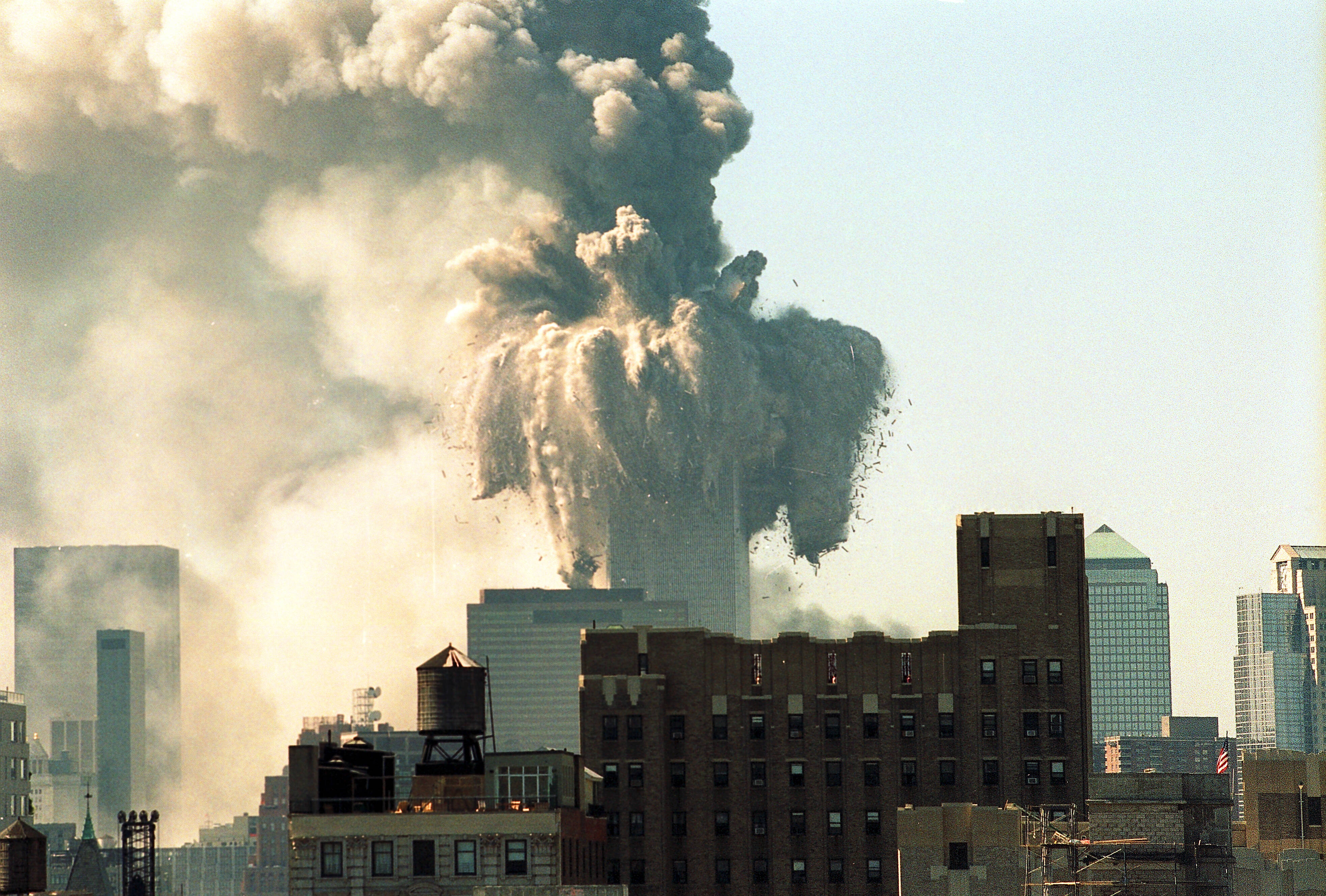
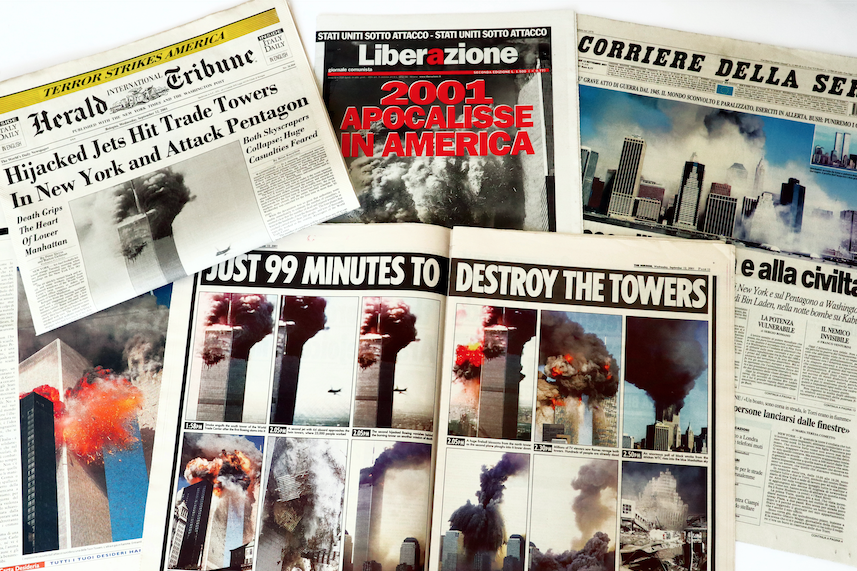
On September 11, 2001, not only did one of New York's architectural symbols disappear. The collapse of the Twin Towers also destroyed a considerable portion of the artistic heritage that, for decades, had transformed the World Trade Center into a unique gallery of contemporary art. The human tragedy—nearly 3,000 people died in the attacks—necessarily occupies the center of any recollection of that day. But among the buildings, offices, and public spaces that were destroyed, paintings, sculptures, murals, tapestries, photographs, and archaeological works, valued at over $110 million, also vanished.
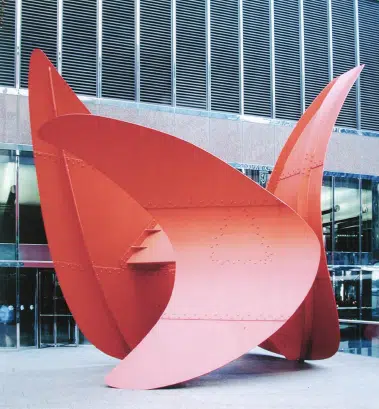
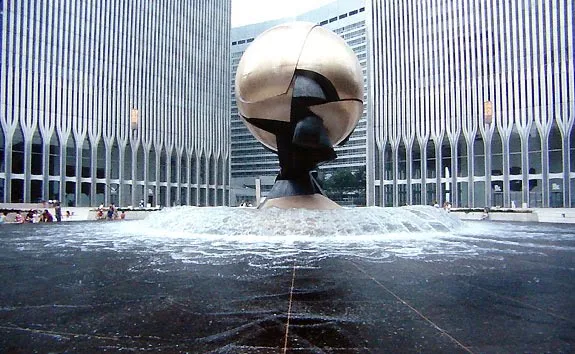
The artistic heart of the complex was located in Austin J. Tobin Plaza, the space between the two towers. There, the Port Authority of New York had assembled, since the late 1960s, a collection of sculptures by some of the greatest names in 20th-century art. Among them was Alexander Calder's Bent Propeller (1971), a monumental red stabile about seven meters tall. The work was almost completely destroyed, and only a portion of its structure was recovered.
James Rosati's Ideogram , an abstract stainless steel sculpture nearly eight meters tall, also disappeared, while Masayuki Nagare's Cloud Fortress initially withstood the collapse, though it was ultimately destroyed during the recovery efforts. Elyn Zimmerman's Memorial Fountain, created in memory of the victims of the 1993 bombing, suffered the same fate.
The only major sculpture from the square that could be recovered was Fritz Koenig's The Sphere . The monumental bronze sphere, conceived in 1971 as a symbol of world peace through trade, was found among the wreckage severely damaged but structurally intact. Today it stands as one of the most powerful surviving objects linked to the memory of 9/11.
Inside the towers was another part of that collection, invisible to most visitors. In the North Tower, Louise Nevelson had installed Sky Gate, New York , a large black wooden relief inspired by an aerial view of the cityscape. The work was destroyed. There were also works by artists such as Pablo Picasso, Roy Lichtenstein, Paul Klee, and Romare Bearden, as well as paintings, murals, and tapestries distributed throughout offices and common areas.
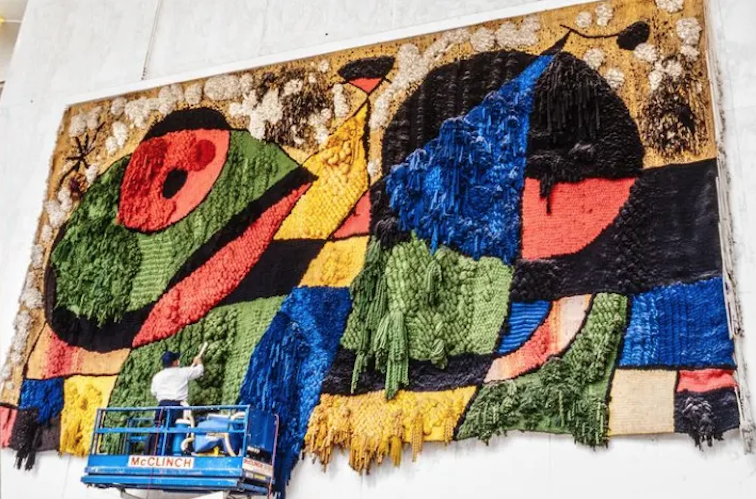
Among all those losses, one work stands out in particular, linked to the history of Catalan art: the Great Tapestry of the World Trade Center , designed by Joan Miró and created by the textile artist Josep Royo. Commissioned in 1974 by the Port Authority of New York, the tapestry was intended to adorn the lobby of the South Tower.
Its creation was a true technical adventure. Miró, who initially had no experience in tapestry, created an oil sketch on canvas measuring 57.2 by 105.2 centimeters and entrusted its execution to Josep Royo. The master weaver and five women worked between five and seven hours a day for about ten months on a loom specially built for the project at La Farinera in Tarragona.
The result was a monumental piece approximately six meters high by ten or eleven meters wide and weighing close to four tons. New Zealand wool, hemp, and rope formed a composition dominated by the reds, greens, and yellows characteristic of Miró's universe. The scale of the work even required intervention in the building where it was created: to remove it from La Farinera, it was necessary to dismantle a side wall and use a crane with the assistance of professionals from the port of Tarragona.
The process was documented by Pere Portabella in the short film Miró, Tapís , while Francesc Català-Roca photographed different stages of its creation. Before traveling to the United States, the tapestry was exhibited in Paris as part of a Miró retrospective. It was later moved to New York, where it remained for nearly three decades in the lobby of the South Tower.
The destruction of the World Trade Center turned that unique work into a void. The tapestry was buried in the rubble and could not be recovered. Josep Royo later rejected the possibility of making a replica because he believed that reweaving a piece conceived to exist only once would mean losing part of its essence.
The Great Tapestry had also been the origin of a collaboration that would continue with other projects. Miró and Royo would later create the tapestry destined for the National Gallery in Washington, as well as other pieces for the Fundació Joan Miró in Barcelona, the Fundació La Caixa, and the Fondation Maeght in Saint-Paul-de-Vence.
The artistic loss of 9/11 extended to less visible spaces as well. The Lower Manhattan Cultural Council's World Views program, which offered studios to international artists, operated on the upper floors. Sculptor Michael Richards, who died in the attack, worked there. Other buildings in the complex housed corporate collections and works belonging to companies and individuals. Cantor Fitzgerald, for example, occupied floors 101 through 105 of the North Tower and lost 658 employees. Its offices also housed a significant collection related to Auguste Rodin, some fragments of which were recovered from the wreckage.
The disaster even reached historical archives. Tens of thousands of negatives by Jacques Lowe, John F. Kennedy's personal photographer, were stored in a vault at 5 World Trade Center. Hundreds of thousands of archaeological artifacts from excavations in Lower Manhattan, including documents related to the former Five Points neighborhood and the African Burial Ground, were also stored in the basement of 6 World Trade Center.
Twenty-five years later, the Twin Towers remain, above all, the symbol of a human tragedy. But the passage of time also allows us to reconstruct the magnitude of everything that 9/11 irreversibly erased. Works of art, archives, and fragments of a cultural memory that were part of New York's history vanished among the rubble. The tapestry by Joan Miró and Josep Royo is perhaps one of its most eloquent examples: a monumental work created in Tarragona that for decades accompanied daily life at the World Trade Center and that today, destroyed forever, remains only in a sketch, some photographs, a few documents, and, above all, in the memory of those who saw it.

You may be
interested
...