Opinion
Marcel Duchamp conquers New York once again
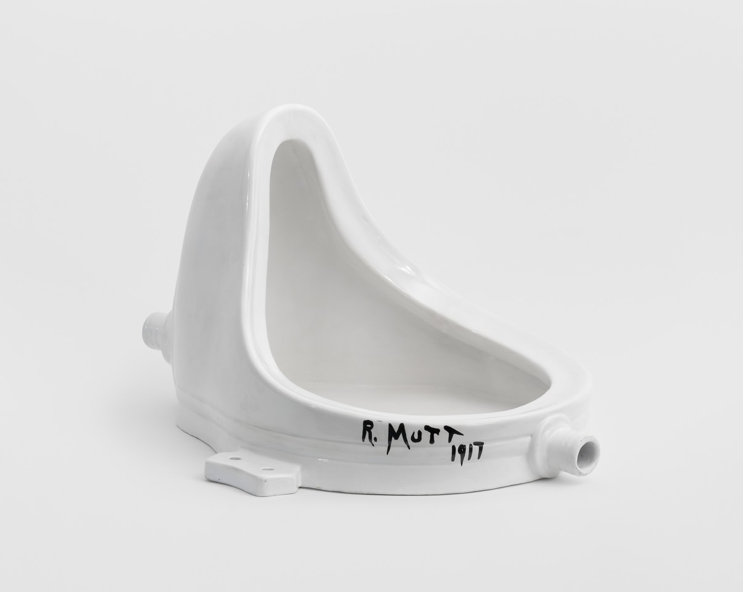
At the beginning of the 20th century, when Europe was still considered the undisputed epicenter of modern art, Marcel Duchamp's arrival in New York marked a quiet but decisive turning point. It wasn't simply a geographical relocation, but a shift in mentality: Duchamp found a different energy in the city, less bound to tradition and more open to intellectual provocation. In this context, his works—such as the celebrated readymades —ceased to be mere eccentricities and became genuine challenges to the very notion of art.
New York, still in the process of establishing itself as a cultural capital, offered Duchamp something that Paris was beginning to lose: an audience willing to accept uncertainty, humor, and irony as part of artistic discourse. The interaction between the artist and the city was, in reality, a mutual dialogue. While Duchamp questioned what could be considered art, New York was learning to see itself as a space where everything could be rethought.
This encounter not only transformed the artist's career but also contributed to shifting the center of modern art toward the United States. Understanding the relationship between Duchamp and New York is, fundamentally, understanding the moment when art stopped seeking definitive answers and began to formulate uncomfortable questions that remain relevant today.
Now, more than a century after his emergence on the New York scene, Marcel Duchamp symbolically returns to the city with a presence that promises to set the tone for the 2026 art calendar. Beginning April 25, his work will take center stage at Gagosian, marking the opening of its new space on the ground floor of the historic building at 980 Madison Avenue. The exhibition features a carefully curated selection of pieces, including some of his most iconic readymades , returning them to the context where they provoked both bewilderment and fascination during his American debut in 1965 at the renowned Cordier & Ekstrom Gallery.
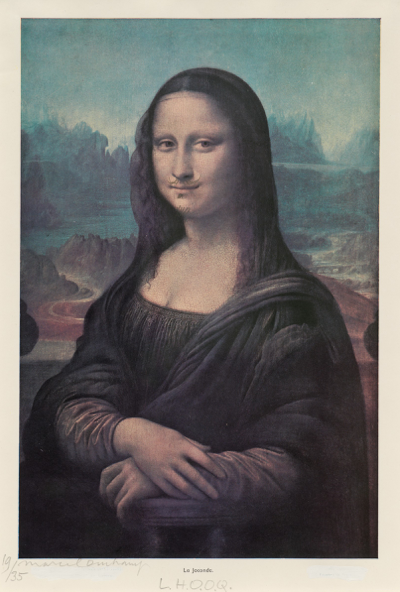
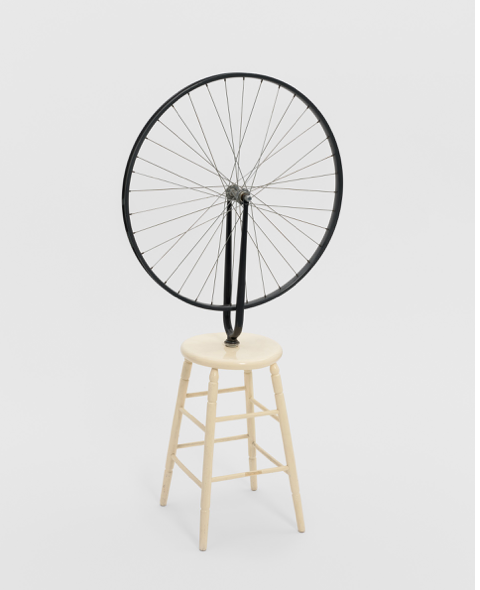
Far from being a simple historical review, the exhibition focuses on the editions produced in 1964 in collaboration with the Italian gallerist Arturo Schwarz, conceived at a time when many of the original works had been lost or destroyed. These pieces—among them Bicycle Wheel , Fountain , LHOOQ , Bottle Bags , and the enigmatic Suitcase —not only reconstruct Duchamp's legacy but also redefine it: they are, at once, homage and questioning, memory and challenge. In them, the artist plays with the notion of authenticity and challenges the idea of authorship, anticipating debates that continue to permeate contemporary art.
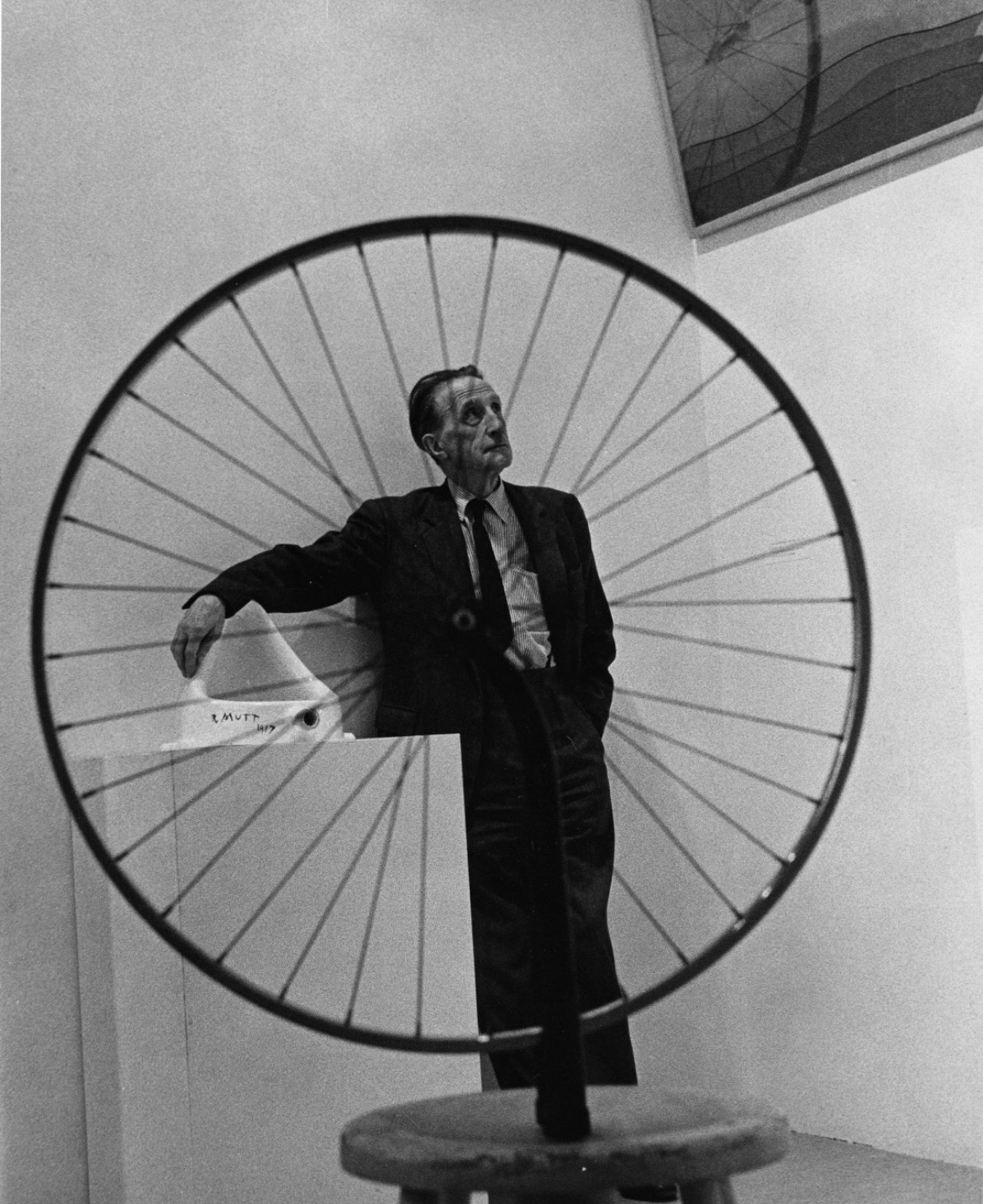
The second key event will take place at the end of August, when the Museum of Modern Art (MoMA) presents an ambitious retrospective featuring around 300 works. It will be the first major survey of his work in the United States since 1973, a fact that alone underscores the magnitude of the event. Over these five decades, Duchamp's figure has continued to generate interpretations, theories, and, also, misunderstandings. This exhibition aims precisely to organize this complex legacy, offering a panoramic view of his career across all media, from 1900 to 1968.
New York is preparing, once again, to rediscover Marcel Duchamp, not only as an established icon, but as a figure who continues to powerfully engage the present. At a time when contemporary art continues to question its own boundaries, many of the answers seem to lie in the conceptual provocations of the French artist, whose work maintains a surprising relevance.
Duchamp not only transformed artistic language, but also established a new way of thinking about art: a system of aesthetic and conceptual codes that, far from being exhausted, continues to fuel current debates. His revolution—more silent than strident—represented a radical evolution in the way artistic creation has been understood since the mid-20th century.
Today, the city of skyscrapers, firmly established as one of the great capitals of global art, once again places him at the center of the stage with two major exhibitions. More than a celebration, this double event invites us to revisit, question, and, above all, examine the extent to which Duchamp remains relevant today.



You may be
interested
...