Exhibitions
Pedro França challenges perception and consciousness at the Mais Silva Gallery
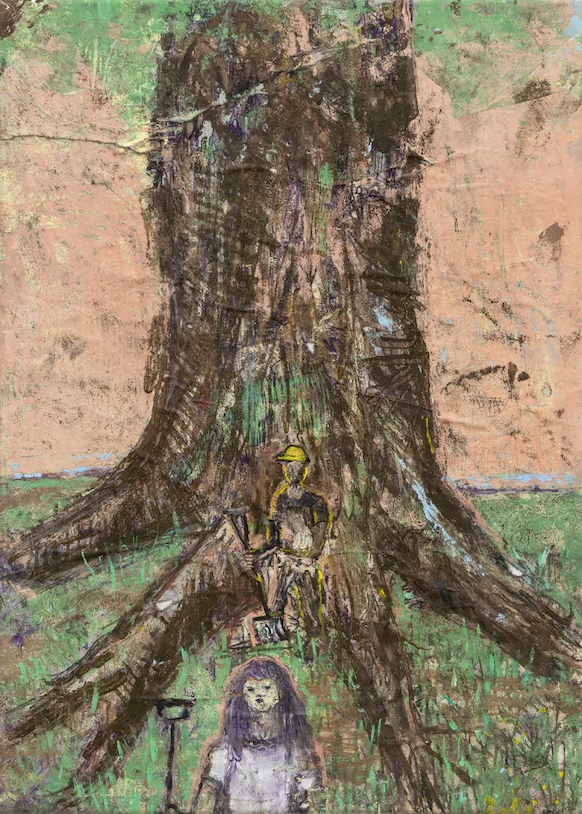
Until May 23, the Mais Silva Gallery (MSG) in Porto is hosting Aos montes , the latest exhibition by Pedro França, a show that confirms his unique ability to transform the aesthetic experience into a space for questioning and discovery. In this exhibition, França's paintings unfold through images of diverse nature and suggestive descriptions that, far from offering definitive answers, narrate evocative situations and point in multiple directions, multiplying senses and meanings.
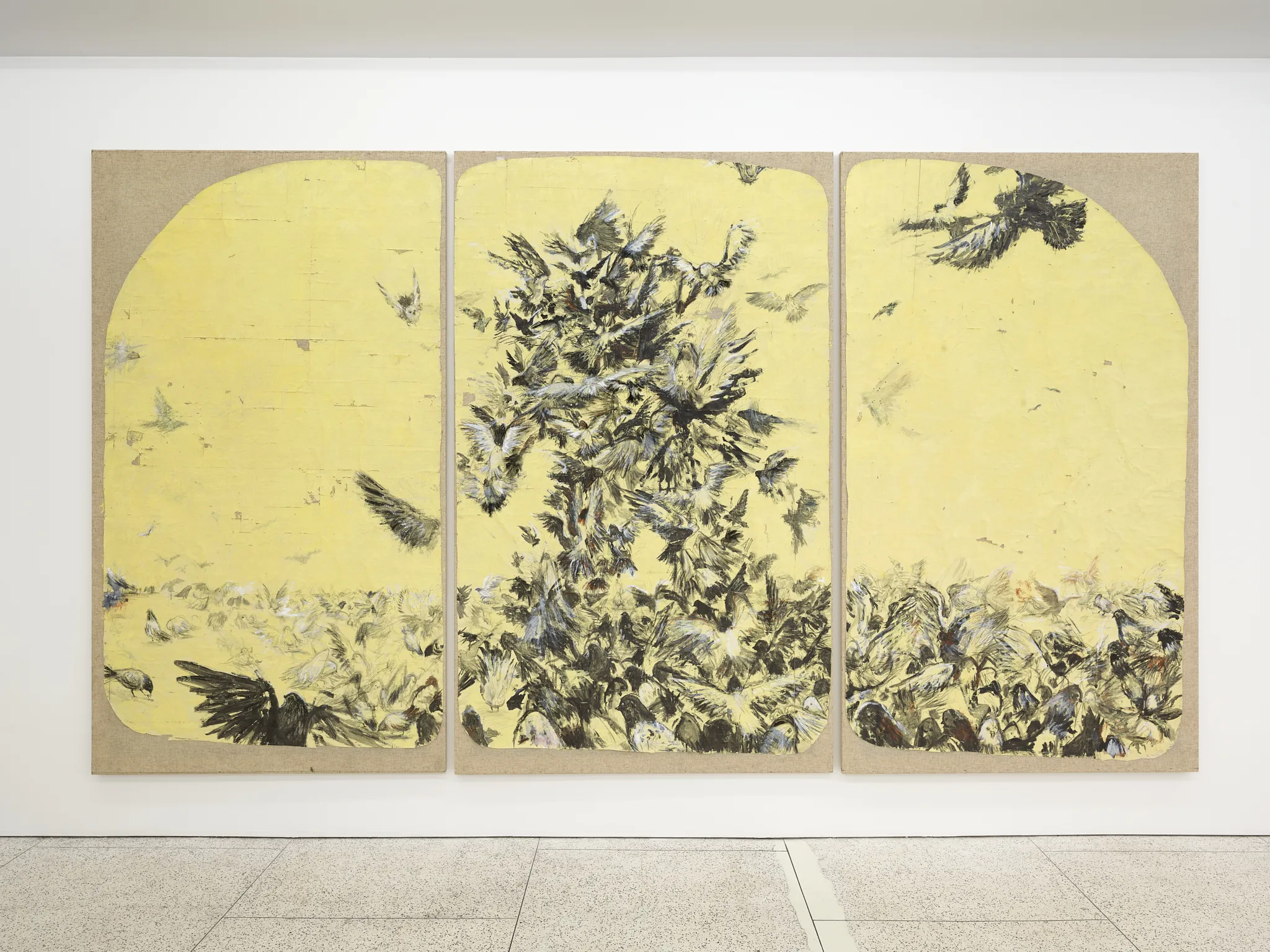
Pedro França, Figure.
França's art is characterized by an experimental and multidisciplinary approach: painting, drawing, ceramics, video, and installations coexist in a single creative universe that challenges the boundaries between materials and forms. Her work does not seek literalness, but rather the exploration of virtuality, states of consciousness, memory, and imagination, constructing atmospheres of ambiguity and uncertainty that invite the viewer to delve into territories of indeterminacy. Everyday materials are combined with found objects, fragments, and superimposed elements, generating dense compositions open to multiple interpretations, in which each observer finds their own narrative and personal resonance.
Beyond technique, the core of França's work lies in the design and conception of the image. The artist states that drawing is his most agile tool for putting ideas or images that arise in dreams, vague memories, or altered states of consciousness onto paper. Far from directly representing nature, his drawings and paintings emerge from an internal process that combines memory, imagination, and creative inspiration, constructing a visual language that is both profoundly intuitive and poetically evocative.
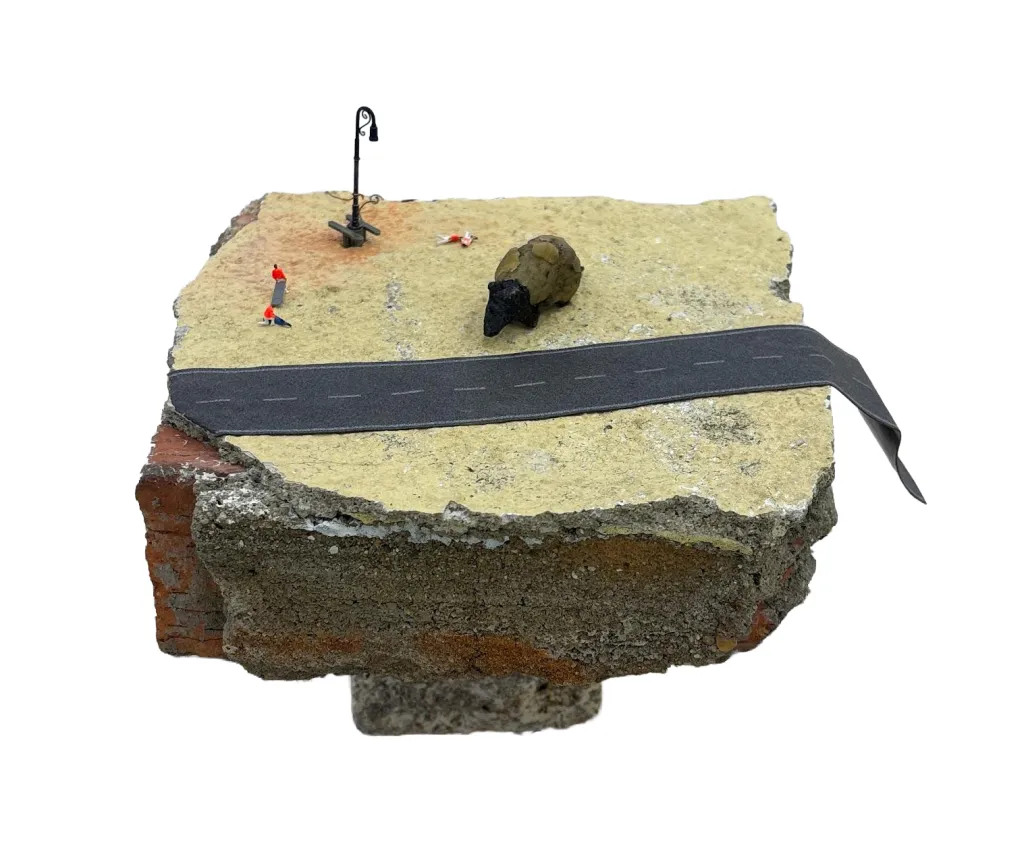
Pedro França, Work Model #2.
What's fascinating about Aos montes is how each work raises more questions than it offers certainties. França challenges the viewer to question their perception of reality, the relationship between image and memory, and the way in which art can open spaces for the indeterminate. The pieces function as sensory and cognitive triggers, and in contemplating them, one is drawn into a territory where logic blends with intuition and where each interpretation generates new possibilities.

You may be
interested
...