Exhibitions
The Prado looks at its history through photography
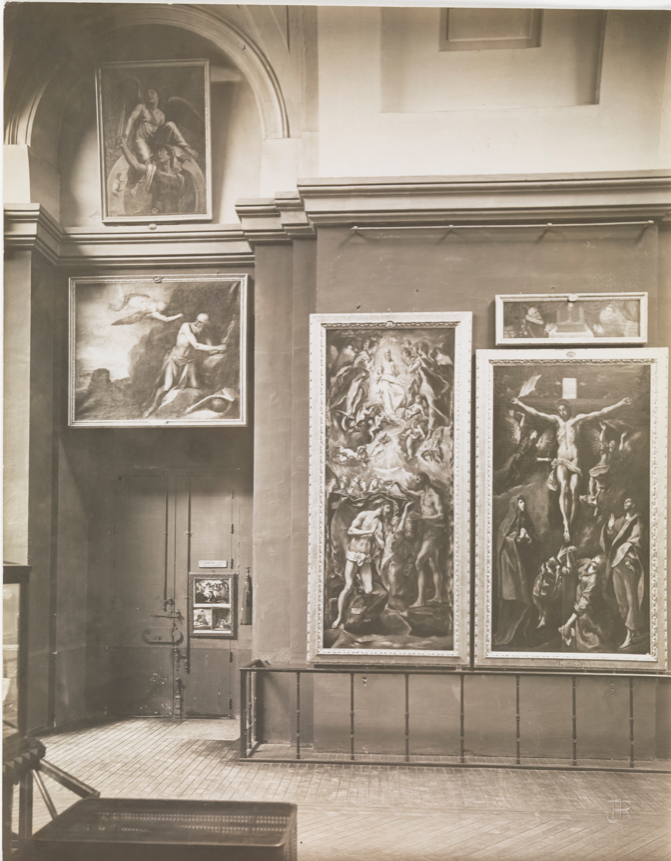
The Prado Museum presents for the first time a monographic exhibition dedicated entirely to photography from its own collection. Entitled "The Prado Multiplied: Photography as Shared Memory ," the exhibition reflects on the fundamental role of photography as a tool for disseminating the museum's collections and as a key element in constructing its visual memory since the 19th century.
The exhibition brings together a selection of 44 works that highlight a photographic collection made up of more than 10,000 images of high heritage value, a constantly growing collection that demonstrates the increasing interest that the study of this artistic practice arouses in contemporary society.
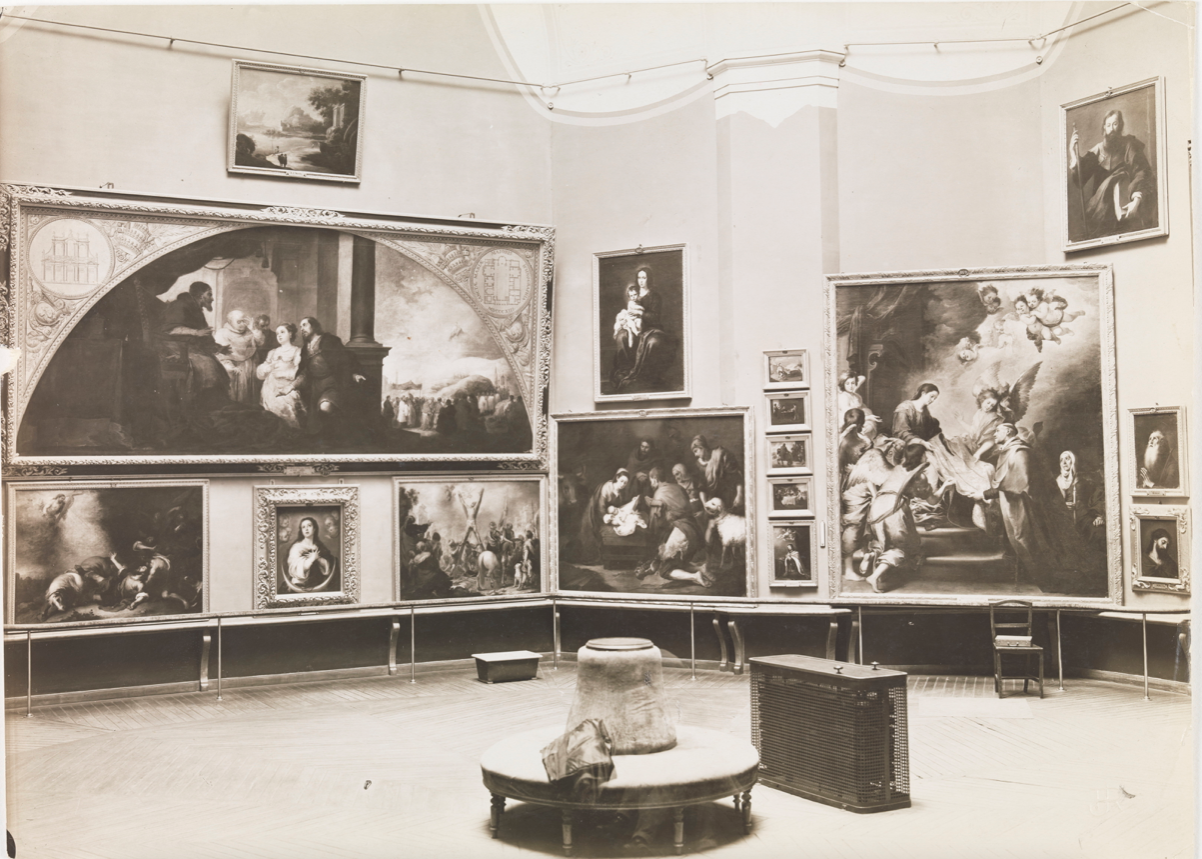
View of the Murillo Room. José Lacoste (1872-?), photographer, and Juana Roig (1877-1941), editor. Signed. 1902-9. From the Prado Museum Archive. HF-1233.
The Prado Multiplied exhibition is part of the Open Warehouse program, an initiative active since 2009 dedicated to presenting 19th-century collections in Room 60 of the museum. This program hosts small-format exhibitions that offer new artistic and technical interpretations of works that, due to space or conservation reasons, are not part of the regular exhibition route.
The exhibition offers a visual journey through some of the Prado Museum's most emblematic spaces, such as the Central Gallery, along with monographic areas like the room dedicated to Murillo and the sculpture gallery. These images, in addition to their undeniable documentary and historical value, allow us to discover aspects of the museum that have since disappeared: from the densely grouped arrangement of the artworks to the furniture, the heating systems, and the occasional presence of visitors and staff in rooms that, in the early days of photography, were usually shown empty.
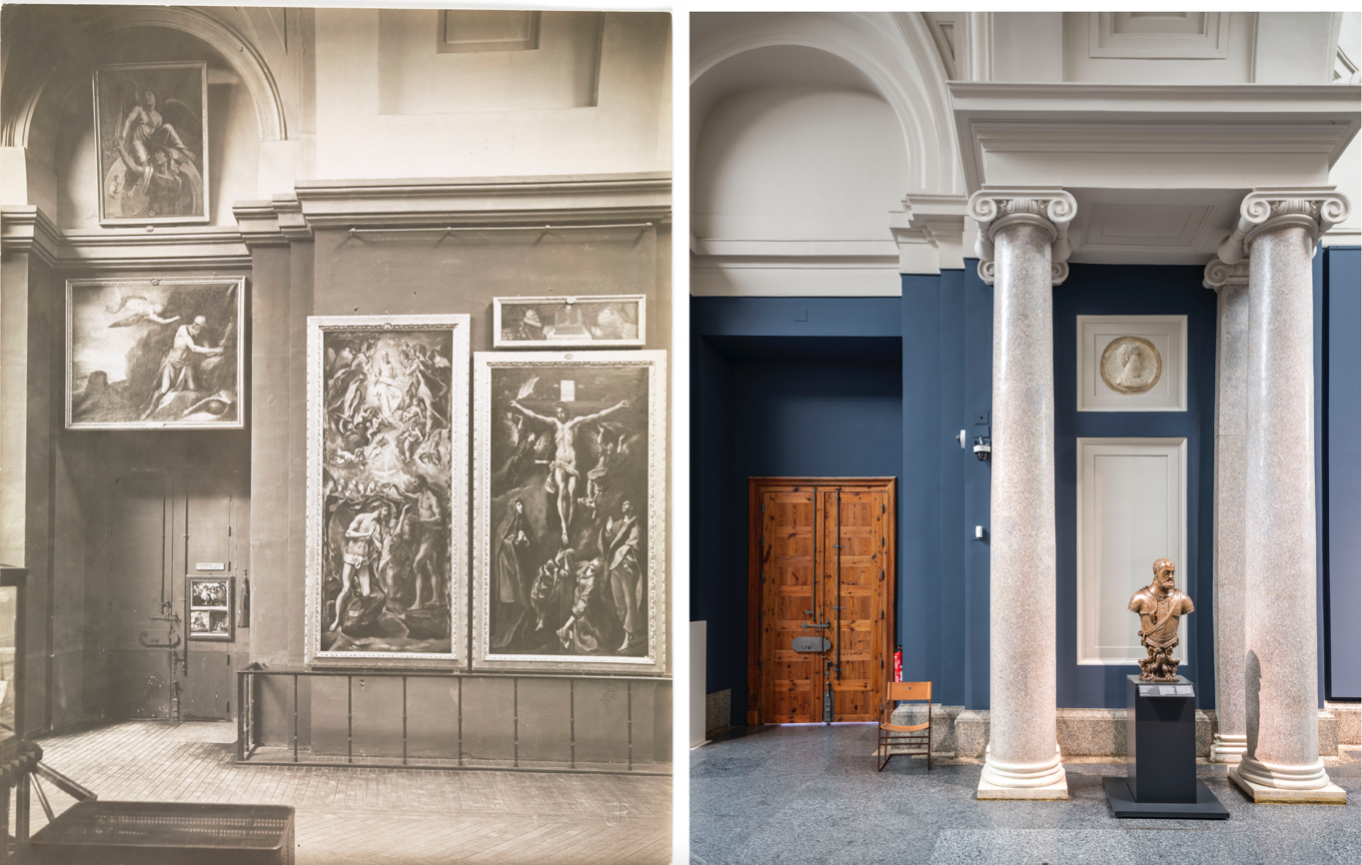
View of the central gallery of the Prado Museum with establishment for the sale of photographs HF-1229 and current view Photo © National Prado Museum.
Systematic photographic documentation of the Prado's artworks began in the 1860s. The technical limitations of early photographic processes often necessitated moving the pieces outside the building to take advantage of natural light. From the resulting negatives, photographers produced prints in various standardized formats for commercial sale, facilitating widespread dissemination of the museum's images to the general public, specialists, and collectors alike.
In this process, renowned companies and photographers such as Juan Laurent, José Lacoste, Braun, Moreno, Anderson, and Hanfstaengl played a fundamental role, responsible for visually capturing the image of the Prado Museum and masterpieces like Velázquez's The Surrender of Breda. Some of these photographs were taken even before the works entered the museum or on the occasion of their participation in national exhibitions, providing valuable documentation of the material, exhibition, and circulation history of the artworks.
You may be
interested
...