Exhibitions
Marta Minujín remains faithful to living in art and contemporary art celebrates it.
More than twenty-five years after her last solo exhibition in Mexico, renowned Argentine artist Marta Minujín (Buenos Aires, 1943) returns to the country with an exhibition that spans six decades of a practice marked by experimentation and the expansion of the boundaries of contemporary art in Latin America. To Live in Art opened on August 23 at the kurimanzutto gallery and will be on view until October 4, offering the public a glimpse into the boundless creative energy of one of the most influential figures on the international art scene.
Marta Minujín is one of the most vibrant and transgressive figures in contemporary Latin American art. A pioneer in happenings and participatory installations, she made irreverence her own language: from La Menesunda (1965), which transformed the way we inhabit a work of art, to El Partenón de libros (The Parthenon of Books ) (1983), a symbol of freedom after the Argentine dictatorship. Her monumental and ephemeral art engages with politics, humor, and the popular, whether erecting an obelisk of sweet bread, burning Gardel, or "paying" the foreign debt with corn alongside Andy Warhol. A recipient of the Velázquez Prize for Visual Arts, her work continues to challenge the boundaries of art and invite the public to be part of the experience.
Living in Art brings together a selection of historical and recent pieces that demonstrate the magnitude of Marta Minujín's impact on the international art scene. Over more than five decades, the artist has transformed notions of contemporary art, participating in movements that challenged convention and consolidating her place as one of the most influential figures in Argentine art and an undisputed global reference.
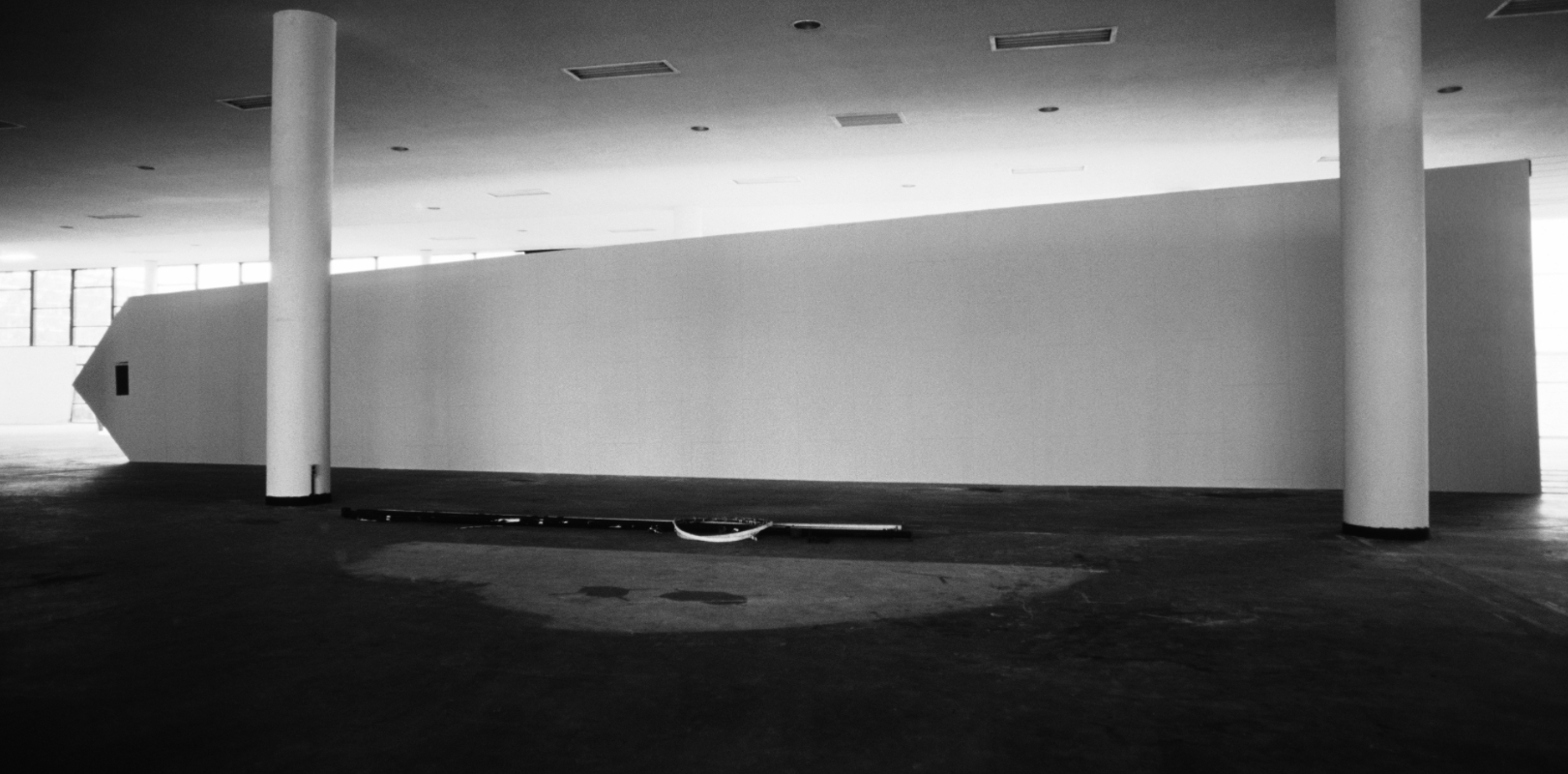
This exhibition presents for the first time in Mexico The Reclining Obelisk (1978), a work with which Marta Minujín inaugurated the series The Fall of Universal Myths and which debuted at the Latin American Biennial of São Paulo that same year. The piece consists of a replica of the emblematic obelisk in Buenos Aires' Plaza de la República, arranged horizontally within the gallery, inviting the public to explore its interior and discover a series of videos created by the artist.
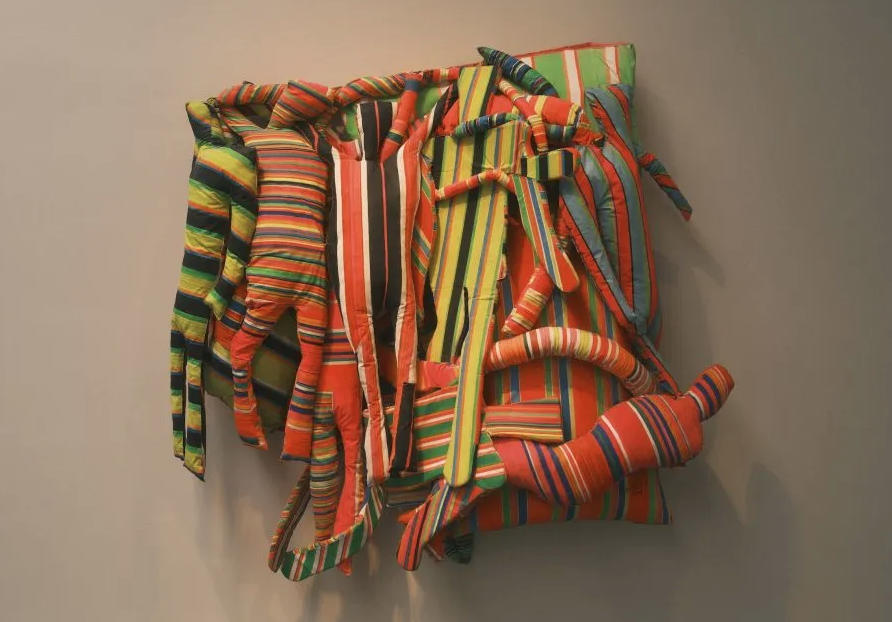
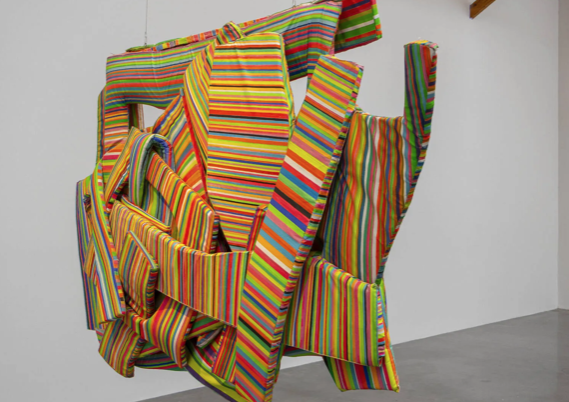
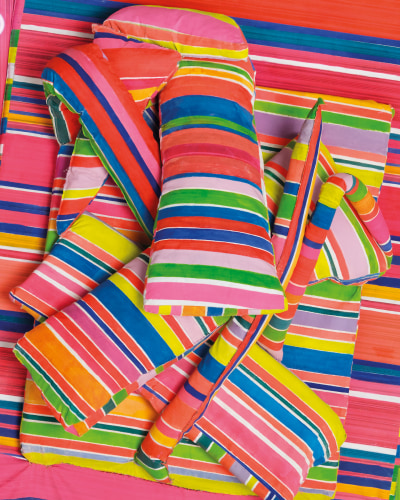
Another of Marta Minujín's material obsessions also appears throughout the exhibition: mattresses, a universal and silent object in any home. Her connection with them began in Paris, when she collected those she found abandoned near hospitals and transformed them by painting them with stripes inspired by the miniskirt fashion of the time. "Half of your life is spent on a mattress. You are born, you die, you make love, you can be murdered on a mattress," she would later explain, alluding to the intimacy, violence, and desire they contain. Kurimanzutto presents pieces from her most recent series, begun in 2006, where each mattress is folded, intertwined, and covered in color, giving rise to compositions that convey movement, vitality, and joy.
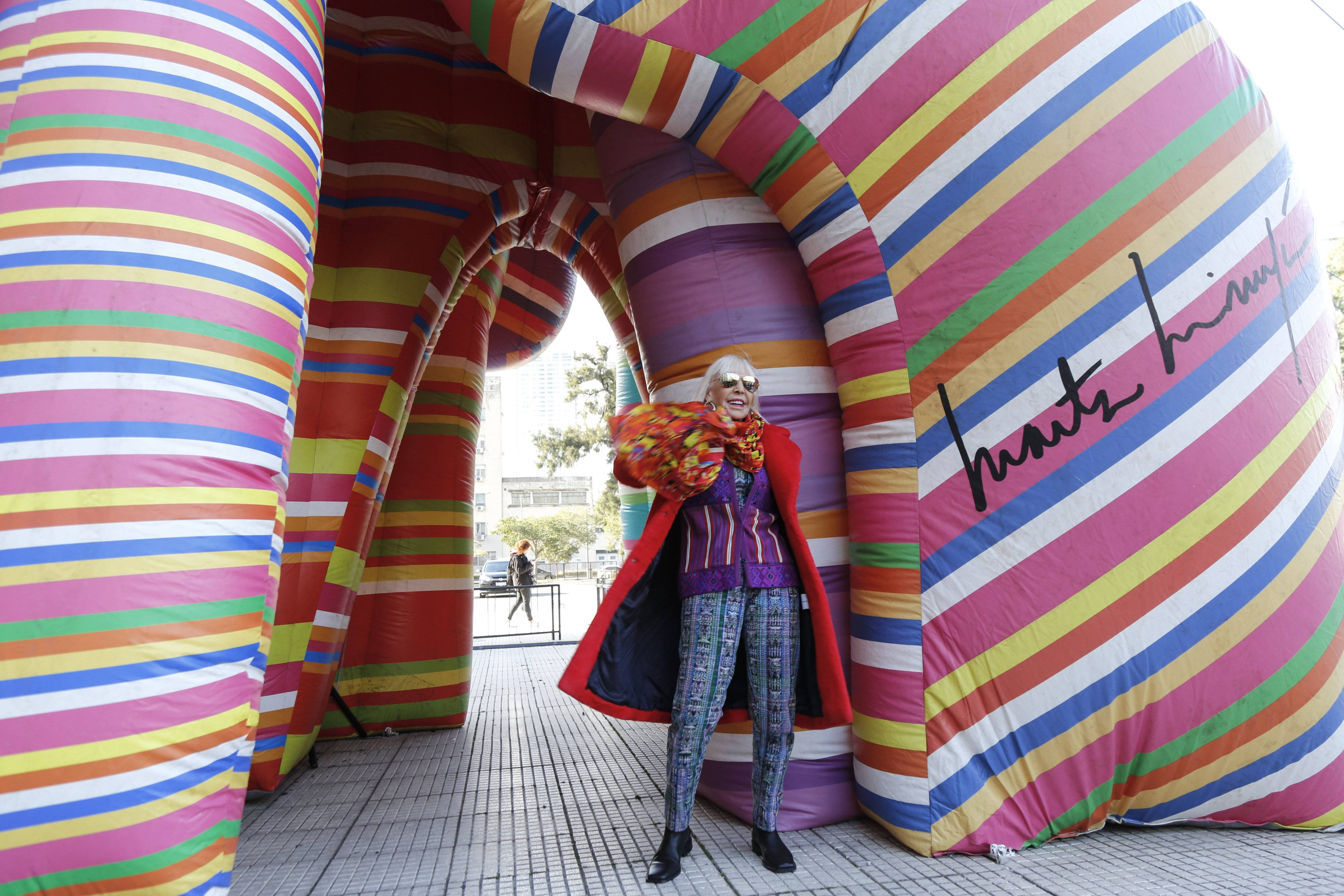
The artist in 2024 in Buenos Aires.
The exhibition's title embodies Marta Minujín's profound desire: to make art a way of life. A pioneer of happenings, performances, and participatory art, her work has demonstrated over the years that creation can transcend the boundaries of the museum and infiltrate every corner of existence: from the most intimate spaces to the political arena and global market circuits.



You may be
interested
...