Exhibitions
Yoshida Hiroshi: A World Carved in Light and Wood at The Ringling
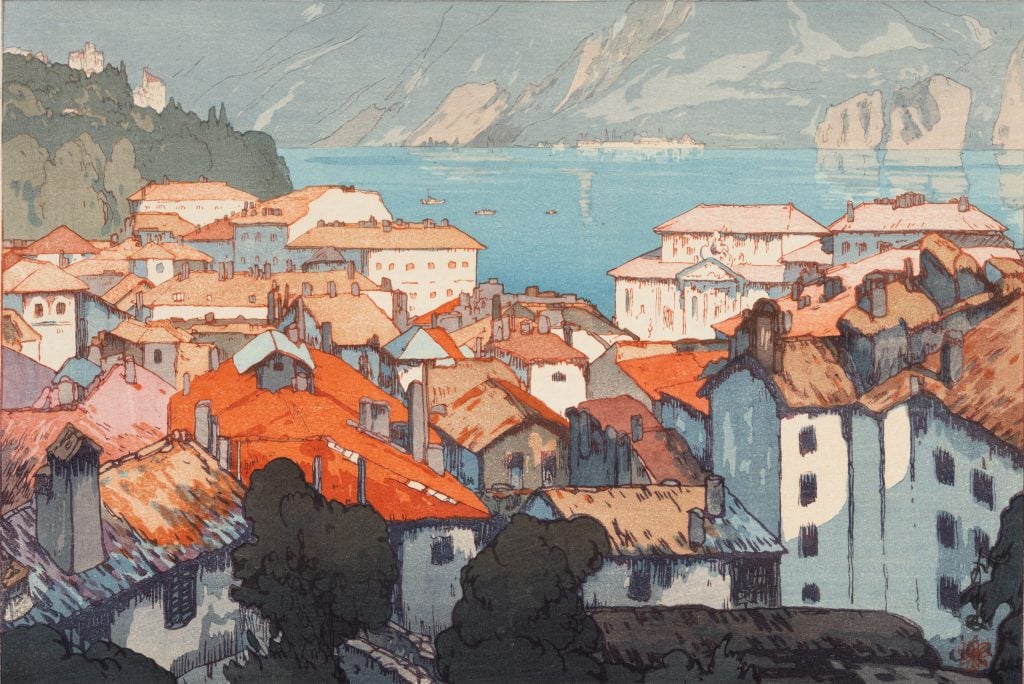
Yoshida Hiroshi's woodblock prints literally set the tone for understanding much of mid-20th-century Japanese art. His work, currently on display at the Ringling Museum in the exhibition Yoshida Hiroshi: Journeys Through Light, reveals a creator trained in Yoga, the Western style of Japanese painting that flourished in the early 20th century. In his early years, Yoshida established himself as a tireless landscape painter, traveling throughout Europe, Asia, North Africa, and the Americas in search of new visual horizons. However, by the 1920s, his artistic career began to slow.
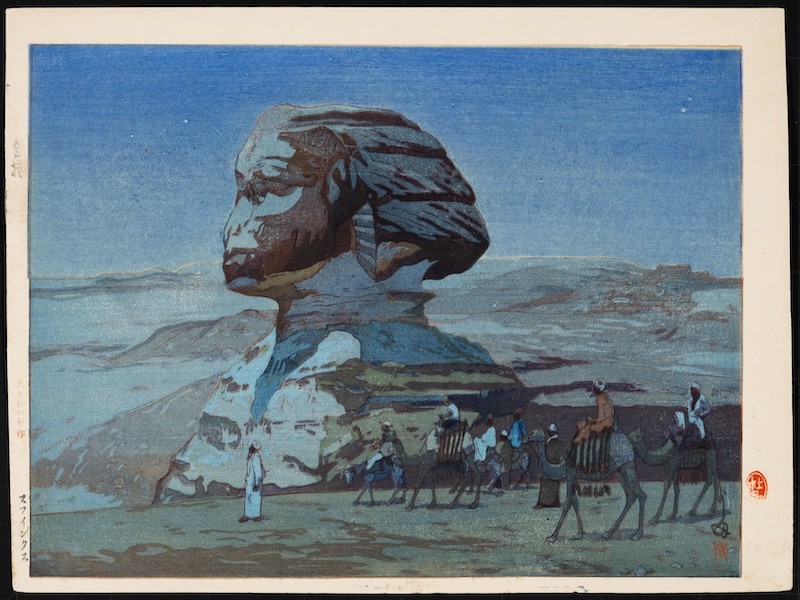
Although Yoshida wasn't the only one to depict landscapes in prints, his techniques—especially as an independent artist—raised the standard of woodblock printing for decades to come. "He created works of extraordinary complexity. In a traditional woodblock print, you typically use one block per color; he went much further," explains Rhiannon Paget, curator of Asian art at the Ringling Museum. "To achieve extremely subtle color gradations and unique depth in saturated areas, he made multiple prints, adjusting the ink with very slight variations."
An exhibition, Journeys through Light, on view until January 11, 2026, features seven versions of Acropolis (1925), in which the ancient citadel of Athens appears bathed in daylight or enveloped in nocturnal stillness. The exhibition also brings together rare proof prints with Yoshida's handwritten notes, a preparatory drawing, and a complete process sequence for his work Lugano, revealing the more than 40 steps required to bring this unique design to life.
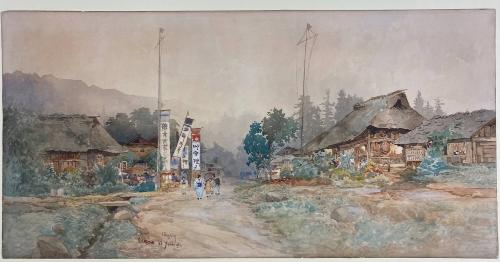
Hiroshi Yoshida: the Japanese master who painted the world with wood and light
At the crossroads of tradition and modernity, the Japanese artist Hiroshi Yoshida (1876–1950) stands out as one of the great innovators of woodblock printing in the 20th century. Initially trained in Western painting, Yoshida was a tireless traveler who used his gaze to bridge the gap between cultures.
Born in Fukuoka Prefecture, he adopted the surname Yoshida after being taken in by his art teacher. His talent soon took him to Tokyo and the United States, where he exhibited watercolors and oil paintings to great acclaim. However, his name would be etched in art history when he delved into shin-hanga—the "new print" movement that revitalized Japanese printmaking.
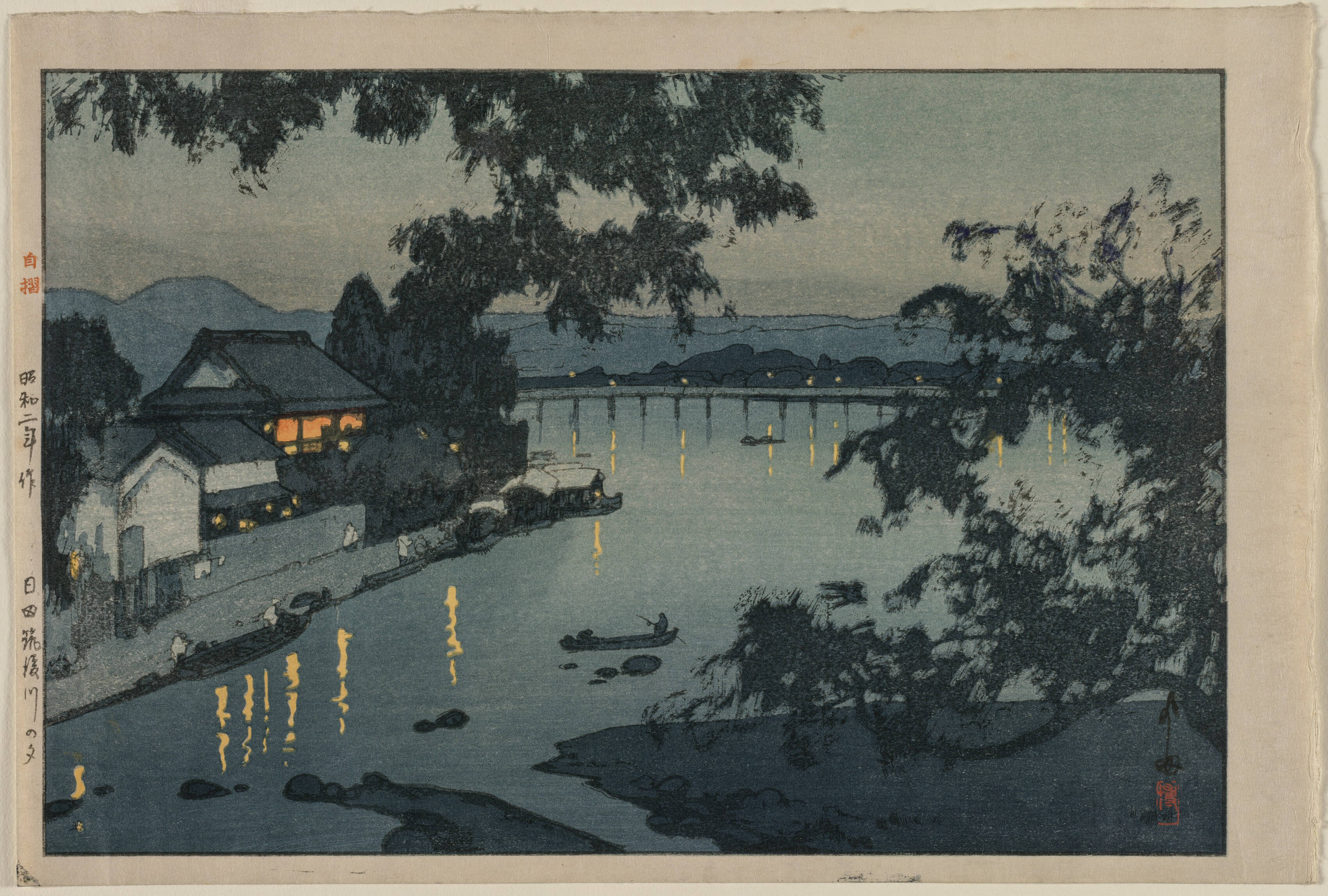
Evening on the Chikugo River, 1927. Yoshida Hiroshi.
Unlike many artists of his time, Yoshida personally controlled every step of the printing process, from design to final production, marking his works with the jizuri ("self-printed") seal. His landscapes, from Japan and places as far-flung as the Taj Mahal, the Swiss Alps, and the Grand Canyon, combine the precision and refinement of traditional technique with the atmospheric depth and realism of Western painting.
In his most famous series, a single scene transforms under different lighting and seasons, revealing how color and atmosphere can completely alter the perception of a landscape. Mount Fuji, a bridge in Kyoto, or a tropical beach become living scenes, charged with emotion and visual poetry.
Yoshida's legacy transcended his lifetime: his wife, Fujio Yoshida, and his sons, Tōshi and Hodaka, continued the artistic lineage, forming a family saga of eight artists over four generations. Today, his prints continue to captivate with their ability to capture the essence of a unique place and moment. In each work, Hiroshi Yoshida reminds us that light illuminates not only the landscape, but also the soul of the beholder.



You may be
interested
...