Exhibitions
Papers, canvases and recovered memory with Rosario de Velasco
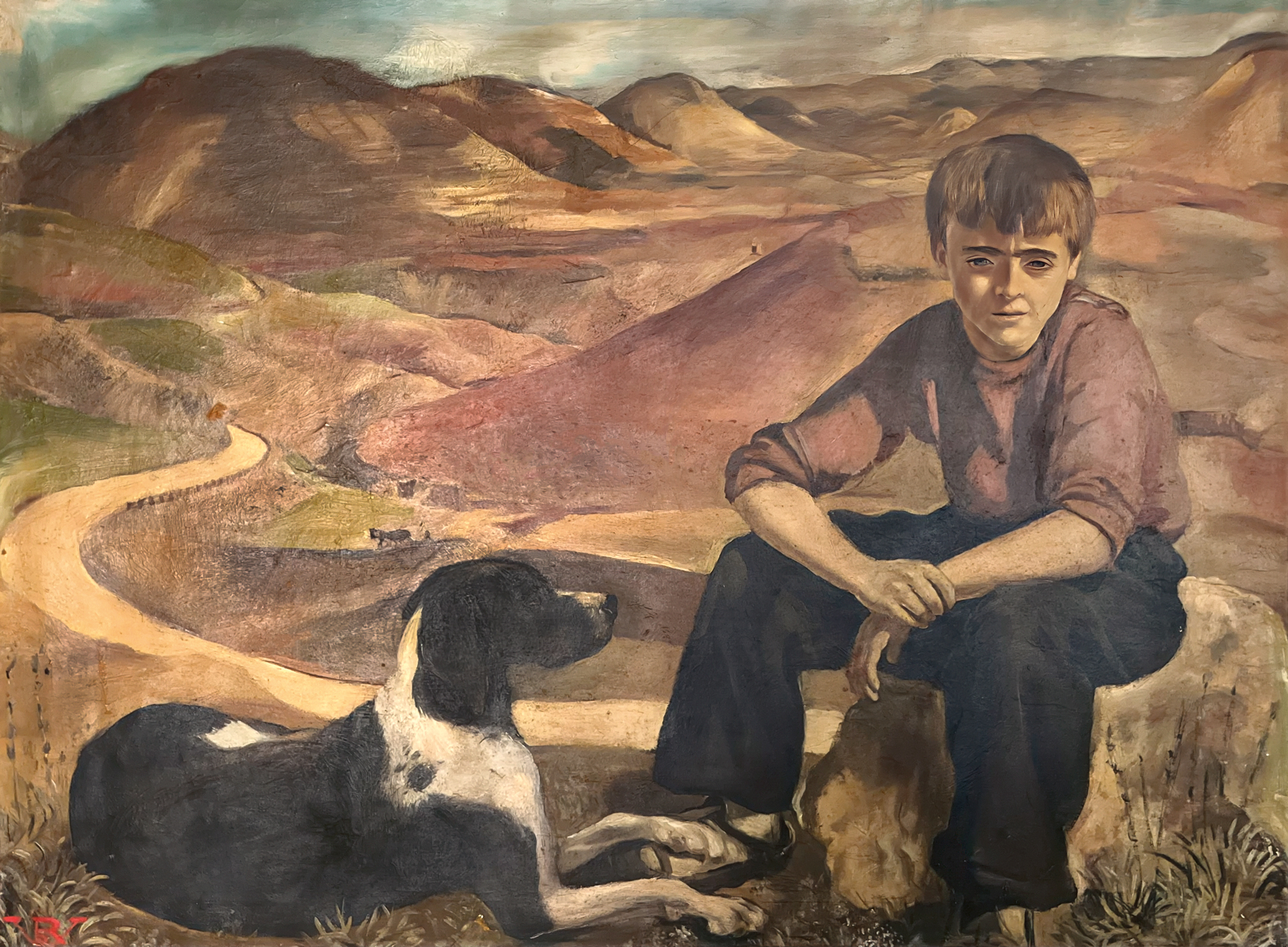
From July 4 to October 12, 2025, the Museum of Contemporary Spanish Realism (MUREC) in Almería presents the exhibition Rosario de Velasco. Between Papers and Canvases , an ambitious retrospective that brings the figure of one of the most unique and overlooked artists of 20th-century Spain back to the forefront. The exhibition, curated by Toya Viudes de Velasco—the artist's great-niece—and Juan Manuel Martín Robles, director of the museum, brings together 109 works, including paintings, drawings, and illustrations, spanning almost six decades of her work.
The exhibition offers a visual and emotional journey through the various artistic languages that Rosario de Velasco cultivated, from her refined, realistic painting to her refined literary illustrations. In many cases, these works are unpublished or long-forgotten, rescued from private collections and family holdings that until now had been inaccessible to the public. Among them, the recovery of the painting "Lavanders" (1934-35) stands out, presented for the first time after almost a century in private hands.
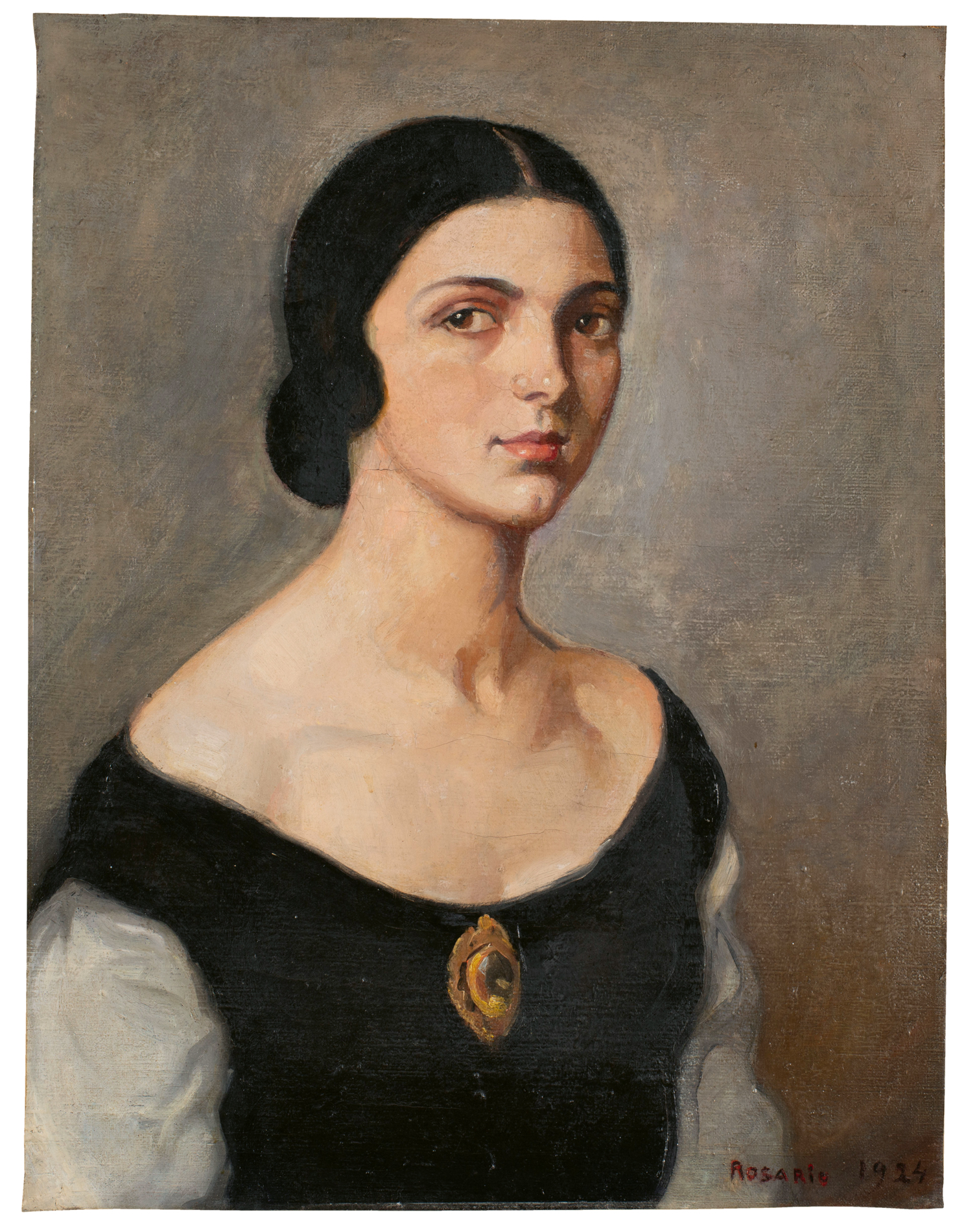
Rosario de Velasco. Self-Portrait, 1924. Oil on canvas. Photograph by Desplechin © Rosario de Velasco, VEGAP, Almería, 2025.
One of the exhibition's key focuses is her work as an illustrator, a field in which Rosario achieved a unique language that combined linear drawing, art deco elegance, and extraordinary narrative sensitivity. Included are illustrations for María Teresa León's La bella del mal amor (1930), as well as for the 1940 edition of Dafnis y Chloe, produced for Gustavo Gili. These pieces reveal a well-rounded artist, with a delicate and acute eye, capable of moving between painting and graphic art with equal ease.
The exhibition also features the large canvases from the Four Seasons series, commissioned by Pilar Primo de Rivera for the Magalia Palace in Ávila in the 1940s. These paintings have been specially restored for the occasion, allowing us to once again contemplate the monumentality and chromatic sophistication that characterized Velasco's mature work.
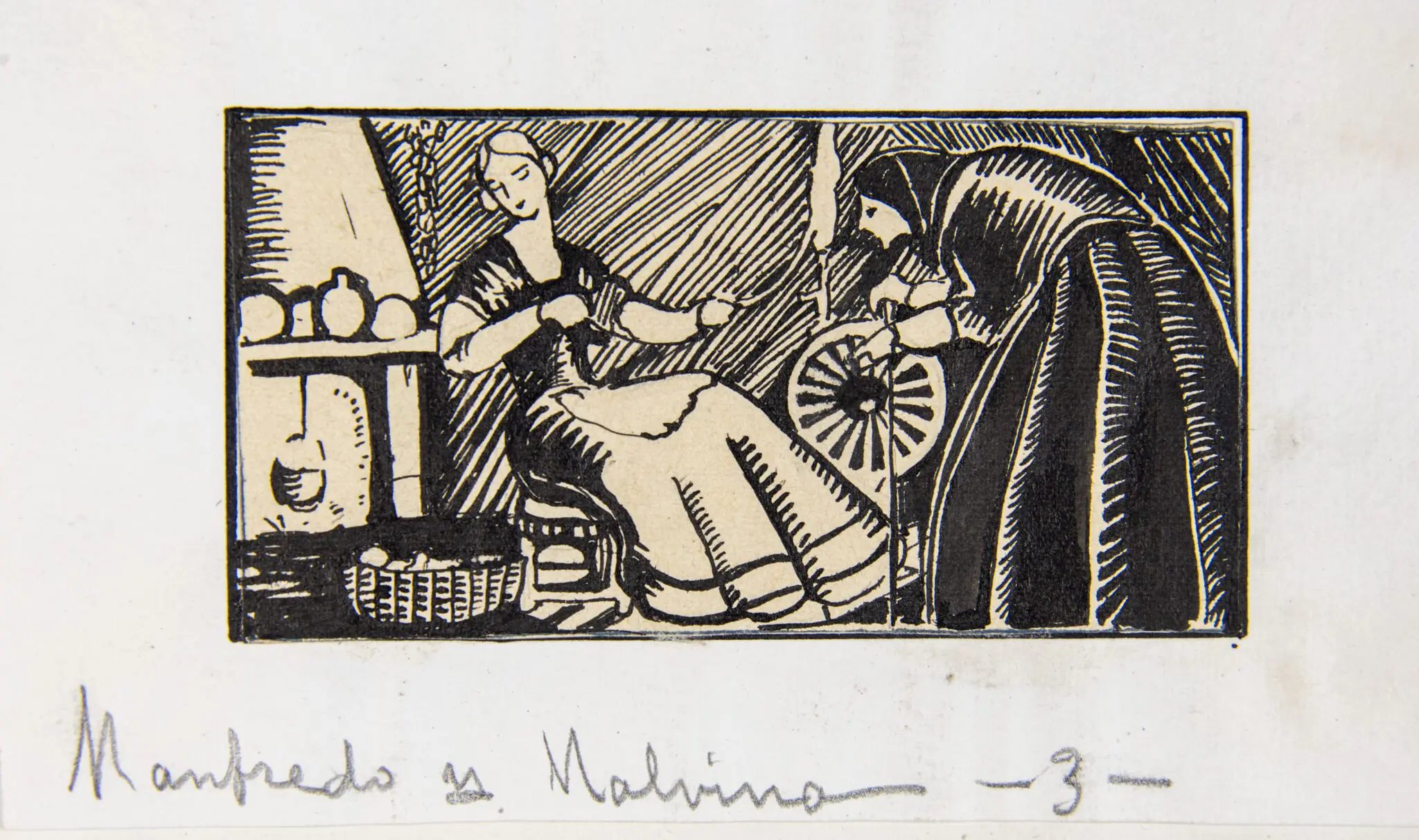
Illustration ("Manfredo and Malvina") for the book The Beauty of Bad Love (1930), by María Teresa León.
Born in Madrid in 1904, Rosario de Velasco was a figure closely associated with the artistic circles of the Generation of '27. Her style combined Renaissance classicism with a refined modern idiom, reflecting the "return to order" movement that marked the interwar period. After achieving notoriety at the 1936 Venice Biennale, her career was interrupted by the Civil War, during which she was imprisoned and sentenced to death—a sentence from which she was freed thanks to the intervention of her future husband, the physician Javier Farrerons.
Like so many other female artists, Rosario de Velasco was silenced for decades for political, aesthetic, and gender reasons. This exhibition represents an exercise in historical justice, not only recovering her work but also reclaiming her place in the narrative of contemporary Spanish art. With this project, the MUREC reaffirms its commitment to the visibility of 20th-century realism and to the task of rescuing voices that time and official history have obscured.

You may be
interested
...