Exhibitions
Miguel Ángel Rojas, the wounds of Colombia
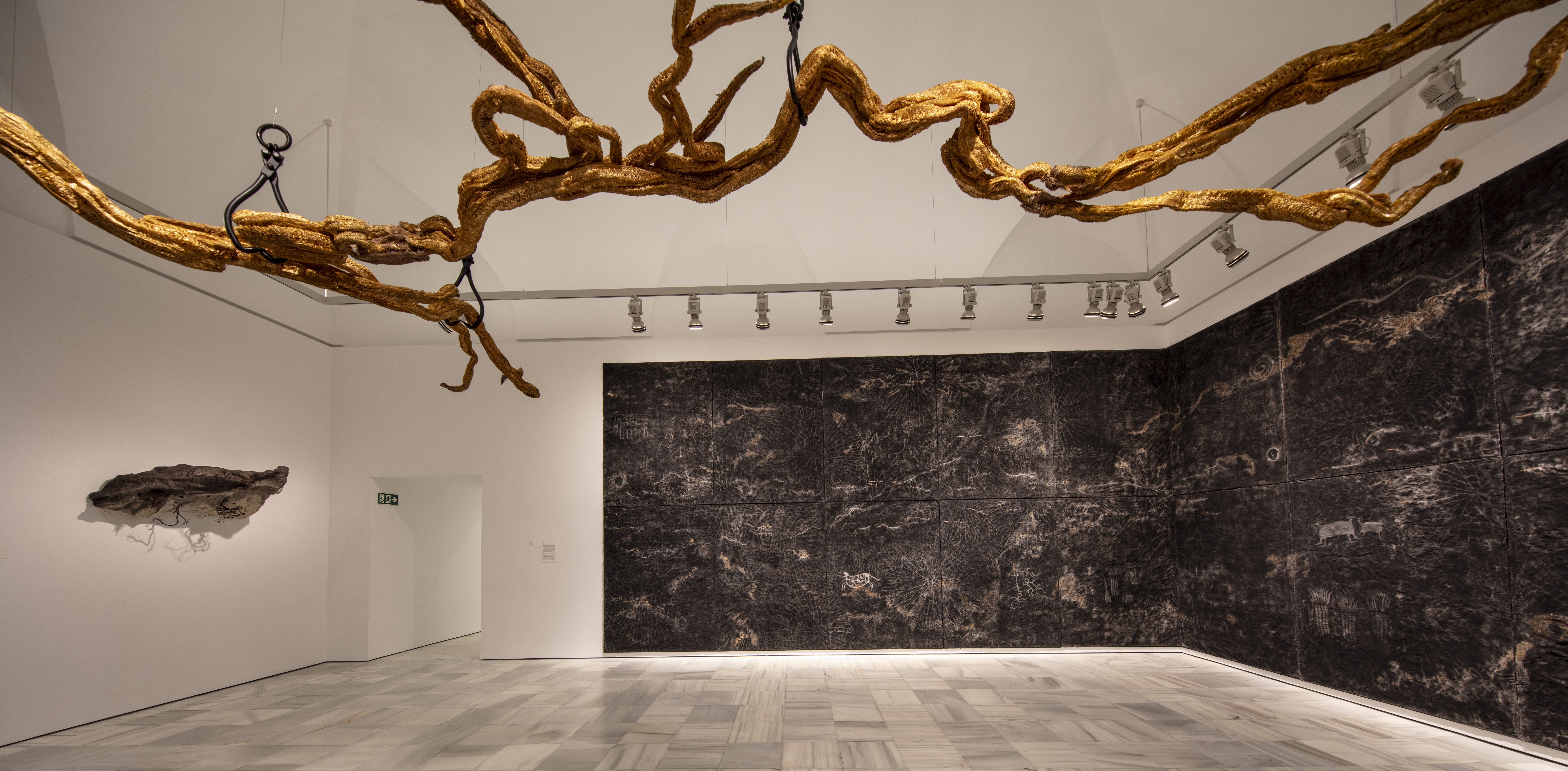
The work of Miguel Ángel Rojas (Bogotá, 1946) constitutes one of the most incisive approaches to the contradictions of contemporary Colombian society. With more than fifty years of experience, the artist has built a visual language in which individual experience and collective memory intersect to address issues such as drug trafficking, violence, migration, decolonization, exploitation of natural resources, and social inequalities. The Museo Nacional Centro de Arte Reina Sofía presents The Night, an exhibition that brings together a significant selection of his work and allows an understanding of the coherence of a career marked by formal experimentation and political commitment.
Far from understanding art as a neutral representation of reality, Rojas uses the image as a tool for investigation and questioning. His work is situated in a space of tension between the autobiographical and the collective, between the intimacy of the body and the wounds of a society marked by historical conflicts. In this sense, one of the most unique aspects of his work lies in the way he has addressed homosexuality and male desire. His photographs of walks through movie theater halls where sexual encounters between unknown men took place introduced a transgressive view on sexuality, clandestinity, and exclusion mechanisms. The camera here becomes a tool of recognition and liberation, capable of making visible that which for a long time remained relegated to the margins.
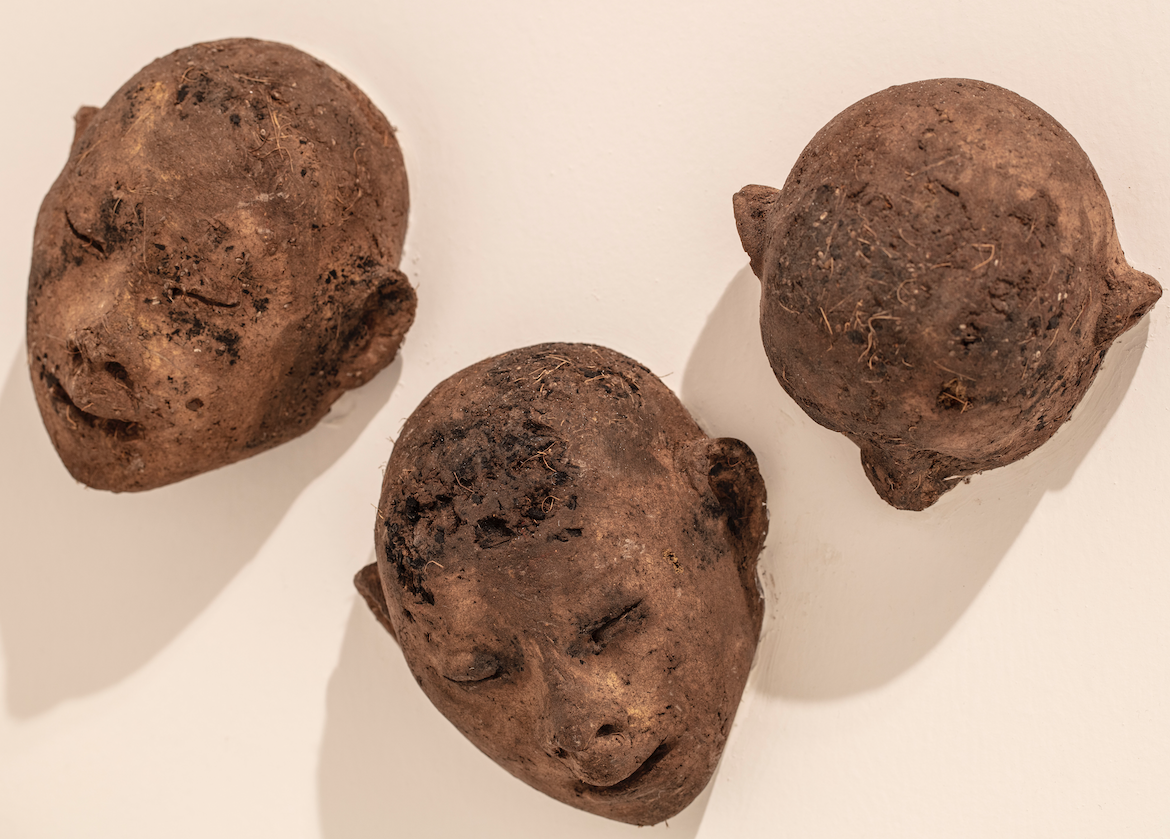
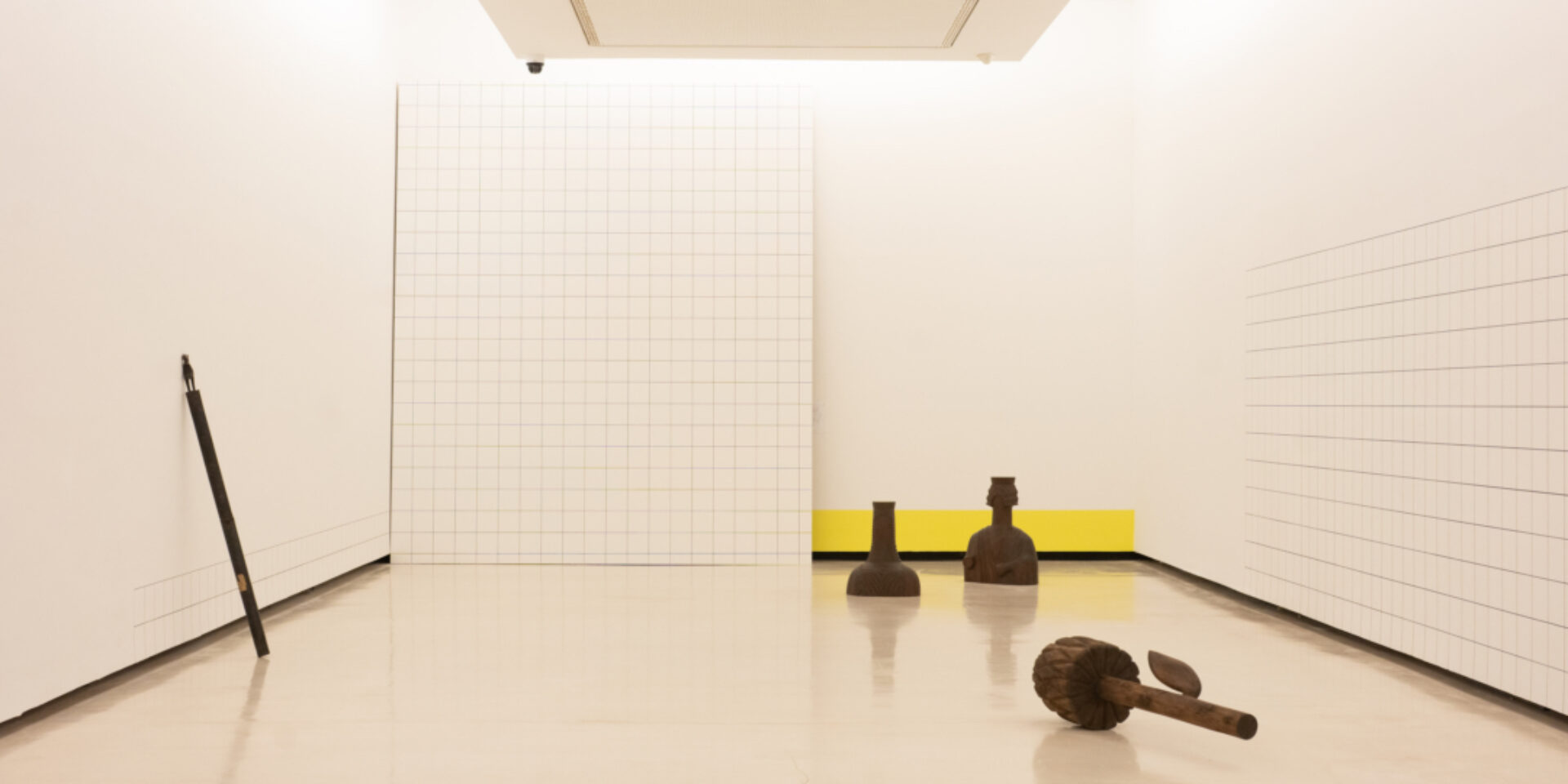
View of The Harvest, 2012, 147 heads in clay, lime, charcoal, plant fibers, and seeds Variable dimensions Artist's collection. © Miguel Angel Rojas Photograph: Museum Reina Sofía National Art Center Archive, 2026.
This will to explore the limits of representation also manifests itself in his photographic experiments in the lab, where image manipulation opened new expressive possibilities. Rojas incorporated into these experiments elements linked to his indigenous and mestizo ancestry, as well as references to his own sexual identity. Photography ceased to function exclusively as a record to acquire a material, symbolic, and political dimension.
One of the fundamental cores of the exhibition, which will be on view until March 15, is Grain (1980), an installation that marked a turning point in the development of Colombian art in the early 1980s. Through the use of different soils from the Tolima region, the territory of his family's origin, the artist reconstructs in the museum space the ground of his grandparents' home. The operation, apparently simple, contains a profound autobiographical and poetic charge. Rojas, raised in Bogotá, undertakes a symbolic return to the rural landscape of his ancestors and recovers a family memory that also refers to migrations from the countryside to the city in search of better living conditions. The earth ceases to be a natural element to become an archive, belonging, and testimony of a displaced identity.
At the opposite end of this exercise in recovering origins appears The Short Path (2012), where the artist adopts elements close to the pop art language to construct a critical reading of the narco-economy. Using circular cutouts of coca leaves and dollar bills, he establishes associations between international personalities linked to known drug consumption problems and the aliases of some of the most violent drug traffickers. The composition introduces an ironic and disturbing dimension: behind the circulation of money and the imaginaries of power, a structure of violence, complicity, and exploitation is revealed that overflows Colombian borders.
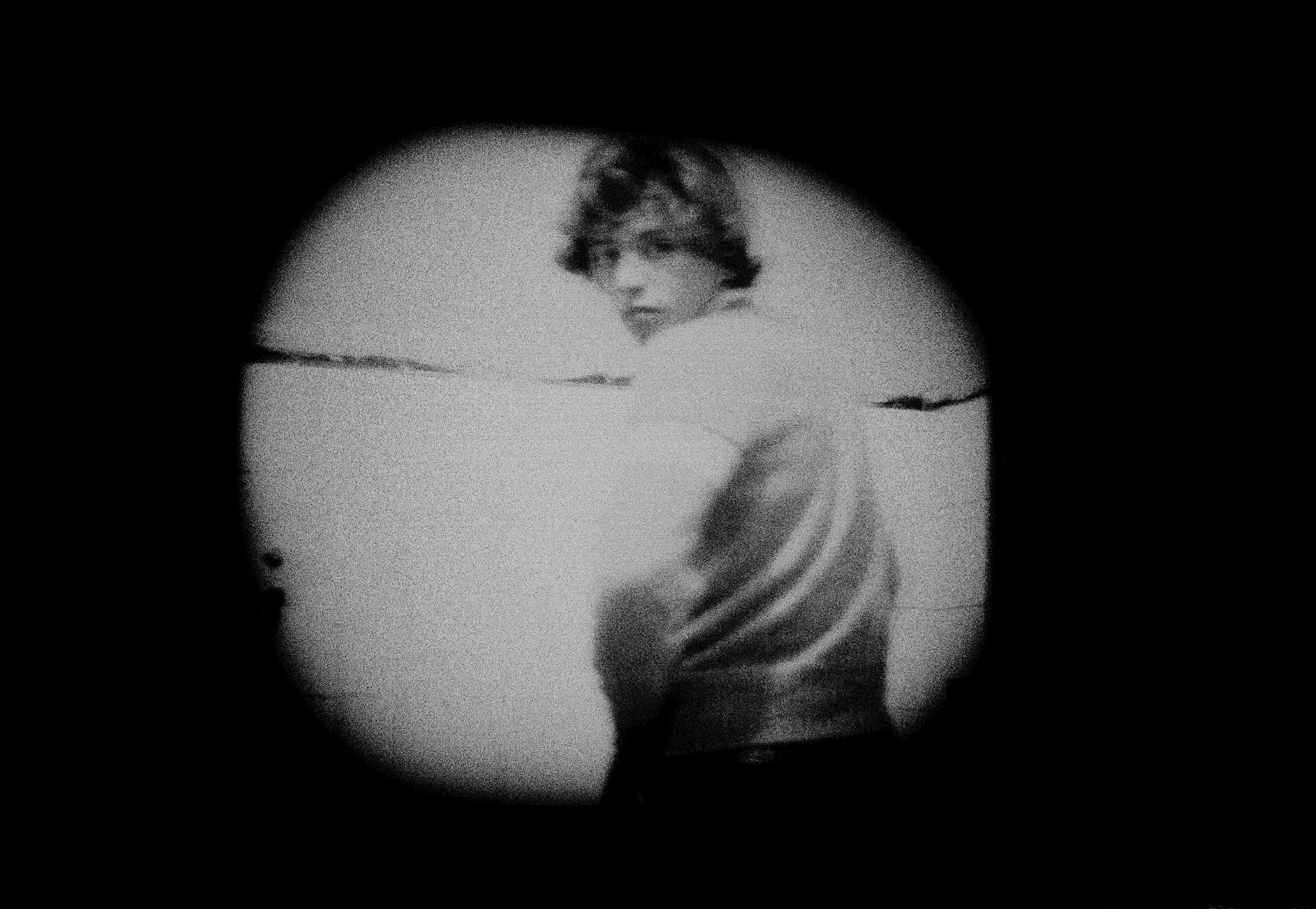
El Freddy, 1979/2008. Inkjet print on cotton paper. 80 x 122 cm. Artist's collection. © Miguel Ángel Rojas. Photograph: Artist's archive.
The human dimension of this violence acquires an especially painful intensity in David (2004). The work arises from the artist's encounter with a soldier mutilated by an anti-personnel mine and transforms the individual portrait into an image of collective scope. The wounded body becomes a testimony to the physical and emotional consequences of a conflict that has left countless victims. There is no will in this approach to sensationalize suffering, but to place the viewer before the vulnerability of a concrete existence. The intimacy of the portrait thus acquires a political dimension, because the represented body also contains the history of a society marked by war.
“The human body is the seat, the sensitive place, the place of pleasure, pain, desires, phobias, consciousness, mind,” states Rojas. This conception crosses much of his work and allows the body to be understood as a space where cultural, economic, and social tensions are inscribed. The individual does not appear isolated, but as an expression of a context that conditions their possibilities for freedom, their relationships, and their own identity.

You may be
interested
...