Exhibitions
Mechanical Kurds: Who makes it possible for machines to “learn”?
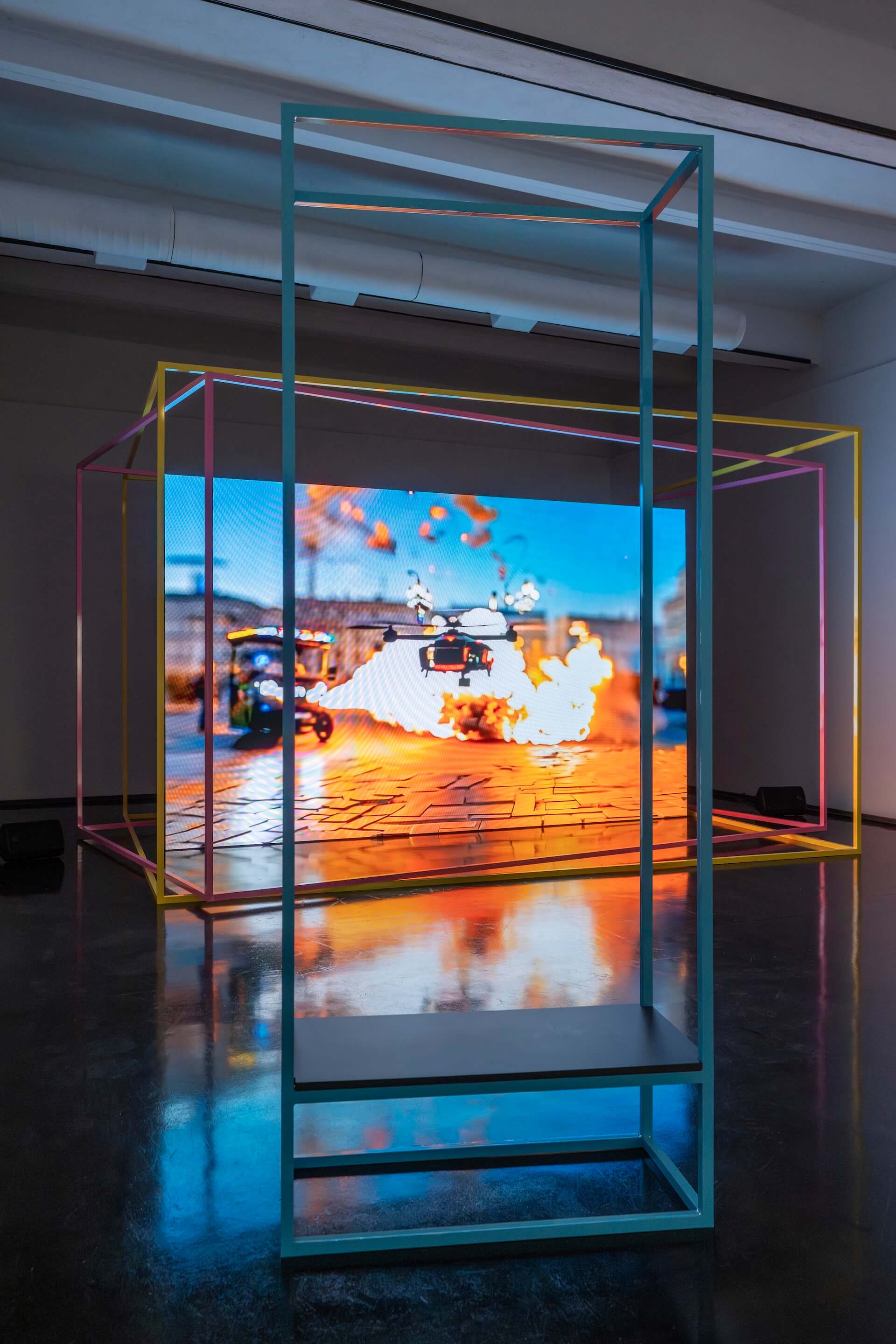
Hito Steyerl's exhibition Mechanical Kurds offers a critical look at the hidden infrastructures that underpin artificial intelligence. Presented at the MACRO museum in Rome, and for the first time in Italy after touring international institutions, the exhibition combines a video installation with immersive elements to examine the relationships between digital labor, image production, geopolitical conflict, and automated technologies.
The starting point is a simple question: who makes it possible for machines to "learn"? Through a narrative that blends documentary and fiction, Steyerl shifts the focus from algorithms to the people who participate in their training. The artist revisits the historical figure of the "Mechanical Turk," a famous 18th-century automaton that appeared to play chess on its own, though in reality it concealed a person inside. This deception serves as a metaphor for addressing the promises of contemporary technological autonomy.
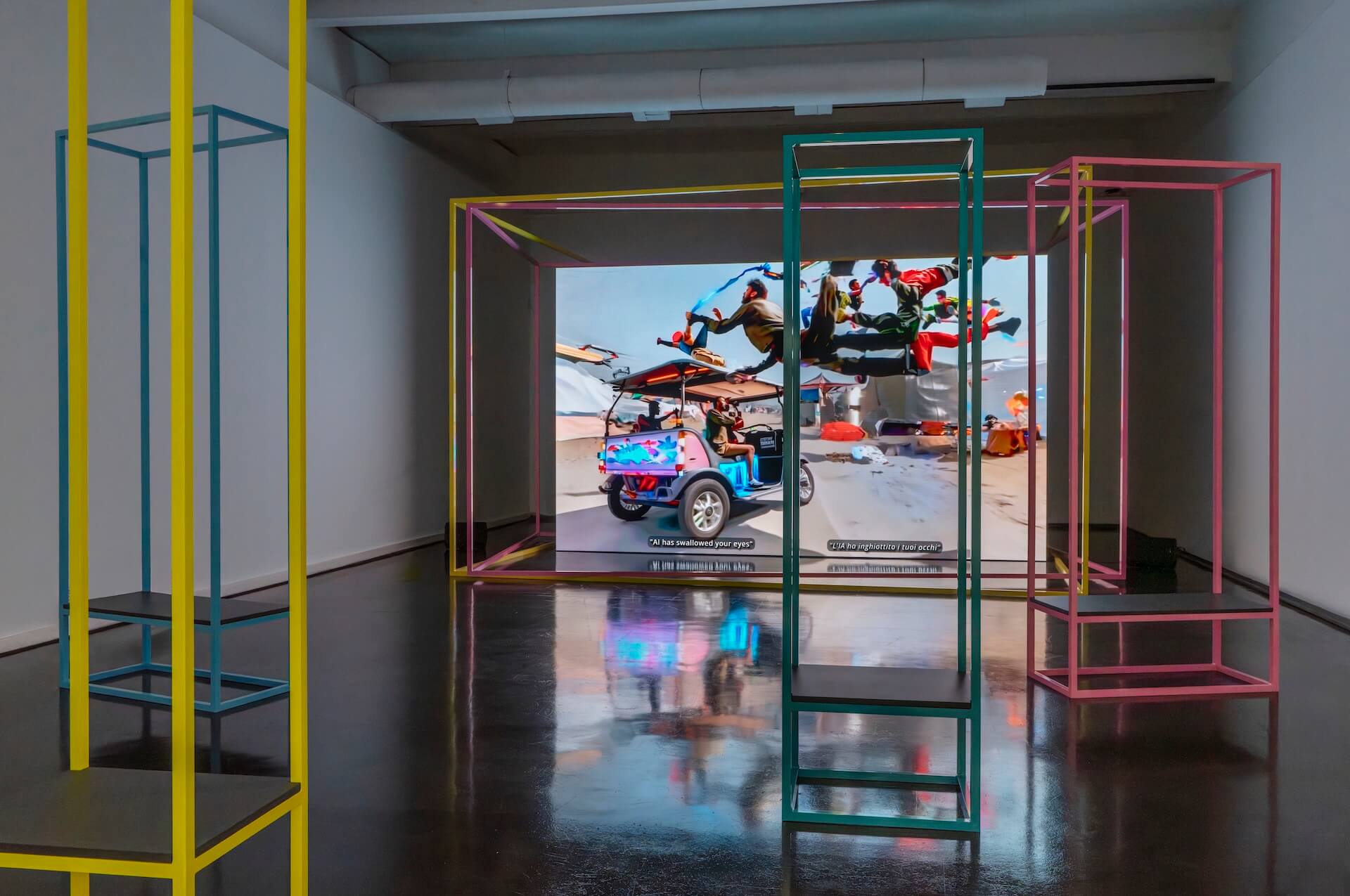
The work unfolds through images recorded in the Domiz refugee camp in Iraqi Kurdistan and sequences generated using artificial intelligence. It features the voices of Syrian Kurdish refugees who worked classifying images for computer vision systems. Their work, fundamental to the development of visual recognition tools, reveals a labor chain often rendered invisible within the digital economy.
As the narrative unfolds, the exhibition establishes a disturbing connection between these image-tagging activities and the military use of automated technologies. Steyerl shows how the very territories and communities that supply data and labor to train intelligent systems are exposed to forms of surveillance and technological violence. Artificial intelligence then appears linked to economic and political networks far broader than the usual narratives about innovation.
Mechanical Kurds is part of a line of research the artist has been developing for years on the power of images and their social effects. Rather than offering definitive answers, the exhibition invites us to reconsider what remains outside the frame: the people, resources, and conflicts that make a digital universe, often presented as immaterial and autonomous, function.


You may be
interested
...