News
Julio Le Parc: light as language, movement as legacy
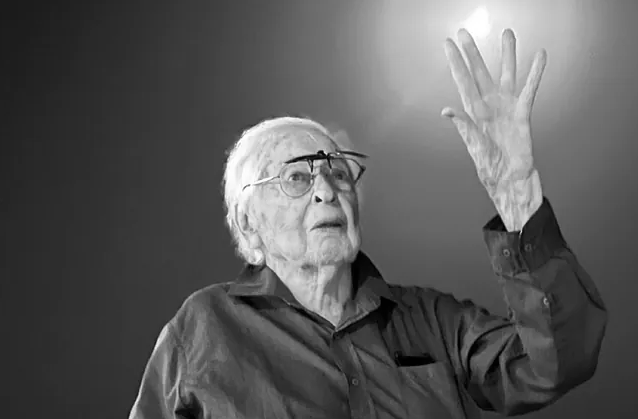
The art world mourns the loss of Julio Le Parc, who died this Saturday in Paris at the age of 97. His work, characterized by a constant exploration of light, color, and movement, established him as one of the most influential figures in international contemporary art and as one of the leading figures of Argentine art on the world stage.
Born in 1928 in Palmira, Mendoza, Le Parc began his training at the School of Fine Arts in his province, studying at night while honing a sensibility that would later lead him to question the traditional limits of painting. Once in Buenos Aires, he came into contact with fundamental ideas of artistic modernism, influenced by teachers such as Lucio Fontana and by the rise of concrete art, which advocated the reduction of forms and the prominence of color as structure.
In 1958, he moved to Paris on a scholarship, a city that would become the epicenter of his career. There, he immersed himself in a vibrant art scene, marked by the radical experimentation of the 1960s, where he developed much of his visual language. His artistic quest centered on a key principle: the artwork should not be a static object, but an active experience in which the viewer participates, completing the piece with their perception.
International recognition came in full force in 1966, when he won the Grand International Painting Prize at the Venice Biennale, one of the most prestigious distinctions in the art world. From then on, his work was exhibited in major cultural centers in cities such as New York, Los Angeles, Washington, Tokyo, Madrid, Venice, Havana, and Beijing, solidifying his global career.
Throughout his life, Le Parc championed a democratic conception of art: accessible, sensory, and open to multiple interpretations. His light and kinetic installations sought to break down the distance between artwork and audience, inviting an immersive experience where movement and perception took center stage.
In Argentina, his figure was especially celebrated in 2019, when on his 90th birthday he received a series of tributes that included retrospectives at the then Kirchner Cultural Center and the National Museum of Fine Arts, as well as interventions in emblematic spaces such as the Colón Theater and the Buenos Aires Obelisk during the Night of the Museums.
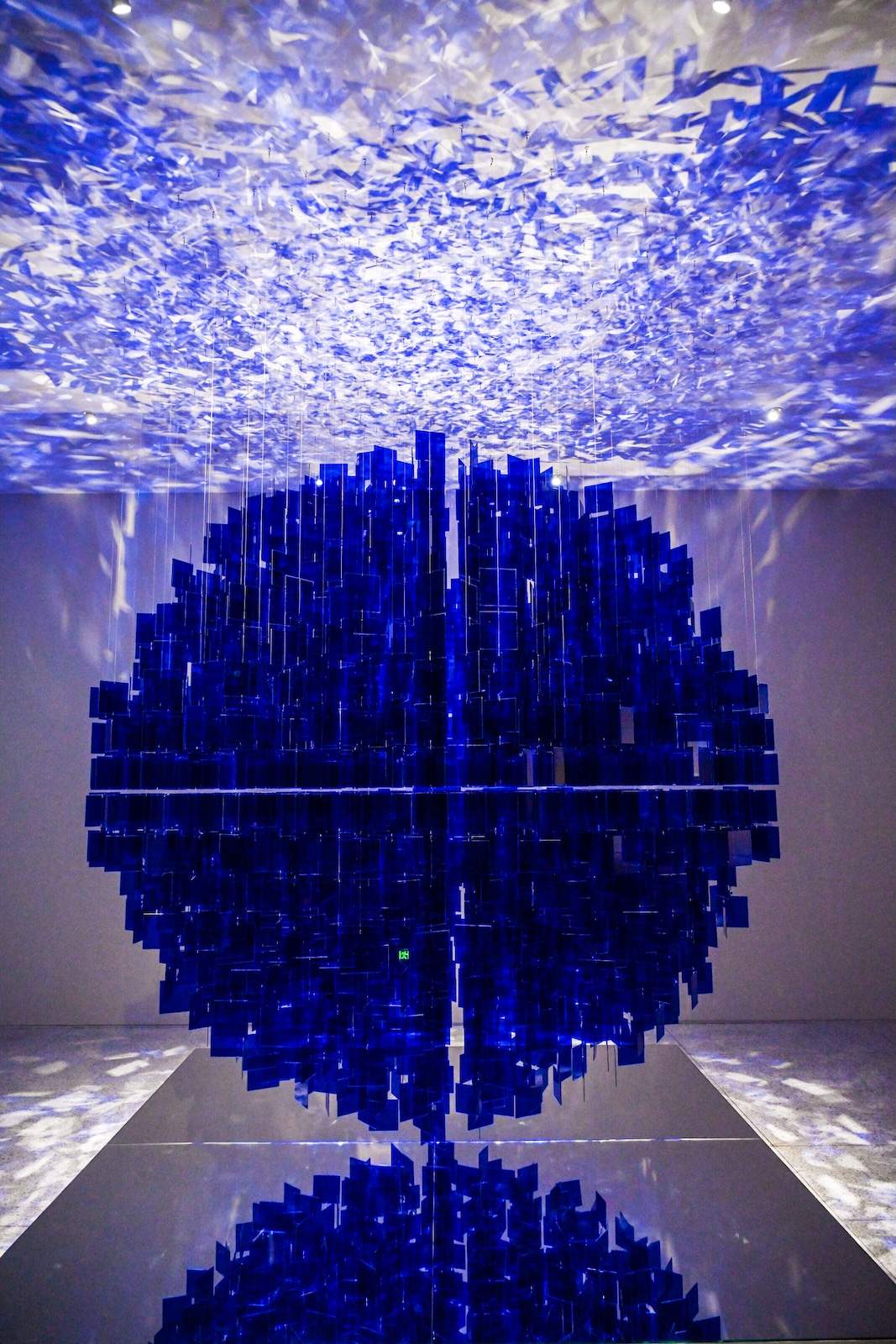
Among his most outstanding works in the country are Blue Sphere , donated in 2016 to the current Liberty Palace, and Sun , a monumental golden structure installed in 2024 at the Ezeiza international airport, which became one of his last great public interventions.
Even in his later years, Le Parc was working on a new international retrospective that was to open at Tate Modern in London, specifically at the Light, Colour, Action exhibition in June, confirming his enduring creative relevance. His legacy, deeply rooted in experimentation with light and movement, remains one of the most decisive contributions of Latin American art to the contemporary global art scene.

You may be
interested
...