Exhibitions
The Amazon bursts onto the scene in Venice: Sara Flores makes history at the Peruvian Pavilion
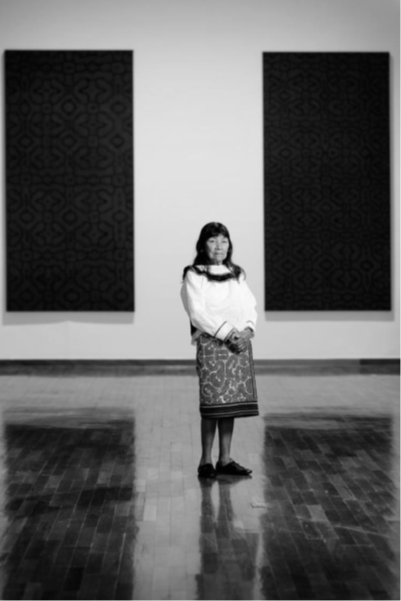
For the first time in history, Peru will be represented at the Venice Biennale by an Indigenous artist. This is Sara Flores (Tambo Mayo, Peru, 1950), a creator belonging to the Shipibo-Konibo people of the Peruvian Amazon, whose work has decisively contributed to making the visual and spiritual language of her culture visible in the field of contemporary art.
The Peruvian Pavilion will present the solo exhibition Sara Flores: From Other Worlds , a project that offers a profound exploration of the Amazonian worldview through the artist's paintings. The exhibition will be part of the 61st Venice Biennale, titled In Minor Keys , and will be on view from May 9 to November 22, 2026, at the Arsenale exhibition complex in Venice.
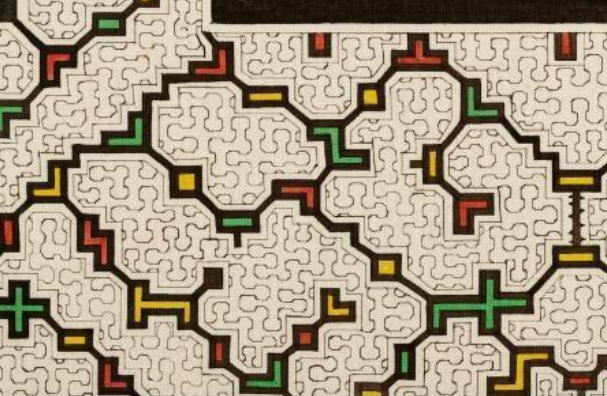
The project is curated by Armando Andrade de Lucio, who serves as the national commissioner, with curatorial work by Issela Ccoyllo and Matteo Norzi. The exhibition offers an immersive experience in the Kené visual system, a complex geometric language of the Shipibo-Konibo people that expresses spiritual maps, relationships with nature, and knowledge passed down through generations.
Since 2015, Peru's participation in the Biennale's international art and architecture exhibitions has been organized by the Patronato Cultural del Perú (PACUPE), a private, non-profit organization dedicated to promoting the country's presence in one of the world's most influential contemporary art events. For the 2026 edition, PACUPE announces this new project, which reinforces Peru's commitment to cultural diversity and the visibility of indigenous artistic practices.
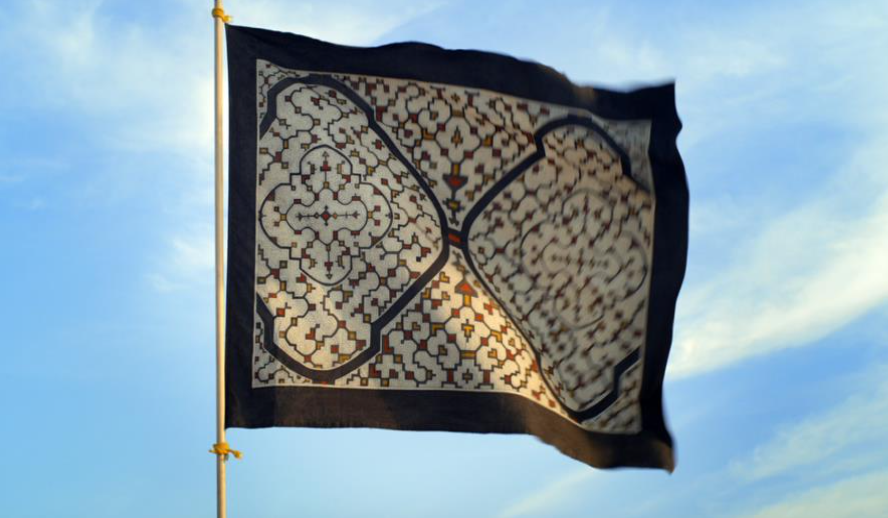
With From Other Worlds , Sara Flores brings the complex patterns of kené, traditionally found in textiles, ceramics, and body painting, into the exhibition space. Her compositions—characterized by geometric rhythms and expansive structures—evoke symbolic and energetic territories that connect ancestral Amazonian knowledge with contemporary debates on identity, territory, and cultural memory.
Sara Flores's presence at the Venice Biennale not only represents a recognition of her artistic career, but also a historic milestone: the inclusion of an Indigenous Amazonian voice in the Peruvian national pavilion at one of the most influential events on the international art circuit. Her participation thus opens a space for the worldview of the Shipibo-Konibo people to engage with global audiences from the very heart of the Biennale.
You may be
interested
...