Exhibitions
Artistic resistance in the data age at the MAC USP in Sao Paulo
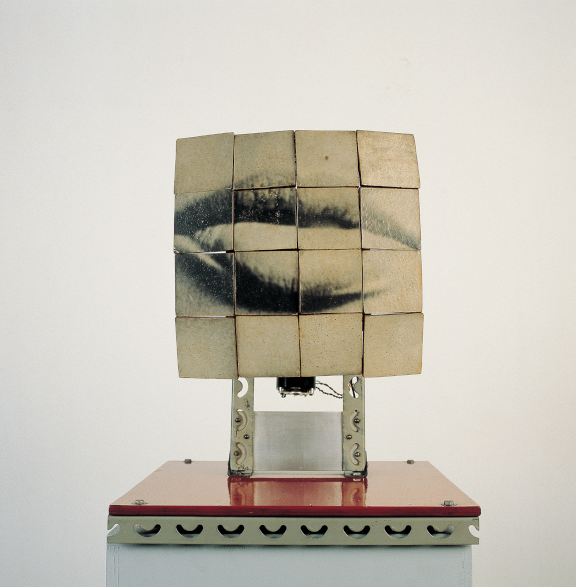
Drawing on works from the MAC USP collection, the exhibition "Antagonists: Algorithmic Resistance" offers a critical reading of the broad and diverse production of artists, activists, and scientists who, since the 1960s, have developed strategies of resistance against hegemonic information technologies. In different historical and geopolitical contexts, these cultural agents confronted the consolidation of a new regime based on data management, automation, and algorithms, exploring alternative ways of relating to technological systems that were beginning to reorganize social, political, and symbolic life. This temporary exhibition at the Museu de Arte Contemporanea da Universidade de São Paulo will be on view until February 22, 2026, and is curated by Bruno Moreschi, Gabriel Pereira, and Heloísa Espada.
Even working with limited technical and material resources, these creators imagined and implemented experimental forms of communication, circulation, and knowledge production that escaped dominant logics. Their works can be understood as antagonistic insofar as they respond to needs systematically ignored, silenced, or erased by official technologies and the economic and political interests that sustain them. Rather than rejecting technology itself, these works divert, reprogram, or resignify it from critical perspectives.
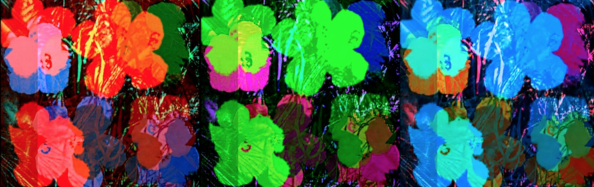
Winnie Soon and Cornelia Sollfrank, Net Art Generator (ver5_b) + Fix My Code, 2003/2017/2021.
During the 1970s, in direct response to the military dictatorships that spread throughout Latin America, many artists turned to the postal system as a strategic tool to create dissident networks of artistic and intellectual exchange. Mail art thus became established as a means of resistance, capable of circumventing censorship, fostering community, and generating alternative circulation circuits that challenged institutional structures and mechanisms of state control.
Today, in a world deeply mediated by digital platforms and ubiquitous surveillance systems, artists continue to identify fissures within contemporary technological devices. Through these cracks, they create spaces for expression, critique, and resistance, questioning the supposed neutrality of digital infrastructures and revealing their political implications. Faced with the omnipresence of monitoring, data mining, and algorithmic surveillance, these practices imagine ways of reappropriating images, information, and archives, proposing new narratives capable of subverting dominant visual and discursive regimes.
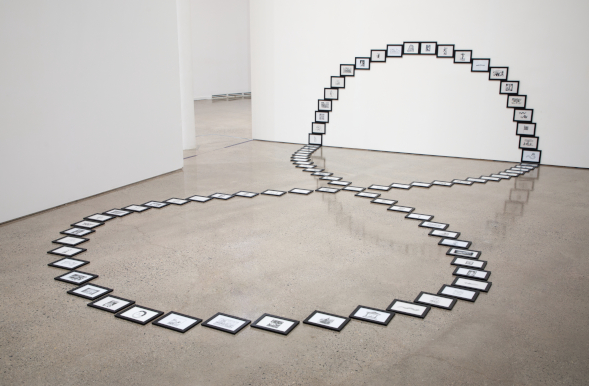
Regina Vater, Snake Nest, 1988.
In this context, Indigenous cosmologies emerge as fundamental references for thinking about technologies that transcend modern Western rationality. By proposing alternative conceptions of time, memory, communication, and the relationship between humans, nature, and technology, these knowledge systems offer conceptual frameworks that allow us to imagine more pluralistic technological futures, situated and sensitive to historically marginalized ways of life.



You may be
interested
...