Exhibitions
Carlos Bunga inhabits contradiction at the Gulbenkian Foundation
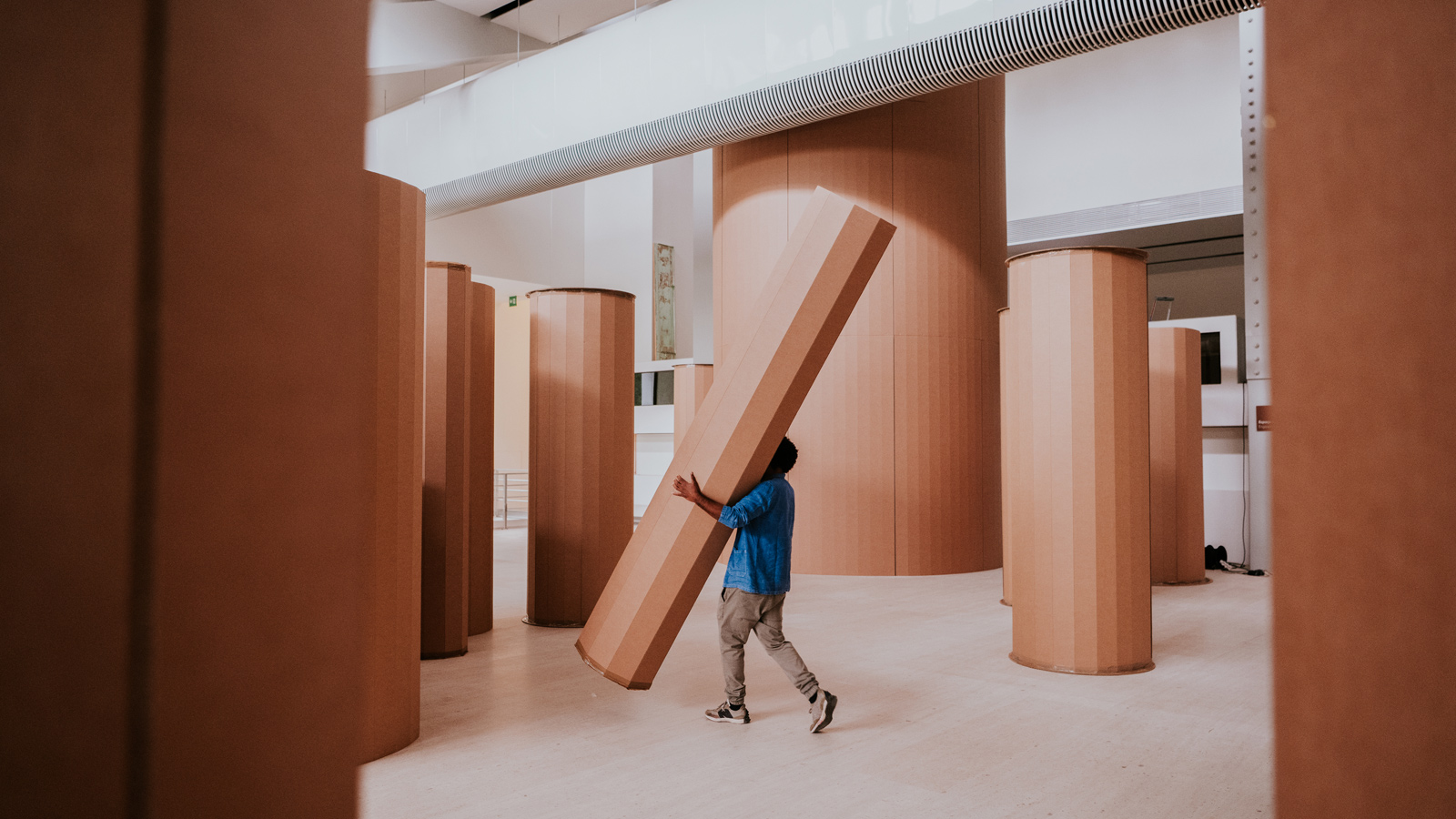
Portuguese artist Carlos Bunga (Porto, 1976), based in Barcelona, presents his new major exhibition, Inhabit the Contradiction , at the Centre for Modern Art of the Calouste Gulbenkian Foundation in Lisbon. This is one of the most ambitious projects of his career. Curated by Rui Mateus Amaral and supported by the Institut Ramon Llull, the exhibition will run from November 8, 2025, to March 30, 2026, and explores the concepts of refuge, identity, and transformation through a material language that is both fragile and powerful.
Bunga's work is defined by its ability to transform the ephemeral into structure. He uses everyday materials—cardboard, tape, and household paint—to construct temporary architectures that engage with the exhibition space and completely transform it. His installations, somewhere between sculpture and architecture, arise from the act of building and tearing down, of inhabiting and vacating, in a constant reflection on precariousness and temporality.
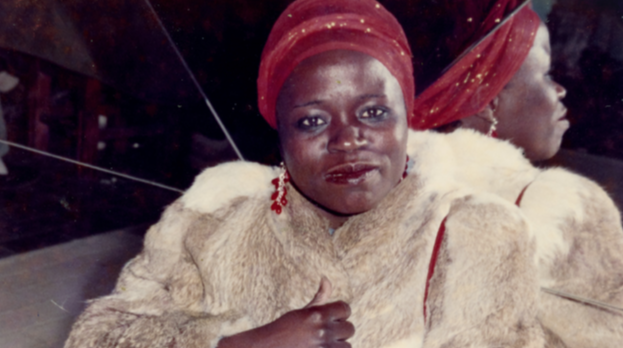
Carlos Bunga, 'Motherhood', 2025. Courtesy of the artist.
The exhibition begins with one of her drawings, My First House Was a Woman , 1975 (2018), a work that alludes to her mother's migration from Angola to Portugal and serves as a symbolic catalyst. From this starting point, Bunga develops a discourse on "dwelling"—home, refuge, nomadism—and on the arbitrariness of architectural power, understood as a social and political metaphor. Memory, change, and transformation permeate each of the spaces, inviting visitors to walk around, explore, and experience the pieces from within, as if they were living architecture.
In the CAM galleries, cardboard columns and walls rise like a forest of ephemeral structures, blurring the boundaries between inside and outside. The exhibition is not merely contemplated: it is inhabited and traversed, in an immersive experience that evokes both the vulnerability of the space and that of the body itself.

Carlos Bunga, 'Fragments', 2000. Courtesy of the artist.
Inhabit the Contradiction reaffirms Bunga as one of the most singular voices in contemporary Portuguese art. Her practice, which connects personal history with universal themes—displacement, refuge, change—transforms fragility into a form of resistance. For the Gulbenkian, this intervention represents a firm commitment to projects capable of transforming space and expanding the artistic experience beyond the object.
Alongside the installation, a comprehensive catalogue has been published that includes texts by Rui Mateus Amaral and essays by prominent international authors such as Roland Groenenboom, Omar Kholeif, November Paynter, Rina Carvajal and Catarina Rosendo.

You may be
interested
...