Exhibitions
Anatomy of space
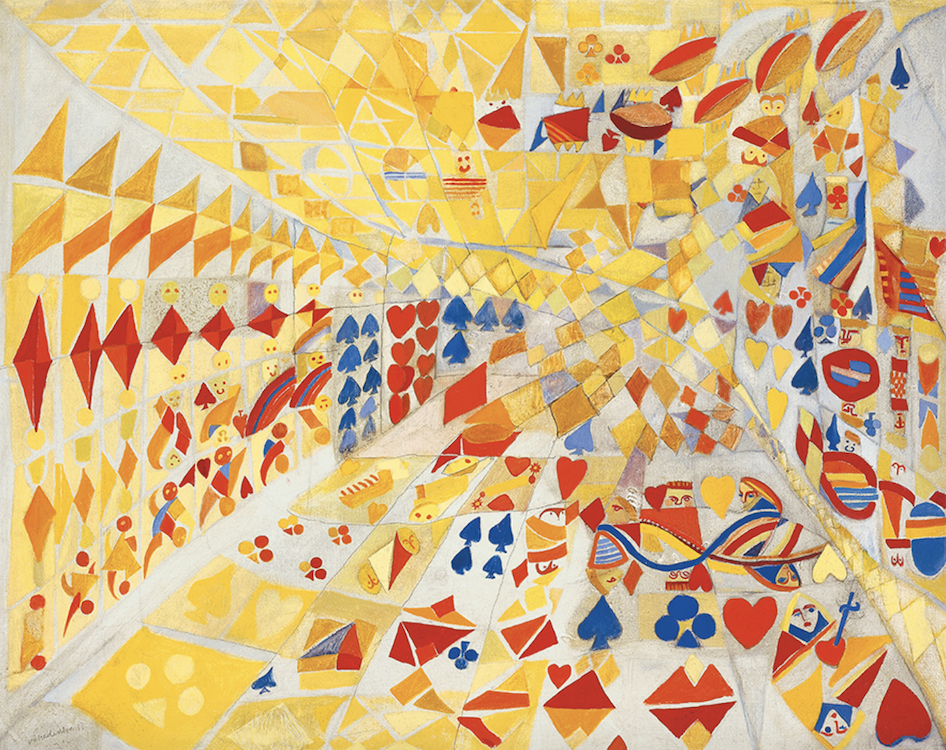
The work of Maria Helena Vieira da Silva has often been interpreted from narrow perspectives. The Guggenheim Bilbao presents a new look at the evolution of visual language and delves into the complexity of Maria Helena Vieira's work in the exhibition "Maria Helena Vieira da Silva: Anatomy of Space." Although critics have linked her work to European Informalism, the exhibition questions this affiliation by revealing a visual universe that eschews spontaneous gestures to embrace the patient construction of mental and architectural spaces. It is in this tension between abstraction and figuration that the core of her work lies: streets, libraries, bridges, and gardens that belong to no real place, but evoke all possible places. Lisbon and Paris, Rio de Janeiro and the cities of memory converge on her canvases like an impossible map, where memory traces its own perspectives.
Trained in sculpture and exposed to avant-garde painting in Paris, Vieira da Silva developed her own visual language, which combines the geometry of Lisbon tiles, Bonnard's domestic grids, and echoes of the modern city. The artist focuses her works on complex interiors and city views, through which she explores space and perspective. Portuguese tilework and her labyrinthine native Lisbon had remained etched in her memory, elements she uses to create spaces that are neither completely abstract nor figurative.
Vieira da Silva transforms pictorial two-dimensionality into an enigmatic architecture: the small rectangles that populate her canvases, applied with thick impasto since the 1930s, generate patterns reminiscent of both ornamental checkerboards and urban maps. However, these structures do not respond to a rationalist logic; they are unstable compositions, open to play and doubt, where the gaze wanders into a labyrinth of lines. Thus, the artist reinterprets classical Italian perspective to fragment and multiply it, turning space into a terrain of poetic inquiry.
The exhibition—curated by Flavia Frigeri—is based on a series of key paintings made between the 1930s and 1980s through which we can contemplate.

You may be
interested
...