Opinion
From ADLAN to Espai 13
As is often the case with many creators who have had long careers, there's something within them that retains the spirit of youth intact, something that drove and inspired them to become artists when they had their whole future ahead of them. Often, even in their later years, they still have a lot of work to do and exciting projects to develop.
Joan Miró, whom we often remember in photographs dated from the late 1960s, when he was already 75 years old, is an exemplary case. It was precisely at that time that he was able to carry out some of his most ambitious projects, also the most collective. Circumstances took many decades to be favorable for the realization of these projects, but that youthful impulse remained the main driving force. It was the same impulse of the modern youth of the 1920s and 1930s of which he was a part: a pioneering group that sought to renew and make less oppressive the culture and society in which they had grown up. It was the driving force behind the Friends of the New Art, ADLAN, which operated as a cultural association during the years of the Second Spanish Republic. After the war, what little remained of that impulse survived and resisted, almost clandestinely, under the leadership of Joan Prats, a great friend of Miró, in what was called Club 49, and which already represented a generational change.
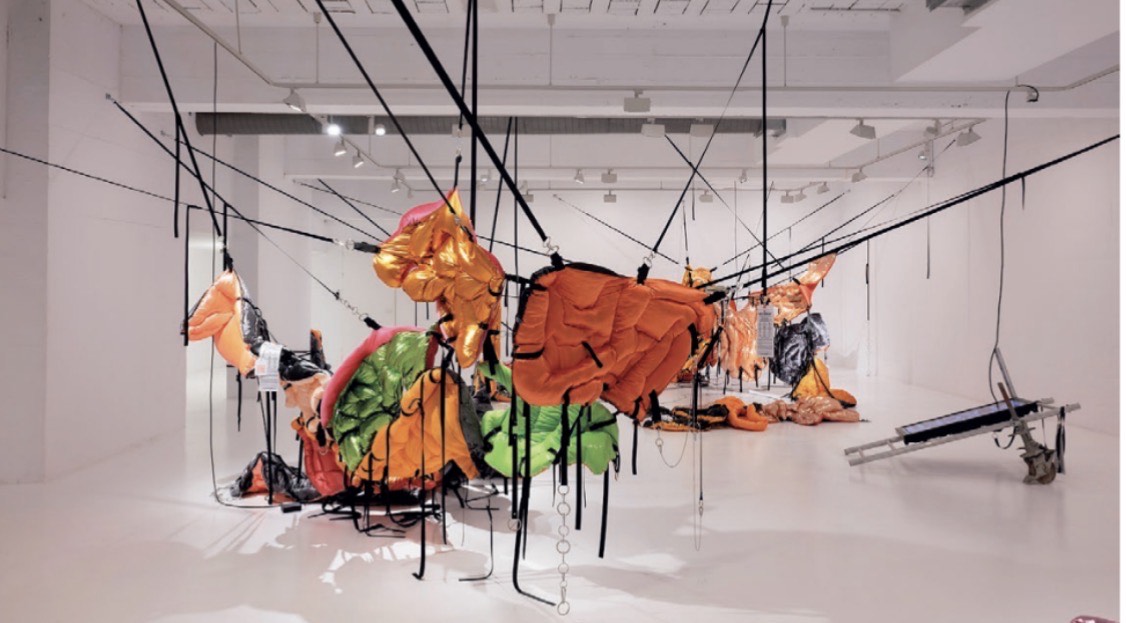
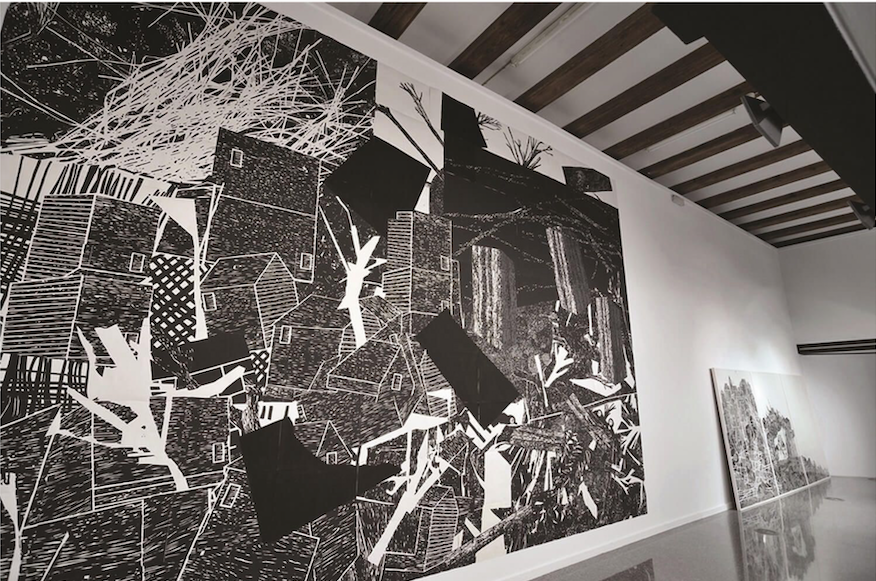
Hac Vinent, Accident. Part of the Espai 13 series We'll Be Together When Night Falls, curated by Irina Mutt. © Fundació Joan Miró, Barcelona. Photography: Roberto Ruiz.
Years later, in the 1960s, that rebellious and modern spirit of ADLAN, born in response to the social unrest in Catalonia and the disaster of Annual in Spain and the dictatorship of Primo de Rivera, resurfaced among the youth born in the postwar period and under Franco. This is why Miró felt so strongly identified with them and why he placed so much hope in them. In a way, they were his heirs in struggle and a continuation of everything his circle of the 1920s and 1930s had championed.
In a letter to Josep Lluís Sert from late 1968, Miró wrote: “Barcelona is a city with a great future, and Catalonia is a young people. I have great faith in these people, full of youth, who can blaze new trails for the future world that is being prepared. It is very good that we put our efforts into this.” With this defense of resilient and committed youth, the Barcelona artist, with the complicity of Joan Prats, Joaquim Gomis, and Sert himself, among others, planned the creation of a space dedicated to the most emerging artistic practices of the moment. In the surviving 1972 plans of the architectural project for the Foundation's future headquarters, a room called CEAC (Center for Contemporary Art Studies) appears, opening onto the building's lobby. Espai 10 would open there, the space that the new center's management would entrust to young artists and, initially, to the Ámbit de recerca, a legendary collective that was in charge of programming and organizing that space, a pioneer in the city.
Later, an activities committee was established following an open call model, and years later, exhibition cycles began to be curated. With the expansion of the building in the late 1980s, under the presidency of Oriol Bohigas, Espai 10 was moved to the basement, where it still exists today as Espai 13. Overall, it is the most continuous emerging art program in Spain and an important part of the art history of the last 50 years. The Joan Miró Foundation also continued the Joan Miró International Drawing Prize, which began in 1962, in Spanish, as mandated by the Franco regime, thanks again to a private initiative led by Miró's circle of friends, who served as honorary president and offered one of his prints to the selected artist.
The exhibitions, which featured works submitted by artists from around the world, began at the Cercle Artístic de Sant Lluc, where both Miró and Joan Prats trained, and were later held at other venues in Barcelona, such as the COAC and the Virreina. Finally, once inaugurated, they were presented at the Joan Miró Foundation. Some posters from that award remain, which we are now presenting in the exhibition commemorating the Foundation's 50th anniversary. There are also many memories from the many artists who participated, and who retain a special connection with Miró and his CEAC.
This international award would later become the Joan Miró Prize, an individual recognition of the most relevant and, so to speak, most Miró-esque creation of our time. This biennial award was launched in 2007 under the presidency of Eduard Castellet and has already been held nine editions with their corresponding exhibitions. These solo exhibitions have brought the Joan Miró Foundation's audience closer to the artistic practice of such prominent creators as Olafur Eliasson, Pipilotti Rist, Mona Hatoum, Roni Horn, Ignasi Aballí, Kader Attia, Nalini Malani, Tuan Andrew Nguyen, and, this year, Kapwani Kiwanga. With Espai 13 and the spring thematic exhibitions, the Joan Miró Prize exhibitions have been the backbone of the Foundation's contemporary art programming for the past 20 years and have helped to establish strong links between the award-winning artists and the legacy of Joan Miró and his institution.
You may be
interested
...