Opinion
How do you spell death in the south?

The exhibition by the duo Carolina Fusilier and Paloma Contreras Lomas, curated by Karla Niño de Rivera and Samantha Ozer, transformed the iconic Anahuacalli Museum—conceived by Diego Rivera as a modernist “pre-Hispanic monolith,” destined to be his personal mausoleum with Frida Kahlo and home to his invaluable collection of pre-Hispanic art. The exhibition not only occupied the space but also redefined it, inviting viewers to reflect on death, power, and identity at the intersection of the ancestral and the contemporary.
It was a fascinating dialogue with the technological and ritual imagery that permeates the works of both artists. The artists' connection to the space was undeniable. The Anahuacalli, more than a backdrop, became a character. Fusilier and Contreras Lomas
They intervened, infusing it with their mythologies and a cast of ghosts. Their works engaged in an intimate dialogue with the history and spirit of the museum. The exhibition was presented as a fictional thriller where echoes of ancient cultures intertwined with contemporary obsessions with conquering death and reconfiguring time.
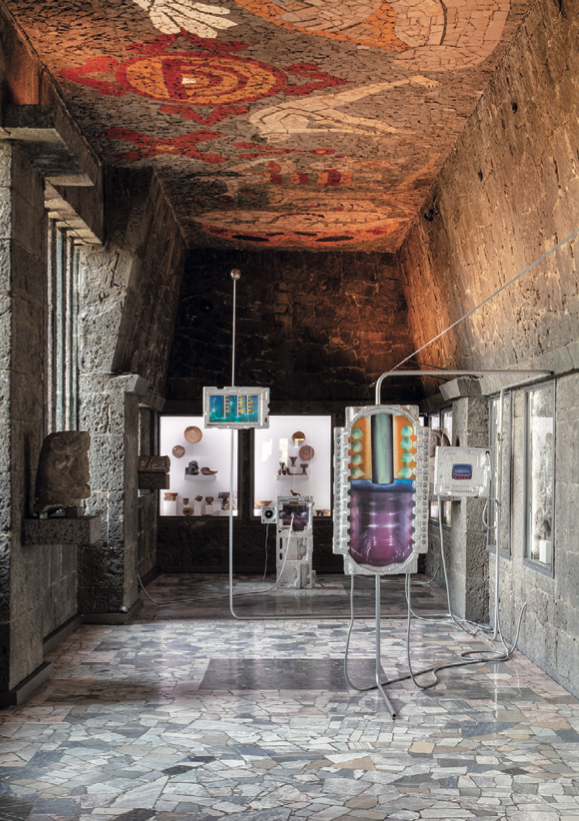
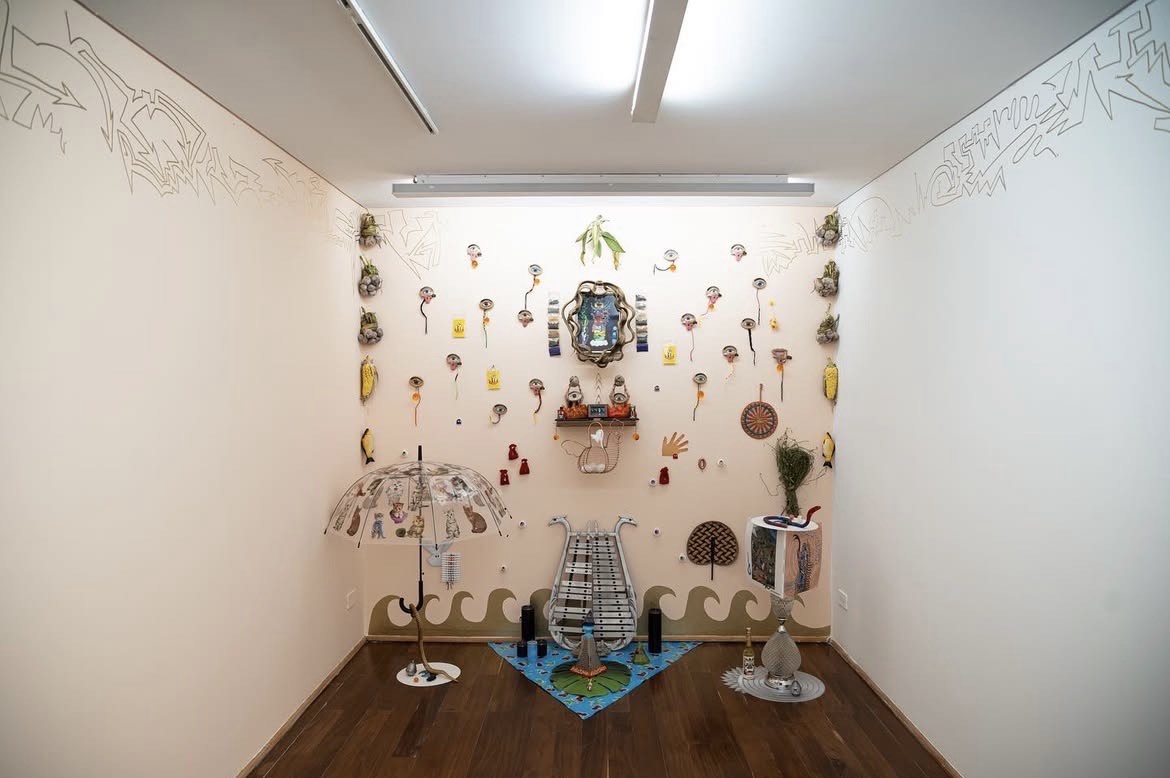
View of the exhibition How Do You Spell Death in the South? Photography: Ramiro Chaves. Diego Rivera and Frida Kahlo Archive, Banco de México.
Carolina Fusilier took as her starting point the theories of the Russian philosopher Nikolai Fyodorov, who in the 19th century defended the idea that death is not a natural destiny, but a technical defect of the human condition, correctable through science and technology. From this premise, Fusilier materialized a set of object-sculptures and paintings that resembled resurrection devices, biocosmic bodies, and ritual artifacts of a future civilization that found its formal referents in Mesoamerican structures. Particularly noteworthy was Resurrected Garden , an installation composed of dried plants collected from the museum and reanimated through mechatronic mechanisms, in an operation that subverted the idea of the museum as a mausoleum, proposing it as a vitalist machine, capable of activating and redefining its own remains. Complementing this idea, a series of VHS videos made by Miko Revereza, a frequent collaborator of Fusilier, were presented, where abstract and chromatic forms evoked sensorial visions of the vital transition.
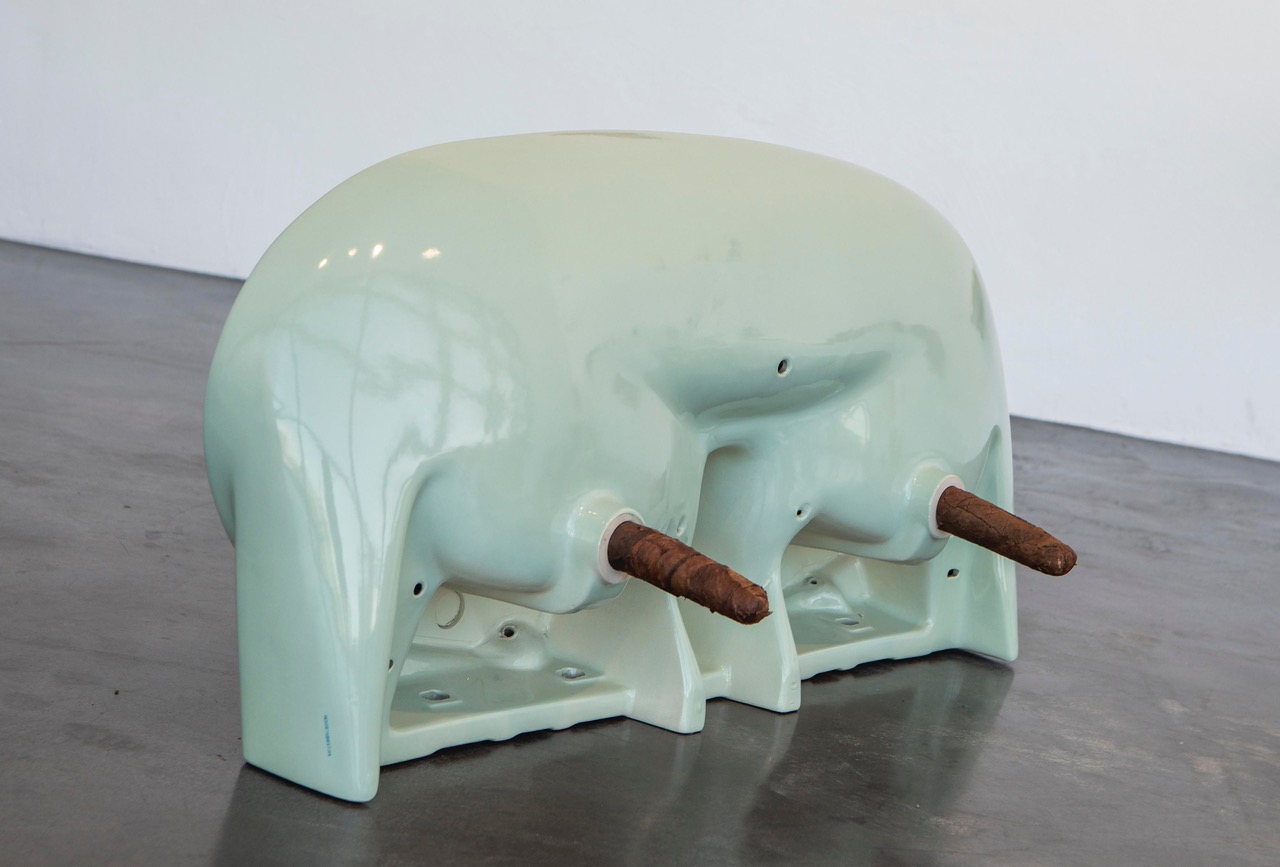
For her part, Paloma Contreras Lomas continued her research into dystopian narratives, Latin American science fiction, and colonial legacies. As in much of her work, Contreras Lomas questioned who narrates history and from what landscape the narrative is articulated. Her murals, ceramic models, and videos summoned a cast of specters, hybrid creatures, and apocryphal mythologies that revealed the mechanisms of oppression and structural violence, always within an aesthetic that drew from pre-Hispanic imagery as well as B-horror films and 1980s pop culture.
Both artists, despite their individual approaches, forged mystical bridges that articulated their notions of immortality and a Mesoamerican futurism that intersected with Western modernity. The exhibition was a vibrant reminder that artistic value is not static, but a constant flux, and that each work contributes to redefining our understanding of art. How do you write death in the south? prompted a profound reflection on life, death, and the transformative power of art. It was an exhibition that left an indelible mark, inviting the viewer to transcend the obvious and embrace the complexity of humanity in a perpetually evolving landscape.
Article published in bonart international 1 .
You may be
interested
...