Exhibitions
Velasco's secret garden: art, science and nature at the Kaluz Museum
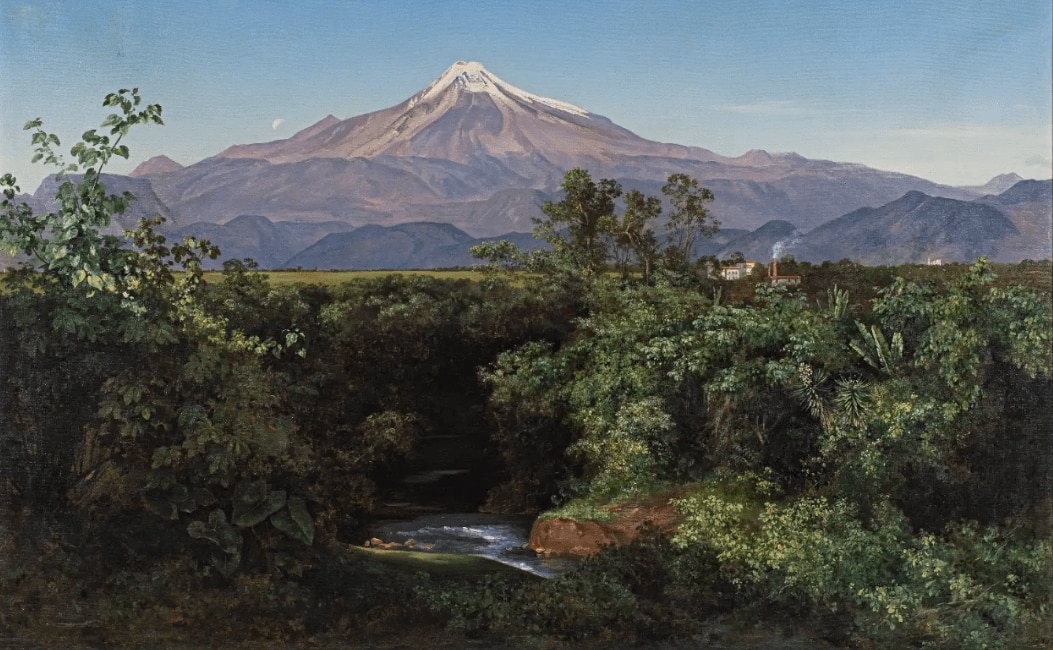
The Kaluz Museum opens an unexpected window into the creative universe of José María Velasco with El jardín de Velasco , an exhibition that transcends the classic image of the landscape painter to reveal him as a meticulous observer of nature, deeply linked to science.
Available from October 25, 2025 to May 25, 2026, the exhibition brings together more than 400 previously unseen pieces from the artist's personal archive, acquired in 2023. Sketches, manuscripts, drawings, scientific lithographs and intimate objects make up a complex and revealing portrait: Velasco not only painted landscapes, he studied them, classified them and understood them like a naturalist.
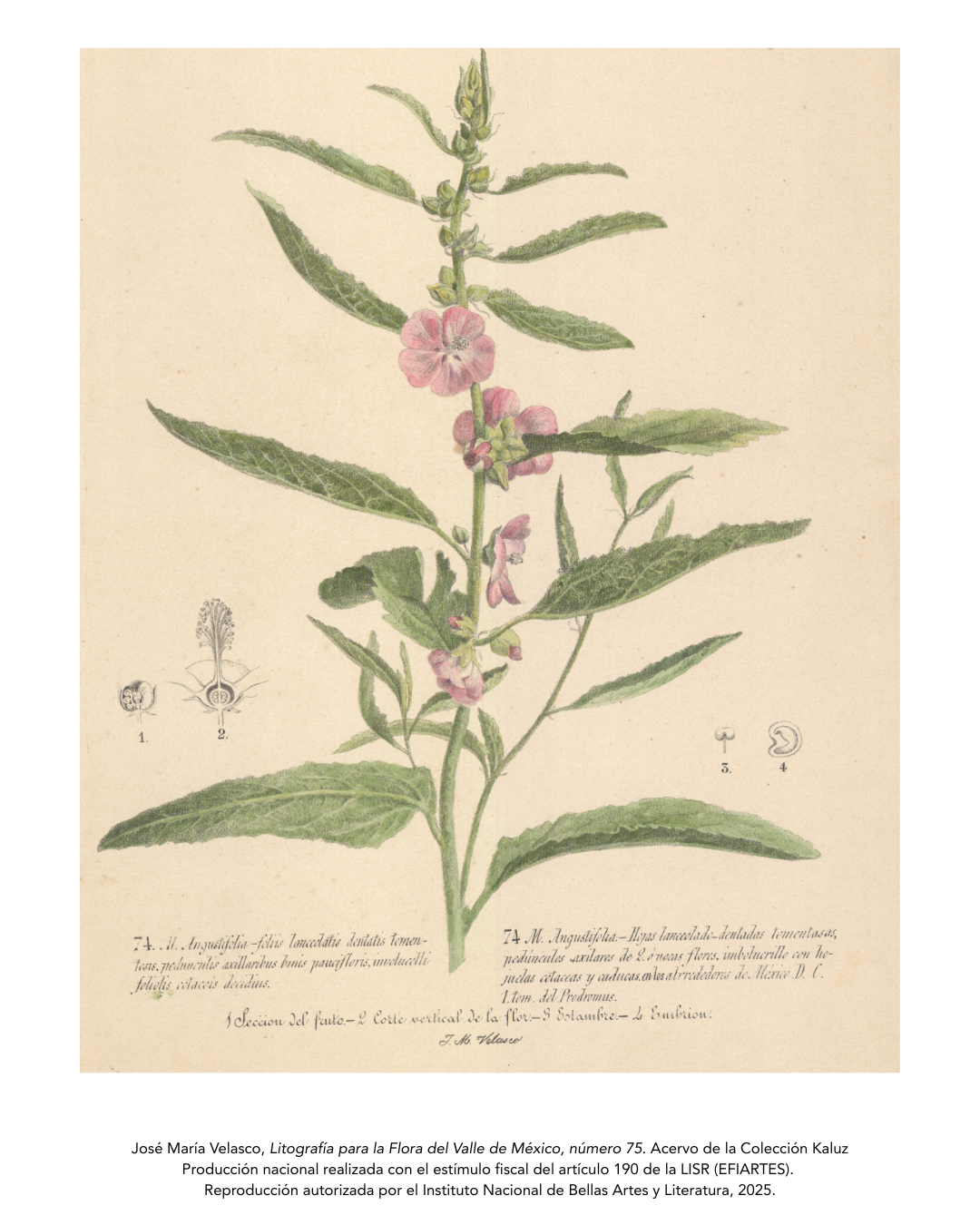
In collaboration with the National Herbarium of the National Autonomous University of Mexico (UNAM), the exhibition establishes a rarely seen dialogue between art and science. For the first time, the artist's studies of the axolotl are on display, alongside the 18 lithographs from *The Flora of the Valley of Mexico * (1869), considered his most significant contribution to the field of botany. These pieces are presented alongside real specimens, connecting the artistic representation with the scientific object.
One of the most striking moments of the tour is the encounter between the iconic Valley of Mexico as seen from Tacubaya and an ancient Montezuma cypress tree, over 23,000 years old, found in Tlapacoya. This dialogue between artwork and natural material reinforces the central idea of the exhibition: the landscape as a living space, imbued with memory and knowledge.
The title "Velasco's Garden" functions as a metaphor for the Valley of Mexico, understood not only as a pictorial setting but also as a natural laboratory. In this territory, the artist deployed a vision that integrated aesthetic sensibility and scientific rigor.
The exhibition is structured into eight sections that allow visitors to explore different facets of his thought. From his training with Eugenio Landesio to his participation in 19th-century international scientific networks, Velasco emerges as a figure deeply connected to his time. His interest in disciplines such as botany, geology, and zoology is reflected in works that document and, at the same time, interpret the natural environment.
Special attention is given to his contribution to the study of Mexican plants, not only from an aesthetic perspective but also from a practical one. The exhibition explores how this visual knowledge influenced the development of national medicines, in collaboration with scientists such as Fernando Altamirano, Adolfo Tenorio, and Rafael Montes de Oca.
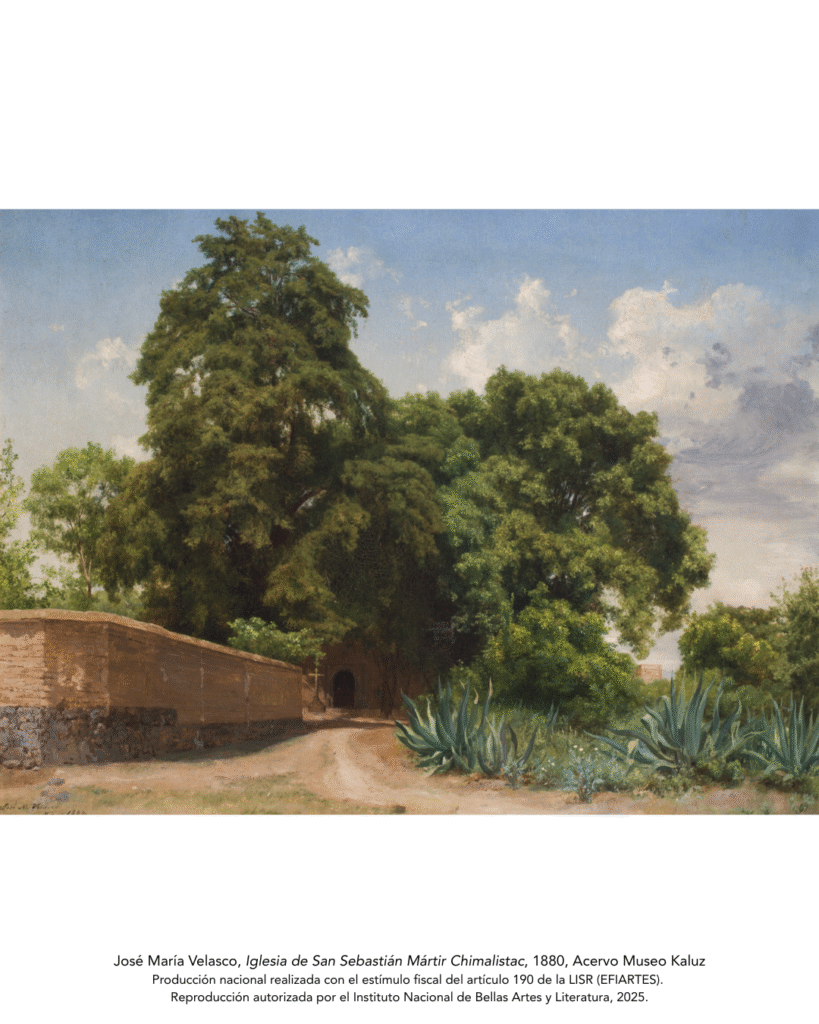
Another key theme is the representation of trees as symbols of identity and memory. Through wood samples from the xylotheque of the Institute of Biology at UNAM, the exhibition proposes an interpretation of the landscape that connects past, present, and future.
In his large canvases, Velasco captured not only the beauty of the Valley of Mexico, but also its transformation. His landscapes reveal the tension between nature and modernity, between permanence and change, becoming visual documents of a constantly evolving territory.
The exhibition concludes with a timeline featuring letters, photographs, and personal belongings, offering a glimpse into the artist's daily life. Far from the distant figure of the genius, a curious, disciplined man emerges, deeply committed to his surroundings.
Velasco's garden is not just an exhibition: it's a reinterpretation of one of the great masters of Mexican art. An invitation to see his landscapes with fresh eyes, understanding that behind every brushstroke there is also science, observation, and a profound respect for nature.



You may be
interested
...