Exhibitions
Barrão: A forest of shapes where the everyday is reinvented
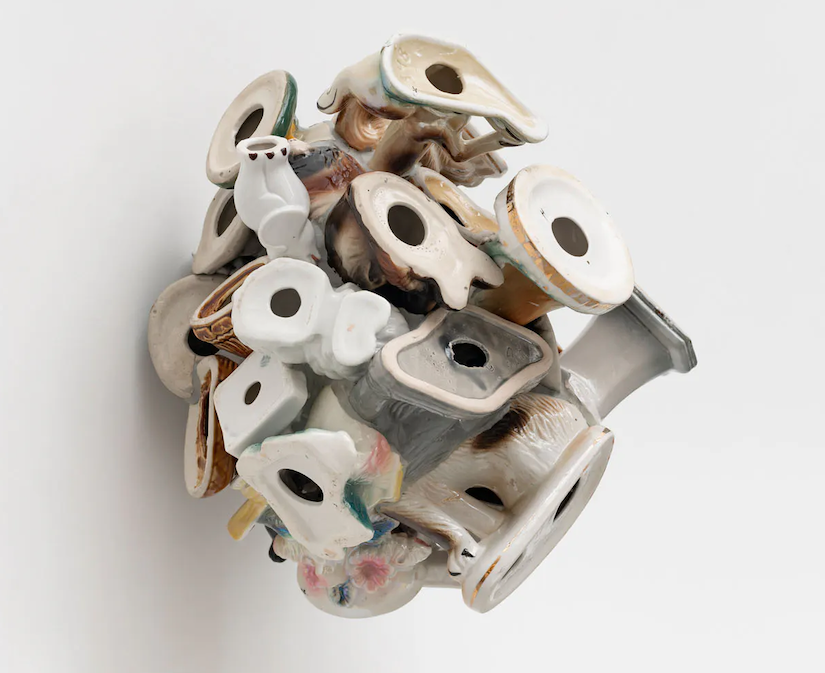
Barrão exhibits his entire creative universe with Teia à Toa at the Oscar Niemeyer Museum in Curitiba, Brazil. Curated by Luiza Mello, a tour featuring 70 works created by the Rio de Janeiro artist over the past two decades will be on view until November 30th in Room 3 of the Brazilian museum.
He is a self-taught Brazilian sculptor and multimedia artist, recognized for his visually striking sculptures made from repurposed everyday objects—primarily ceramic and porcelain fragments with a kitsch aesthetic—which he fuses into ingenious hybrid compositions. At the Oscar Niemeyer Museum, he exhibits multicolored ceramic sculptures, resin and bronze pieces, as well as watercolors and installations.
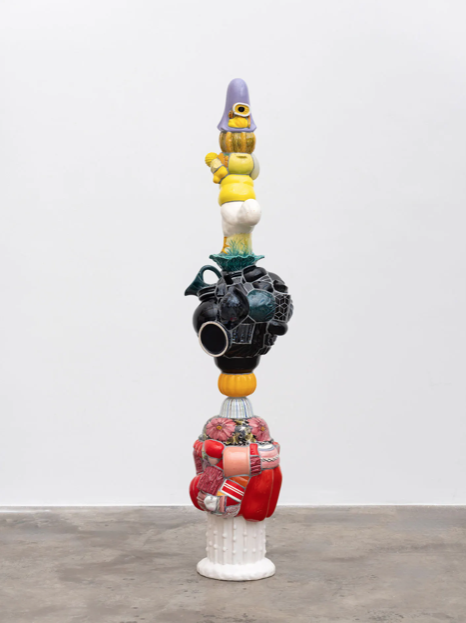
Bewitched, 2025.
Curator Luiza Mello defines the exhibition as a "forest of shapes and colors" in which everything is subtly intertwined by invisible threads. The pieces on display emerge from a free and spontaneous assembly of elements from the past that, when reconfigured, acquire new meanings within the artistic language.
Barrão's first solo exhibition in Curitiba offers a spectacular, playful, and reflective visual experience about his art, created objects, and possible transformations. "The result is almost an allusion to life, to the imponderable that often shatters predictions and leaves us only the possibility of adaptation," he says. "Barrão instigates by inverting the original meaning of objects with humor, irony, and poetry," comments Juliana Vosnika, director and president of MON.
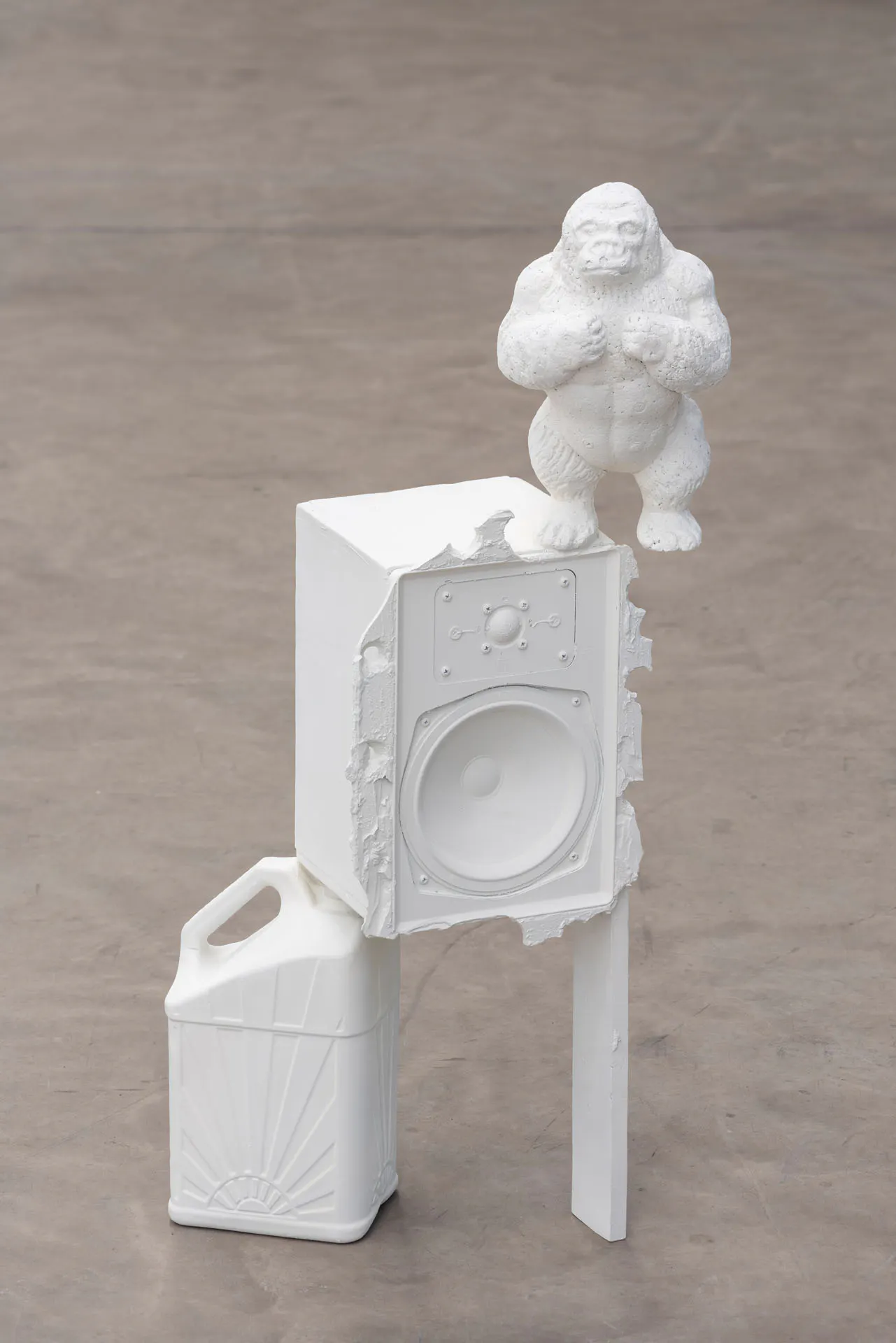
Pancadao, 2018.
Throughout his career, Barrão has developed an artistic language deeply marked by intuition and transformation. His work is constructed from the combination of everyday elements: easily recognizable objects from our domestic and urban environments. In his studio, these objects accumulate on shelves that function almost like contemporary curiosity cabinets. The pieces, from diverse sources, are organized according to criteria that respond more to an intuitive and personal logic than to a rational classification.
From this accumulation and regrouping, hybrid sculptures emerge, breaking with the functional and stylistic conventions of the original objects. When reconfigured, these fragments lose their usual usefulness and transform into new, unexpected forms, charged with ambiguity. The works resulting from this process not only challenge traditional categories of art but are also permeated by a sharp sense of humor and subtle irony, inviting the viewer to question the hierarchies between the banal and the artistic, the serious and the playful.
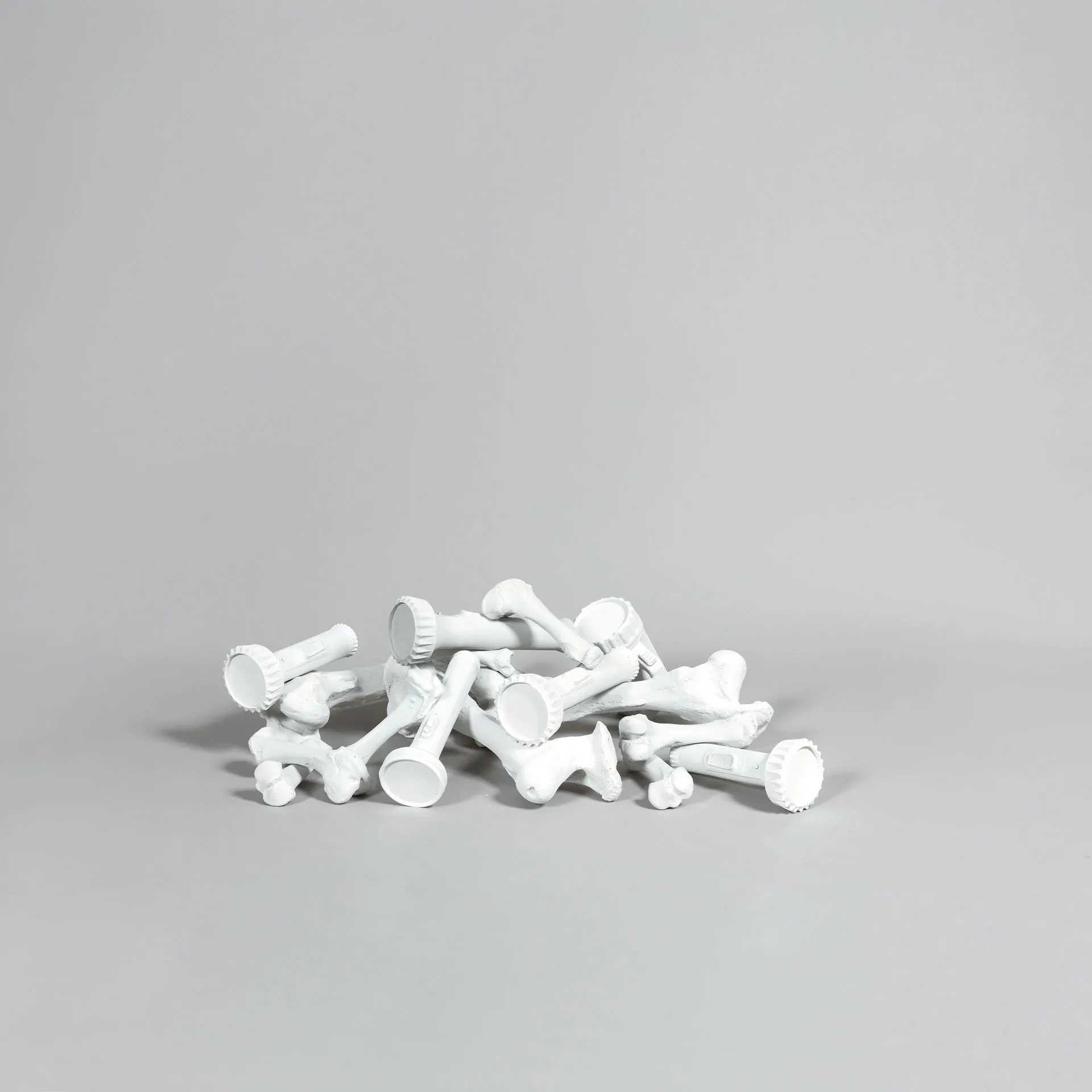
Bones and Lanterns, 2015.
According to the artist, all of his work is built on an already existing world. "They are objects that had other functions and were already here when I arrived, but now they are associated with others and acquire a new meaning," he summarizes. "They are transformed."

You may be
interested
...